
Most home cooks oversweeten their sweet and sour sauce, masking the balance that makes the dish work. This recipe shows you the ratio that matters and why cornstarch thickens it properly—no lumps, no guesswork.
Sweet and sour chicken stir fry is one of those dishes that looks simple on the surface but has a few technical details worth understanding. Get the sauce ratio right, control your pan temperature, and keep your vegetables moving—and the result is genuinely satisfying: glossy sauce, tender chicken, and vegetables with some crunch left in them. If you enjoy bold sweet-savory combinations, you might also want to look at our Sweet Sour Pineapple Chicken or the Sweet and Sour Chicken – Restaurant Style for a deeper dive into technique. This version is built for a weeknight—straightforward ingredients, one wok or large pan, and about 30 minutes of active cooking.
Origins of Sweet and Sour Chicken
Sweet and sour as a flavor principle has deep roots in Chinese cooking, particularly in Cantonese cuisine where the combination of vinegar, sugar, and soy appears in dishes dating back centuries. The version most people in Europe and North America recognize—battered chicken pieces in a bright red-orange sauce—evolved significantly through Chinese-American restaurant culture in the 20th century. That adaptation prioritized sweetness and visual appeal, which is partly why the sugar often ends up out of balance in home versions. If you want to explore the broader context, the history of Chinese-American cuisine is worth reading. This recipe leans toward a more balanced, less candy-sweet profile while staying approachable for a home kitchen.
Ingredients
This recipe serves 4 as a main course with rice.
For the Chicken
- 600g boneless, skinless chicken thighs (or breast), cut into 3cm pieces
- 2 tablespoons cornstarch
- 1 tablespoon soy sauce
- 1 teaspoon neutral oil (sunflower or rapeseed)
For the Sauce
- 3 tablespoons rice vinegar
- 3 tablespoons ketchup
- 2 tablespoons soy sauce
- 2 tablespoons caster sugar
- 1 tablespoon cornstarch
- 100ml water or light chicken stock
For the Stir Fry
- 1 red bell pepper, cut into 2cm chunks
- 1 green bell pepper, cut into 2cm chunks
- 1 medium onion, cut into wedges
- 2 garlic cloves, minced
- 1 teaspoon fresh ginger, grated
- 2 tablespoons neutral oil for cooking
- Cooked jasmine rice, to serve
Sweet and Sour Chicken Stir Fry
Ingredients
For the Chicken
- 600 g boneless, skinless chicken thighs (or breast) cut into 3cm pieces
- 2 tablespoons cornstarch
- 1 tablespoon soy sauce
- 1 teaspoon neutral oil sunflower or rapeseed
For the Sauce
- 3 tablespoons rice vinegar
- 3 tablespoons ketchup
- 2 tablespoons soy sauce
- 2 tablespoons caster sugar
- 1 tablespoon cornstarch
- 100 ml water or light chicken stock
For the Stir Fry
- 1 red bell pepper cut into 2cm chunks
- 1 green bell pepper cut into 2cm chunks
- 1 medium onion cut into wedges
- 2 cloves garlic minced
- 1 teaspoon fresh ginger grated
- 2 tablespoons neutral oil for cooking
- cooked jasmine rice to serve
Instructions
- Toss the chicken pieces with soy sauce, cornstarch, and a teaspoon of oil. Let it sit for 10–15 minutes while you prepare everything else. This velveting technique protects the chicken surface and keeps it tender.
- Combine all the sauce ingredients in a small bowl and whisk until the cornstarch is fully dissolved with no white sediment at the bottom. Set the bowl next to the stove.
- Heat a wok or large frying pan over high heat until genuinely hot. Add 1 tablespoon of oil, then add the chicken in a single layer. Don’t stir for the first 90 seconds to allow caramelization. Cook for 4–5 minutes total, turning once, until cooked through. Remove and set aside.
- Add the remaining oil to the same pan. Add the onion wedges first, then after 60 seconds add the peppers, garlic, and ginger. Keep everything moving for 2–3 minutes. The peppers should still have some firmness.
- Return the chicken to the pan. Give the sauce a quick stir, then pour it over everything. Stir constantly as the sauce comes to a boil—within 30–60 seconds it will thicken and turn glossy. Serve immediately over rice.
Notes
How to Make Sweet and Sour Chicken Stir Fry
Step 1: Prep and Marinate the Chicken
Toss the chicken pieces with soy sauce, cornstarch, and a teaspoon of oil. Let it sit for 10–15 minutes while you prepare everything else. The cornstarch here does two things: it protects the surface of the chicken from direct high heat (slowing moisture loss), and it helps the exterior brown slightly rather than steam. This is called velveting—a technique used in Chinese restaurant kitchens to keep stir-fried meat tender instead of rubbery.
Step 2: Mix the Sauce
Combine all the sauce ingredients in a small bowl and whisk until the cornstarch is fully dissolved. There should be no white sediment at the bottom. If you mix the cornstarch into cold liquid before adding heat, it disperses evenly—this is why you never add dry cornstarch directly to a hot pan. Set the bowl next to the stove so it’s ready to go.
Step 3: Cook the Chicken
Heat a wok or large frying pan over high heat until it’s genuinely hot—a drop of water should evaporate on contact. Add 1 tablespoon of oil, then add the chicken in a single layer. Don’t stir for the first 90 seconds. You want some caramelization on the surface, not steaming. Cook for 4–5 minutes total, turning once, until the chicken is cooked through. Remove and set aside.
Step 4: Stir Fry the Vegetables
Add the remaining oil to the same pan. Add the onion wedges first—they take the longest. After 60 seconds, add the peppers and the garlic and ginger. Keep everything moving. This is the key to avoiding soggy vegetables: high heat and constant motion means the moisture escapes as steam rather than collecting in the pan. Cook for 2–3 minutes. The peppers should still have some firmness.
Step 5: Bring It Together
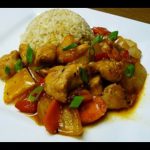
Return the chicken to the pan. Give the sauce a quick stir (the cornstarch settles), then pour it over everything. Stir constantly as the sauce comes to a boil—within 30–60 seconds it will thicken and turn glossy. Once it coats the back of a spoon, it’s done. Serve immediately over rice.
Why the Sauce Works This Way
The ratio in this recipe is 3 tablespoons of vinegar to 2 tablespoons of sugar, with ketchup adding both body and a secondary sweetness. That balance is intentional. A lot of takeaway-style recipes use 4–5 tablespoons of sugar, which pushes the sauce into dessert territory and makes it cloying. The acidity of the vinegar needs to be able to cut through the richness of the chicken—if the sugar dominates, you lose that contrast.
Why rice vinegar specifically? Rice vinegar has a mild, slightly fruity acidity (around 4–4.5% acetic acid) compared to white distilled vinegar (5–8%) or apple cider vinegar (5–6%). White vinegar will give you a sharper, more aggressive sourness that can overwhelm the other flavors. Apple cider vinegar adds a fruity, slightly fermented note that works but shifts the flavor profile noticeably. Rice vinegar is the default here because it integrates cleanly without competing. If you only have white wine vinegar, reduce the quantity by about 20% and it will approximate the same effect.
How does cornstarch thicken without flour? Cornstarch is pure starch, without the protein that flour contains. When it heats in liquid, the starch granules absorb water and swell—this is called gelatinization. The result is a clear, glossy sauce rather than the opaque, floury texture you’d get with a roux. Flour can work in a pinch, but you’d need roughly twice the quantity and the sauce will look cloudy and taste slightly raw unless cooked for longer.
Can I Use Frozen Chicken for This Stir Fry?
You can, but it needs to be fully thawed first. Stir frying works by applying very high heat very quickly—if the chicken still has any ice crystals in the center, two things happen: the surface overcooks before the inside is safe to eat, and the released water drops the pan temperature dramatically, causing everything to steam instead of sear. The result is pale, rubbery chicken sitting in its own liquid. Thaw frozen chicken overnight in the refrigerator or under cold running water for about an hour. Once fully thawed, dry the pieces thoroughly with kitchen paper before marinating—surface moisture is the enemy of a good sear.
Tips for Best Results
- Dry your chicken thoroughly before adding the marinade. Pat it with kitchen paper. Moisture on the surface creates steam in the pan, not browning.
- Cut vegetables to a consistent size. If the onion wedges are much thicker than the pepper chunks, they won’t cook evenly in the same 2–3 minutes.
- Don’t crowd the pan. If you’re scaling up the recipe, cook the chicken in two batches. A crowded pan traps steam and you’ll end up with braised chicken instead of seared chicken.
- Have everything ready before you start cooking. Stir frying moves fast. Once the oil is in the pan, there’s no time to measure anything.
- Taste the sauce before adding it. Adjust acidity or sweetness to your preference—sauces are easier to fix before they hit heat than after.
Substitutions and Swaps
Chicken thighs vs. breast: Thighs are more forgiving because the higher fat content means they stay juicy even if slightly overcooked. Breast meat is leaner and can turn rubbery quickly at high heat—keep your cooking time tight and pull it from the pan as soon as it’s cooked through.
Ketchup alternatives: Tomato paste (1 tablespoon) plus an extra teaspoon of sugar will approximate the ketchup’s role. The sauce will be slightly less glossy but the flavor is similar. Some cooks use plum sauce instead, which adds a more complex fruitiness—use the same quantity.
Cornstarch alternatives: Arrowroot powder works in a 1:1 ratio and produces a similarly clear sauce. Potato starch is another option but can make the sauce slightly slimy if overcooked. Plain flour works at roughly double the quantity (2 tablespoons) but the sauce will be opaque and needs a slightly longer cooking time to lose the raw starch taste.
Vegetables: This recipe uses a simple combination, but pineapple chunks (fresh or canned, drained) are a natural addition—add them at the same time as the sauce. Broccoli florets, snap peas, or baby corn work well too; just adjust cooking time based on firmness.
Make Ahead and Prep
The sauce can be mixed and stored in a sealed jar in the refrigerator for up to 5 days. Give it a good shake or stir before using—the cornstarch will settle to the bottom. The chicken can be marinated for up to 24 hours in the fridge, which actually improves tenderness slightly as the soy salt penetrates further into the meat.
If you want to freeze chicken for this dish, freeze it raw rather than cooked. Raw frozen chicken thighs thaw cleanly and cook well from scratch. Cooked chicken in sauce can be frozen, but the texture of the vegetables degrades significantly and the sauce can separate on reheating, requiring some extra stirring and possibly a splash of water to bring it back together.
Storage and Reheating
Leftovers keep well in an airtight container in the refrigerator for up to 3 days. The sauce will thicken further as it cools—this is normal. Reheat in a pan over medium heat with a splash of water (2–3 tablespoons) to loosen the sauce back to a pourable consistency. Avoid microwaving at full power, which can make the chicken tough; use 70% power in short bursts, stirring in between. The vegetables will soften more on reheating, so if texture matters to you, this dish is genuinely best eaten the day it’s made.






Leave a Reply