
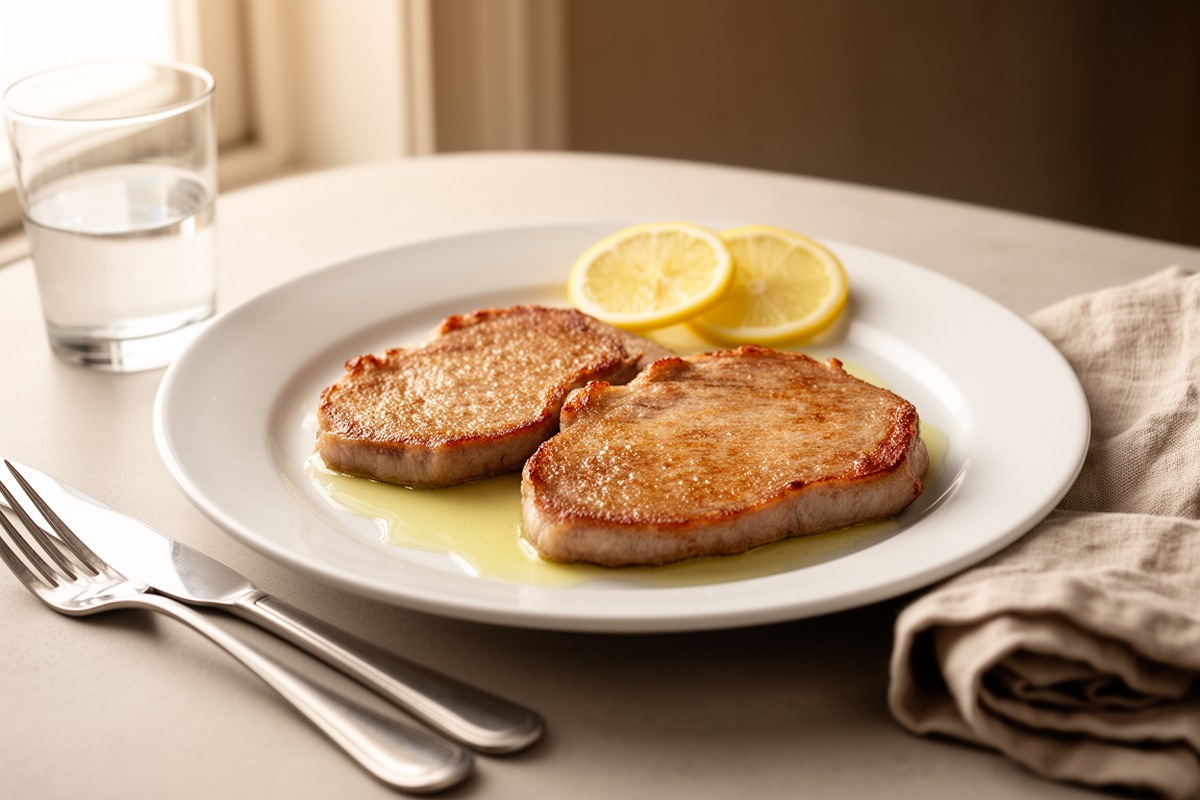
Veal cutlets with lemon sage sauce — known in Italian as scaloppine al limone con salvia — cook in under 15 minutes using one pan and seven ingredients. The method is a classic Italian technique: thin, flour-dusted cutlets seared in butter, finished in a pan sauce built from the drippings, lemon juice, and fresh sage.
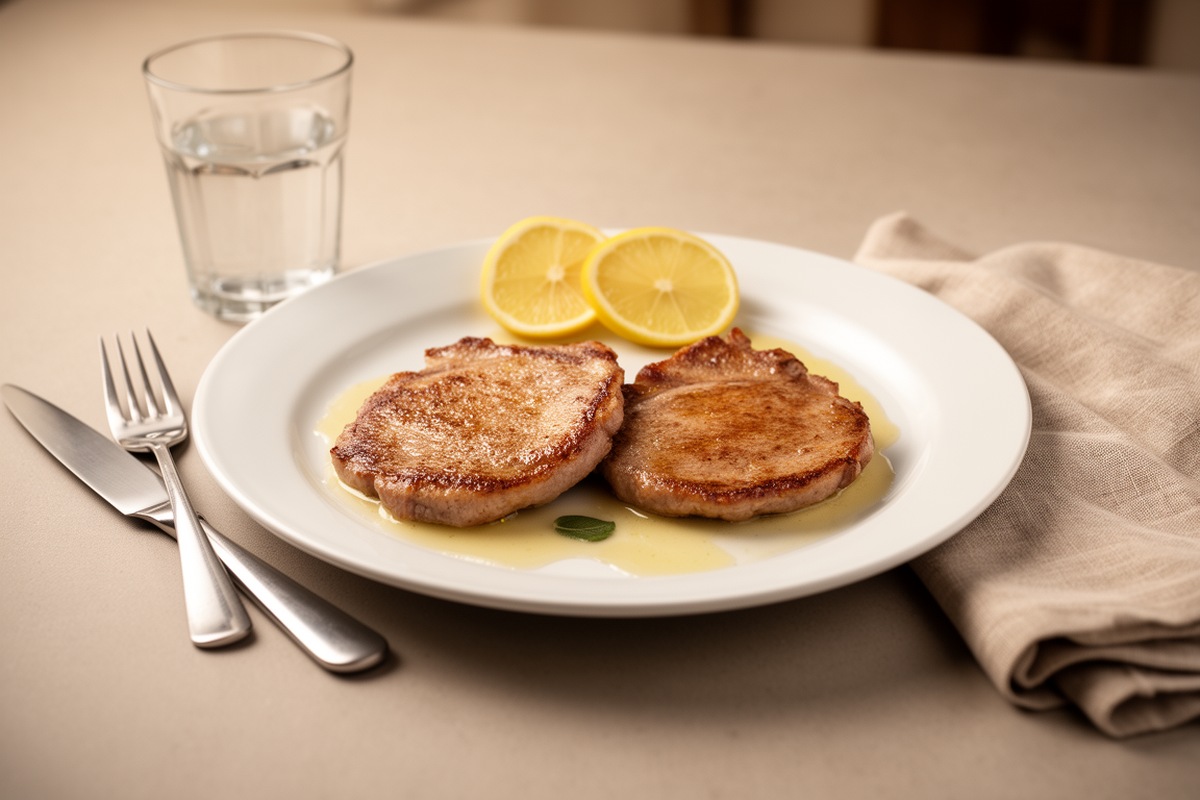
What makes this version work well is the broth-based sauce. A lot of lemon sage recipes call for white wine, which is great — but beef broth gives you a deeper, slightly richer result that pairs better with veal specifically. The sage goes in with the liquid, not the oil, so it infuses the sauce rather than just sitting on top of the meat. And the small amount of flour on the cutlets does double duty: it gives you the golden crust you want, and it thickens the pan sauce so it clings to every bite instead of pooling around it.
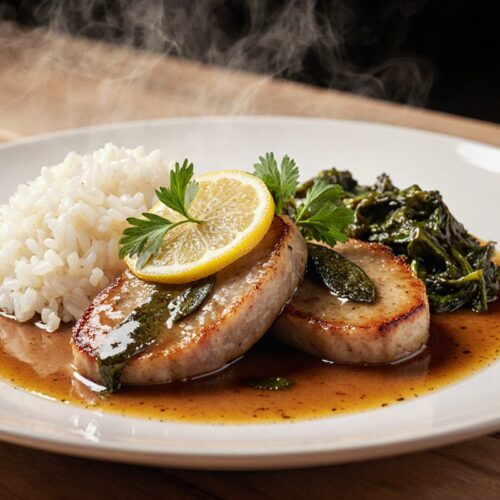
Serve it over rice or egg noodles, with something green alongside — braised spinach is the classic pairing, and for good reason.
What Makes This Dish Work
This is a version of scaloppine al limone — a classic Italian technique where thin, flour-dusted cutlets are quickly seared and finished in a pan sauce built from the drippings. The “al limone” (with lemon) version is one of the simplest, and sage is a natural addition that adds a slightly earthy, aromatic note without overpowering the brightness of the lemon.
Veal works especially well here because the meat is mild and tender — it picks up the flavors of the sauce cleanly. The cutlets cook in under two minutes per side, which means there’s no window for the meat to dry out if you work quickly.
Ingredients
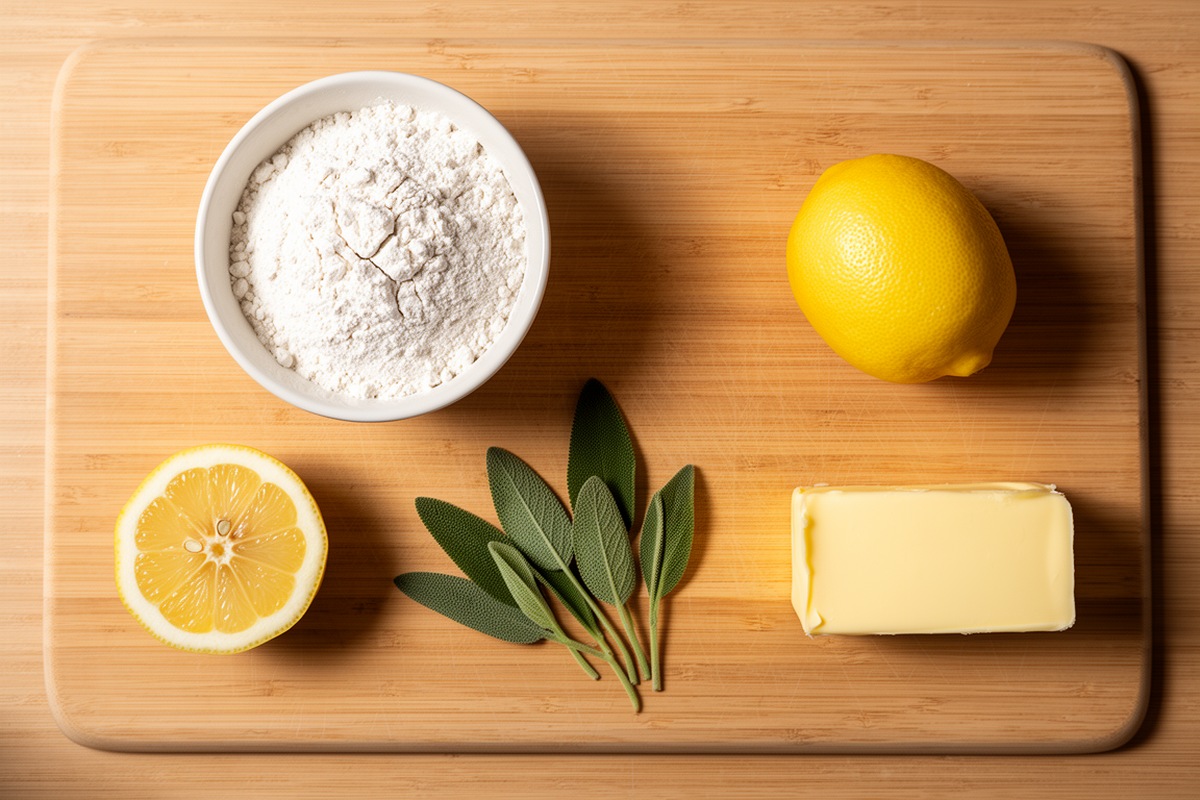
For the Cutlets
- 1 lb (450g) veal cutlets — pounded to ¼ inch thickness. Ask your butcher to do this, or do it yourself between two sheets of plastic wrap with a meat mallet.
- 3 tablespoons flour — all-purpose. This creates the crust and thickens the sauce.
- ¼ teaspoon white or black pepper — white pepper is more traditional; black works fine.
For the Pan Sauce
- 2 tablespoons unsalted margarine — or unsalted butter. Margarine gives a slightly lighter result; butter gives more richness. Either works.
- ½ cup low-sodium beef broth — low-sodium so you control the salt level. The broth gives depth that water or wine alone can’t.
- 1 tablespoon lemon juice — fresh squeezed. Bottled works in a pinch but the flavor is noticeably duller.
- 2 teaspoons chopped fresh sage — or ½ teaspoon dried sage, crumbled. Fresh is better here; dried works but is less fragrant.
To Serve
- ½ lemon, sliced thin — for garnish
- Watercress or fresh parsley — a few sprigs
The Recipe
Veal Cutlets with Lemon Sage Sauce
Ingredients
For the Cutlets
- 1 lb veal cutlets pounded to ¼ inch
- 3 tbsp all-purpose flour
- ¼ tsp white pepper or black pepper
- ¼ tsp salt
For the Pan Sauce
- 2 tbsp unsalted butter or margarine
- ½ cup low-sodium beef broth
- 1 tbsp fresh lemon juice about ½ lemon
- 2 tsp fresh sage leaves finely chopped
Instructions
- Mix flour, salt, and pepper on a flat plate. Press each cutlet into the flour on both sides and shake off any excess. The coating should be thin and even.
- Melt butter in a heavy skillet over moderately high heat. When the foam subsides and butter starts to turn golden, add cutlets in a single layer. Do not move them. Brown 1 minute per side. Transfer to a warm plate.
- Add beef broth, lemon juice, and sage to the hot skillet. Scrape up the browned bits from the bottom — that’s the flavor base. Let the sauce bubble for 1 minute.
- Return the veal to the skillet. Cook 2 minutes total, turning once, until the sauce reduces slightly and coats the meat. Serve immediately on warm plates with the pan sauce spooned over.
Notes
How to Make Veal Cutlets with Lemon Sage Sauce
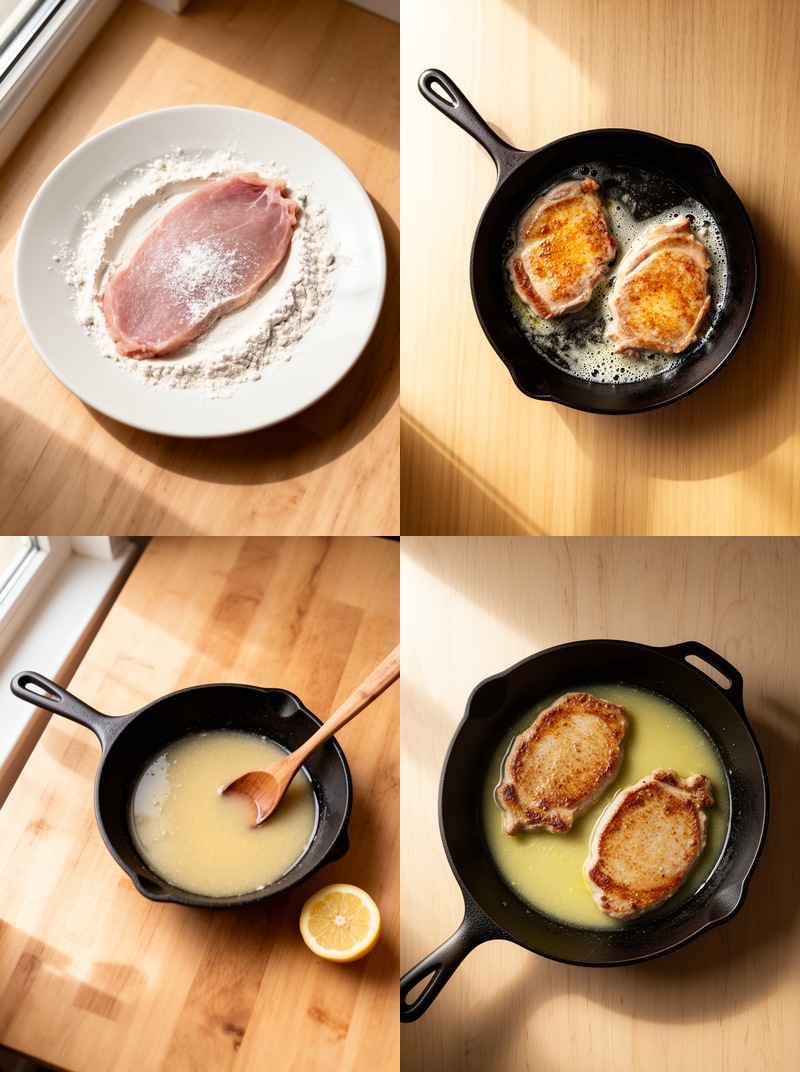
Step 1 — Dredge the cutlets. Mix the flour and pepper on a flat plate. Press each veal cutlet into the flour on both sides, then shake off any excess. You want a light, even coat — too much flour and the crust becomes heavy; too little and the sauce won’t thicken properly.
Step 2 — Sear the veal. Melt the margarine in a heavy skillet (cast iron or stainless works best) over moderately high heat. When the foam subsides, add the cutlets — don’t crowd the pan. Brown about 1 minute per side. They should be golden, not cooked through. Transfer to a warm plate.
Step 3 — Build the sauce. Add the beef broth, lemon juice, and sage to the same skillet. Stir with a wooden spoon, scraping up any browned bits from the bottom — this is where all the flavor is. Let it bubble for about 1 minute.
Step 4 — Finish together. Return the veal to the skillet and cook about 2 minutes, turning once, until the sauce reduces slightly and coats the meat. Transfer everything to a warm platter, garnish with the thin lemon slices and watercress or parsley.
Can I Use Chicken Instead of Veal?
Yes — and it’s a very natural swap. Chicken breast cutlets, pounded thin, work with exactly the same technique and timing. The result is slightly less delicate in flavor (chicken has a stronger taste than veal), but the lemon-sage sauce is just as good.
A reader mentioned trying this with turkey cutlets too, which works well for larger batches. The key in all cases is the thickness — if the cutlets are thicker than ¼ inch, the outsides brown before the center is done. Pound them thin, or slice them in half horizontally before pounding.
Pork scaloppine is another option that stands up well to sage specifically. Cook slightly longer — about 90 seconds per side instead of 1 minute.
Tips for Perfect Results
- Don’t skip pounding. Even if the cutlets look thin enough at the butcher, pound them. Uniform thickness means every part of the cutlet finishes cooking at the same moment.
- Get the pan hot before the meat goes in. The margarine should be foaming and starting to brown — not just melted. A hot pan gives you the golden crust; a cool pan gives you steamed, grey meat.
- Work in batches if needed. Overcrowding drops the pan temperature and causes steaming instead of searing. If your skillet is small, cook in two batches and keep the first batch warm.
- Scrape the pan well. Those browned bits stuck to the bottom are called the fond — they’re concentrated flavor. The broth loosens them instantly; don’t leave them behind.
- Taste the sauce before serving. Lemon juice varies in acidity. Add a few drops more if it tastes flat, or a pinch of sugar if it’s too sharp.
Make Ahead
The veal itself doesn’t make ahead well — thin cutlets toughen quickly when reheated. But you can prep everything else in advance to make weeknight cooking faster:
- Pound the cutlets up to 24 hours ahead. Store between layers of parchment in an airtight container in the fridge.
- Mix the flour and pepper in a small bowl, cover, leave at room temperature.
- Measure out the broth, lemon juice, and sage. Combine them in a small bowl so they’re ready to pour in one shot when the meat comes out of the pan.
With this prep done, the actual cooking takes under 10 minutes.
Frequently Asked Questions
Can I use pork cutlets instead of veal?
Yes, pork cutlets work well as a substitute. They’re similar in thickness and cook time. Pound them to about 1/4 inch, same as veal. Flavor profile differs slightly—pork is milder, so the lemon sage sauce still complements it nicely.
How do I know when veal cutlets are cooked through?
Veal cutlets are done when they reach 160°F internally, or when the meat is opaque throughout with no pink. Since they’re thin and cook fast (2-3 minutes per side), watch carefully. They’ll firm up slightly when pressed.
Can I make the lemon sage sauce ahead of time?
Make the sauce up to 2 hours ahead and store it covered in the fridge. Reheat gently over low heat before serving. Don’t prepare it further in advance—lemon juice flavor fades and sage can become bitter.
What should I serve with veal cutlets?
Light sides work best: arugula salad, roasted asparagus, buttered pasta, or risotto. Keep it simple since the lemon sage sauce is already bright and flavorful. Avoid heavy starches that compete.
Why does my veal cutlet come out tough?
You’re likely cooking too long or at too high heat. Pound cutlets thin and evenly so they cook through in 2-3 minutes per side. Don’t flip repeatedly. Veal is lean, so overcooking dries it out fast. Use medium-high heat, not high.
Storage
Fridge: Store leftovers in an airtight container for up to 2 days. The sauce may separate slightly — that’s normal. A splash of broth when reheating brings it back together.
Reheating: Low heat in a skillet with a small splash of broth or water, covered, for 2–3 minutes. Avoid high heat — the veal will go rubbery fast. The microwave works but the texture suffers.
Freezing: Not recommended. Thin veal cutlets don’t freeze and reheat well — the texture becomes fibrous.
Ingredient Substitutions
No sage?
Thyme is the easiest 1:1 swap — it’s common in the same cuisine, works at the same ratio, and won’t overpower the lemon. Rosemary also works but use half the amount; it’s more intense than sage and can take over the sauce. Marjoram is the closest in flavor profile if you have it — same mint family, slightly sweeter. In a pinch, a pinch of Italian seasoning does the job.
No veal?
Chicken breast cutlets, pounded thin, are the natural substitute — same technique, same timing, slightly stronger flavor. Turkey cutlets work for larger portions. Pork scaloppine holds up especially well with sage — cook about 90 seconds per side instead of 1 minute. The dish changes character slightly with each protein, but the lemon-sage pan sauce works with all of them.
No beef broth?
Chicken broth works fine and gives a lighter result. Dry white wine is the classic Italian version — use the same quantity, let it reduce for an extra 30 seconds before returning the veal. Vegetable broth works if you’re cooking for someone who avoids meat stocks.
Butter vs margarine
The recipe uses margarine for a lighter result, but unsalted butter is a straight swap and gives a richer, slightly nuttier sauce. Olive oil also works if you prefer — the sauce won’t emulsify as smoothly but the flavor is still good.
If you made this recipe, leave a rating below — it helps other readers find it.
More Recipes You’ll Like
- Veal Scaloppine with Marsala Wine — same technique, richer wine sauce
- Veal Marsala — classic Italian pan sauce variation
- Osso Buco (Traditional) — slow-braised veal, worth the extra time



Leave a Reply