
Most homemade pad thai tastes flat because the sauce is wrong — not enough tamarind, too much soy sauce, or palm sugar swapped for white sugar that doesn’t caramelize the same way. Get the sauce balance right, work over high heat, and don’t add too many noodles to the pan at once, and you’ll have pad thai that tastes like it came from a Bangkok street wok.
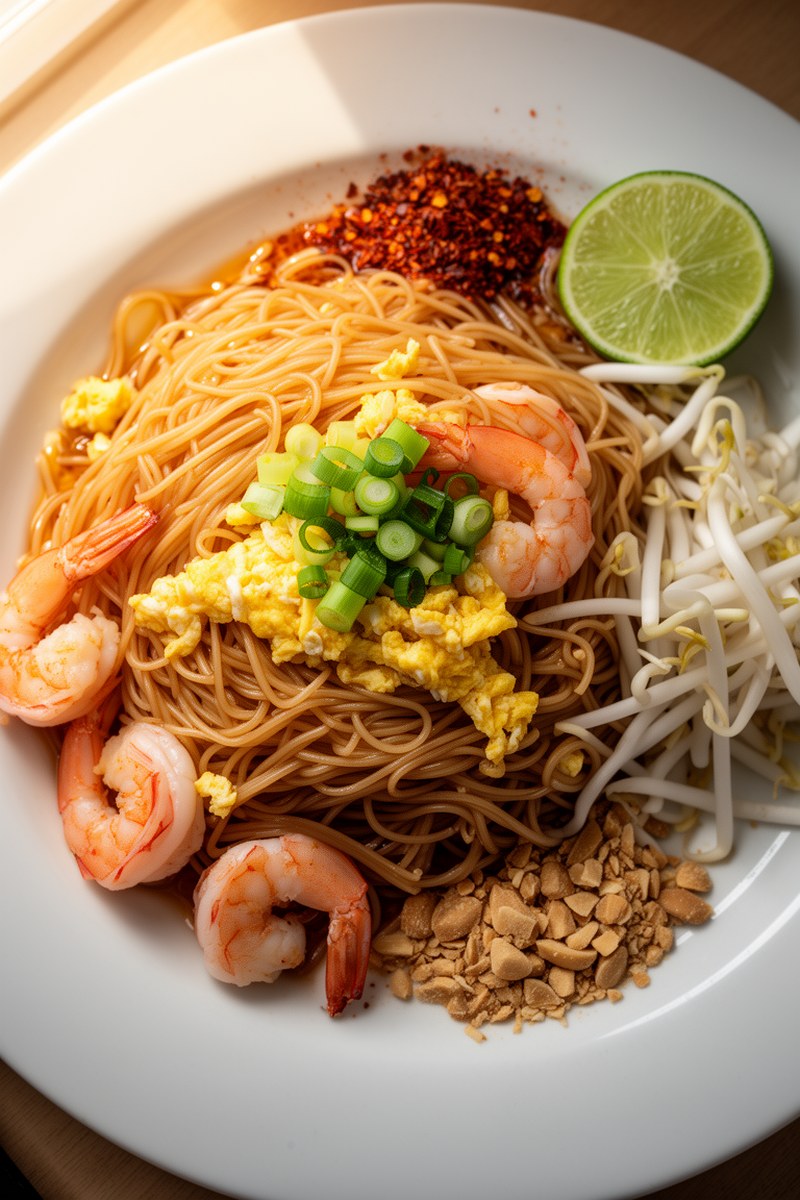
Pad thai is Thailand’s most recognized noodle dish — stir-fried rice noodles with eggs, protein, and a sauce built on tamarind, fish sauce, and palm sugar, finished with bean sprouts, green onions, lime, and crushed peanuts. It became Thailand’s national dish in the 1930s through a government campaign to build a national identity around a unified cuisine, which is why you find it everywhere from street carts to upscale restaurants.
The technique is a wok dish, which means high heat and fast movement. Most home kitchens can’t replicate a restaurant wok burner’s BTU output, but you can compensate: cook in smaller batches, get your pan as hot as possible, and have every ingredient prepped and within arm’s reach before you turn on the heat. The actual stir-fry takes under 10 minutes.
The Origins of Pad Thai
Pad thai’s origin is less ancient than most people assume. The dish was promoted by Prime Minister Plaek Phibunsongkhram in the late 1930s as part of a campaign to modernize Thailand and reduce rice consumption during a time of economic pressure. The government distributed the recipe, subsidized noodle vendors, and pushed pad thai as the “Thai national dish.” It worked — within a generation, pad thai had spread from Bangkok street carts to every corner of the country.
The dish draws on Chinese stir-fry technique (the wok, the high heat, the noodles) combined with distinctly Thai ingredients: tamarind, fish sauce, dried shrimp, and Thai chili. It’s a genuinely hybrid dish, which is part of why it translates so well to home kitchens around the world.
Ingredients for Pad Thai
The noodles are dried rice noodles, specifically the 3mm to 5mm flat variety — sometimes labeled “rice stick noodles.” Soak them in room-temperature water for 30 minutes before cooking; they should be pliable but not fully soft. They finish cooking in the pan. Do not boil them — overcooked noodles turn to mush under wok heat.
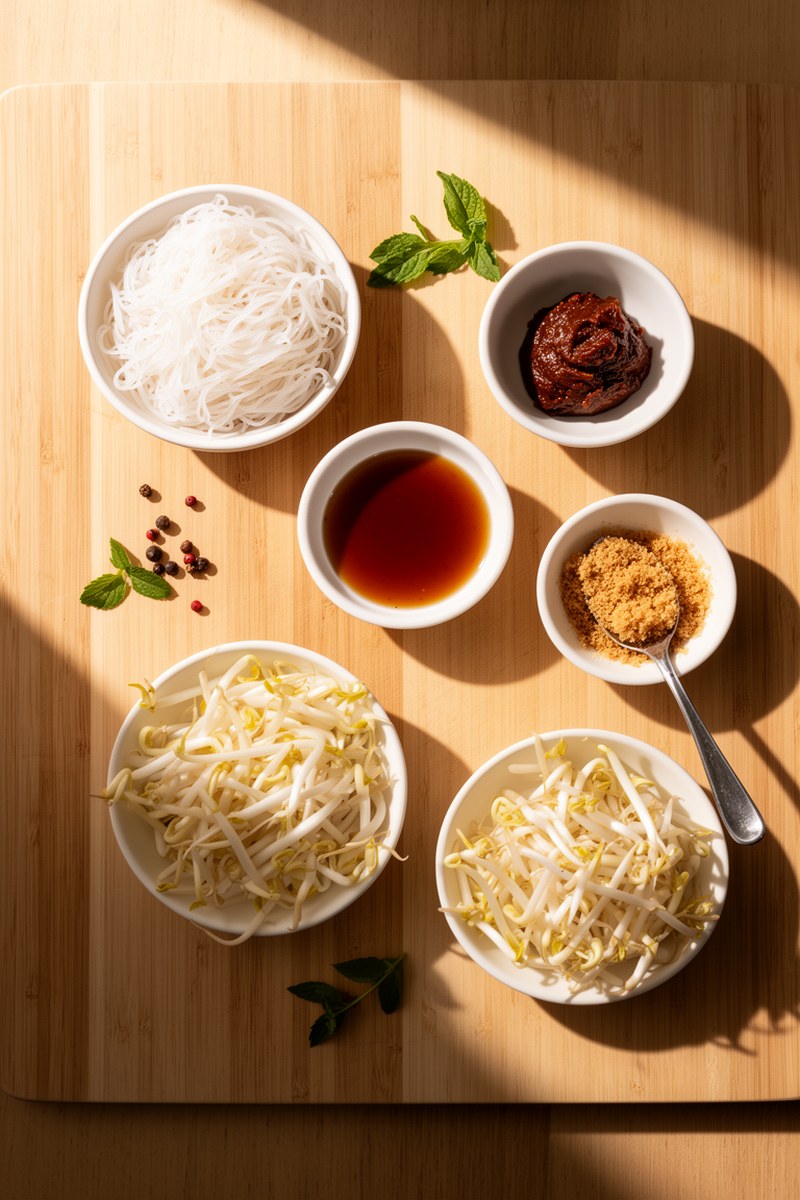
The sauce is where most home versions go wrong. You need real tamarind — either tamarind paste dissolved in warm water, or tamarind concentrate (use half the quantity). Lime juice is not a substitute; it lacks tamarind’s deep, jammy sourness. Fish sauce is the salt component — don’t replace it with soy sauce, which gives the dish an entirely different flavor profile. Palm sugar dissolves and caramelizes differently than white sugar; brown sugar is the closest substitute, though it has a slight molasses note that authentic pad thai doesn’t.
Pad Thai
Ingredients
For the Noodles and Sauce
- 8 oz dried rice noodles (3mm to 5mm flat) rice stick noodles
- 3 tbsp tamarind paste dissolved in 3 tbsp warm water, or use 1.5 tbsp tamarind concentrate
- 2 tbsp fish sauce
- 2 tbsp palm sugar or packed brown sugar
- 1 pinch white pepper
For the Stir-Fry
- 8 oz shrimp or chicken thigh small pieces or peeled large shrimp
- 2 large eggs
- 2 tbsp neutral oil peanut or vegetable
- 1 cup bean sprouts fresh
- 2 green onions sliced into 1-inch pieces
For Serving
- 1 lime wedge
- 3 tbsp crushed roasted peanuts
- 1 pinch dried chili flakes
- 1 tsp extra fish sauce for table adjustment
- 1 tsp sugar for table adjustment
Instructions
- Cover the rice noodles with room-temperature water and soak for 25 to 30 minutes until pliable but still firm — they should bend without snapping but not feel soft. Drain and set aside.
- In a small bowl, whisk together the tamarind paste (dissolved in warm water), fish sauce, palm sugar, and a pinch of white pepper until the sugar dissolves. Taste and adjust: it should be tangy, savory, and slightly sweet in that order. Add more fish sauce for salt, more tamarind for sourness, or more palm sugar for sweetness as needed.
- Heat a wok or large heavy skillet over high heat until a drop of water evaporates on contact — preheat for at least 2 full minutes. Add oil and swirl to coat the surface.
- Add the shrimp or chicken to the hot pan and cook without stirring for 1 minute until the protein starts to color, then toss it around.
- Push the cooked protein to the side of the pan, crack the eggs into the center, break the yolks, and scramble loosely until just set but still wet. Fold the scrambled eggs into the protein.
- Add the drained soaked noodles to the pan, spreading them in an even layer. Pour the sauce over the top and toss immediately using tongs or two spatulas, breaking up any clumps.
- Continue tossing over high heat for 2 to 3 minutes — the noodles will absorb the sauce and become tender. If the pan looks dry before the noodles are tender, add 1 tablespoon of water and continue tossing.
- Add the bean sprouts and green onions, toss once more, and remove from heat immediately. The sprouts should be barely wilted — if they go fully soft, the temperature was too low or you cooked too long.
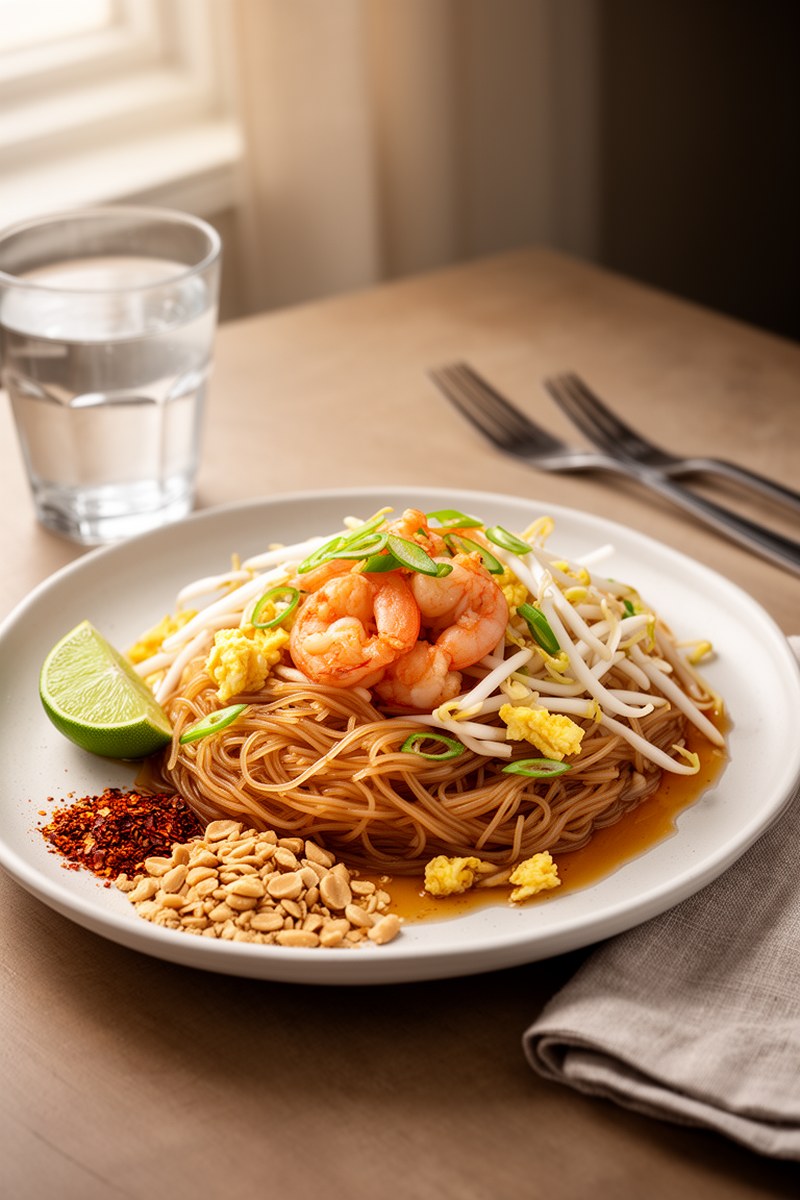
- Plate immediately — pad thai sits poorly and the noodles continue to absorb liquid as they cool. Arrange on the plate with a lime wedge, a small pile of crushed roasted peanuts, dried chili flakes, and extra fish sauce and sugar on the side for guests to adjust their own balance.
Notes
How to Make Pad Thai
Step 1 — Soak the noodles and mix the sauce
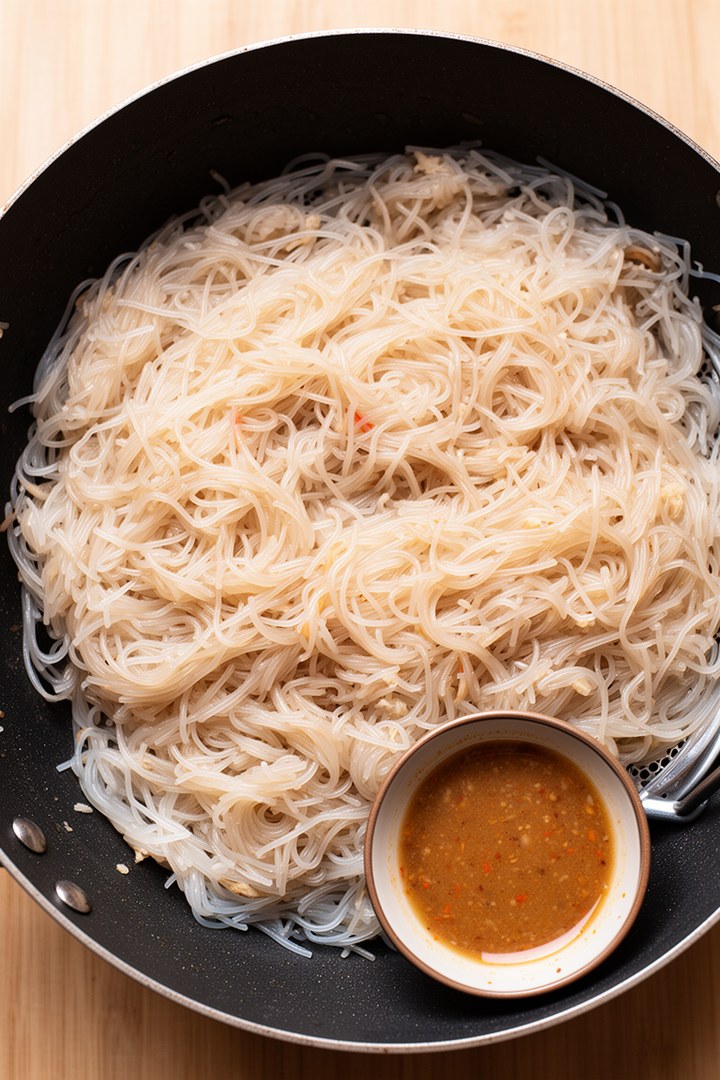
Cover the rice noodles with room-temperature water and soak for 25 to 30 minutes until pliable but still firm — they should bend without snapping but not feel soft. Drain and set aside. In a small bowl, whisk together the tamarind paste, fish sauce, palm sugar, and a pinch of white pepper until the sugar dissolves. Taste: it should be tangy, savory, and slightly sweet in that order. Adjust with more fish sauce for salt, more tamarind for sourness, more palm sugar for sweetness.
Step 2 — Cook the protein and eggs
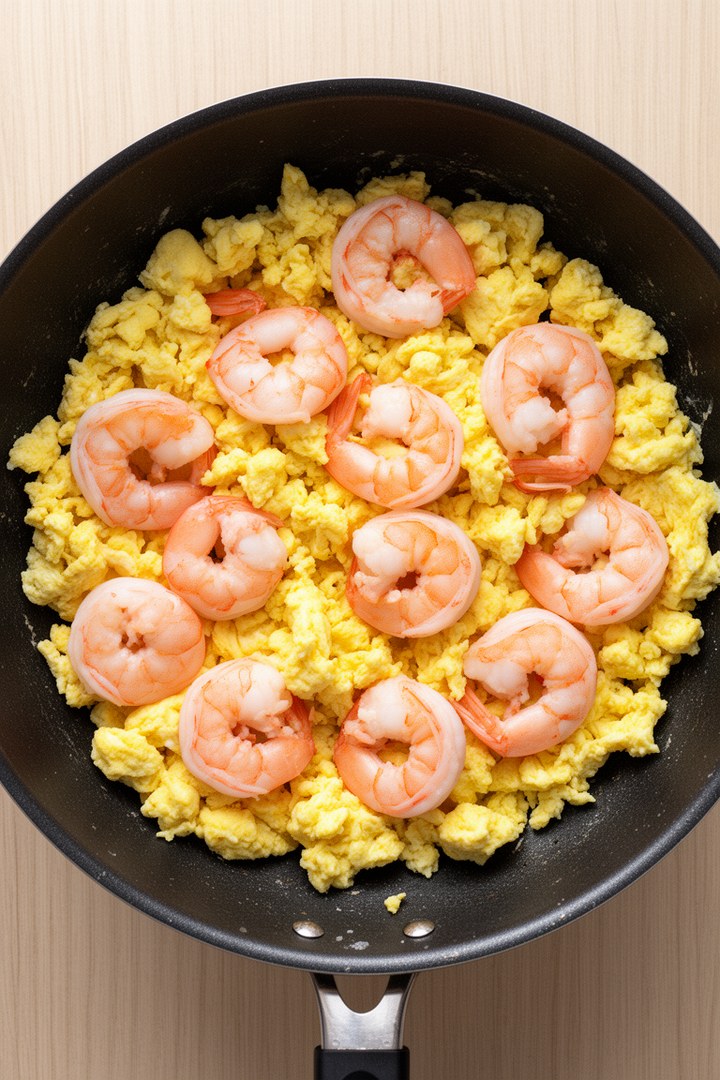
Heat a wok or large heavy skillet over high heat until a drop of water evaporates on contact — 2 full minutes of preheating minimum. Add oil, swirl to coat, and add the shrimp or chicken. Cook without stirring for 1 minute until the protein starts to color, then toss. Push to the side, crack the eggs into the center of the pan, break the yolks, and scramble loosely until just set but still wet. Fold the eggs into the protein.
Step 3 — Add noodles and sauce
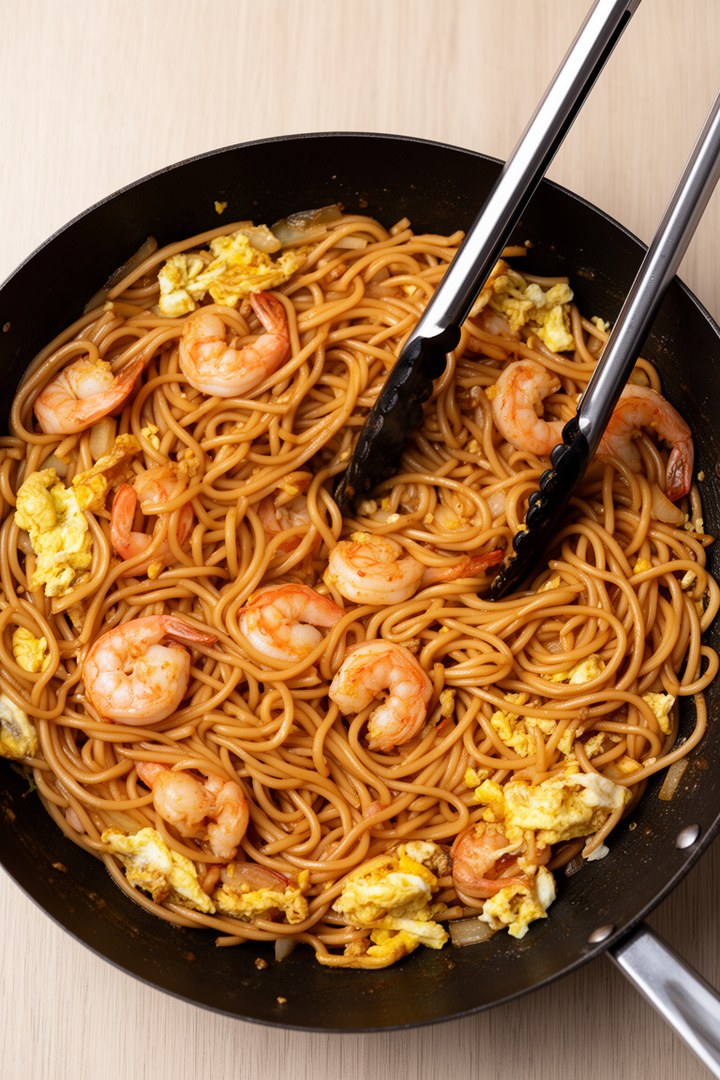
Add the drained noodles to the pan, spreading them in an even layer. Pour the sauce over the top and toss immediately using tongs or two spatulas. The noodles will absorb the sauce within 2 to 3 minutes over high heat. If the pan looks dry before the noodles are tender, add a tablespoon of water and continue tossing. Add the bean sprouts and green onions, toss once more, and remove from heat. The sprouts should be barely wilted — if they go fully soft, the heat was too low or you cooked too long.
Step 4 — Finish and plate
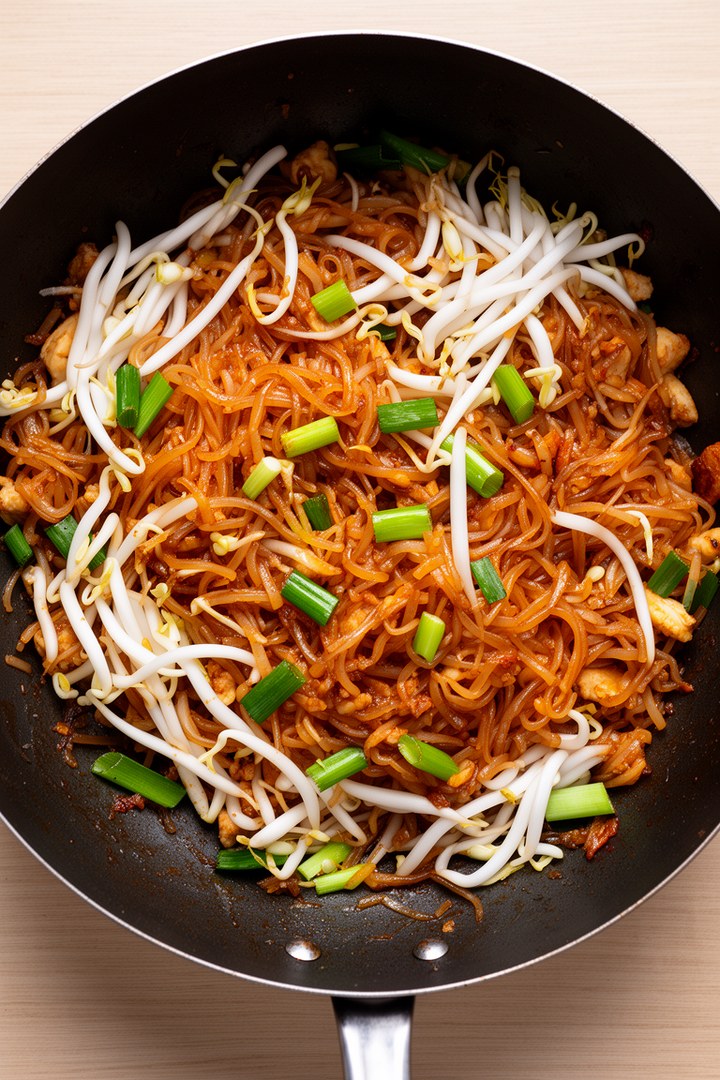
Plate immediately — pad thai sits poorly and the noodles continue to absorb liquid as they cool. Arrange on the plate with a lime wedge, a small pile of crushed roasted peanuts, dried chili flakes, and extra fish sauce and sugar on the side for guests to adjust their own balance. Bean sprouts can also be served raw on the side for extra crunch. Eat within a few minutes of plating.
Why High Heat Matters for Pad Thai
Pad thai relies on “wok hei” — the slightly smoky, charred quality that comes from cooking at extreme heat in a seasoned wok. At home, you won’t fully replicate it, but you can get close. The critical difference is that high heat evaporates sauce moisture quickly, leaving the noodles coated rather than waterlogged. At lower temperatures, the sauce steams the noodles instead of glazing them, and the dish tastes wet and flat. Cook in batches of no more than two servings at a time — a crowded pan drops the temperature and kills the effect.
Best Substitutions for Pad Thai Ingredients
Tamarind paste: use 2 tablespoons tamarind concentrate instead of 3 tablespoons paste, dissolved in 2 tablespoons warm water. Fish sauce: for a vegetarian version, use 2 parts soy sauce to 1 part lime juice — not identical but the closest workable substitute. Palm sugar: use packed brown sugar at the same quantity. Shrimp: chicken thigh cut into small pieces works identically; firm tofu works for a vegetarian version if pressed dry and seared before adding to the pan. Bean sprouts: thinly sliced napa cabbage wilts similarly and provides crunch.
How to Serve Pad Thai
Serve immediately with condiments on the side: extra lime wedges, fish sauce, dried chili flakes, white sugar, and crushed roasted peanuts. This is the traditional pad thai condiment set — diners adjust their own balance at the table. A Thai iced tea or cold Singha beer are the classic drink pairings. Pad thai is a complete meal on its own — no side dishes needed.
Make-Ahead and Storage Tips
Pad thai does not keep well — the noodles absorb all the sauce within an hour and the texture changes significantly. Make the sauce up to a week ahead and refrigerate. Soak the noodles up to 4 hours ahead and keep covered in water. Prep all vegetables and protein ahead. But cook it fresh, right before eating. Leftovers can be reheated in a hot dry wok with a splash of water, but they’ll never taste as good as fresh.
Frequently Asked Questions
Can I make pad thai without fish sauce?
Yes, for a vegetarian version use a mix of 2 parts soy sauce and 1 part lime juice as a substitute. The flavor won’t be identical — fish sauce has a fermented depth that soy sauce doesn’t — but it produces a workable sauce. Also substitute dried shrimp with extra tofu or omit entirely. Many Thai restaurants offer a vegetarian pad thai made this way and it’s a legitimate version.
What’s the difference between tamarind paste and tamarind concentrate?
Tamarind paste is made from tamarind pulp dissolved in water — it’s thick, dark, and sour but has some residual sweetness and a fruity undertone. Tamarind concentrate is more processed and very intensely sour, almost astringent. Use half the quantity of concentrate versus paste. If you’re buying tamarind for the first time, look for paste in Asian grocery stores — it’s more forgiving and closer to what street food vendors use.
Why is my pad thai watery?
Two likely causes: the pan wasn’t hot enough, or you put too many noodles in at once. A crowded, medium-temperature pan steams the noodles in the sauce instead of letting the sauce caramelize onto them. Cook in batches of two servings maximum, get the pan smoking hot before adding anything, and the sauce should glaze the noodles rather than pool at the bottom.
Can I prep pad thai ingredients ahead of time?
Yes — in fact, this is the best approach. Make the sauce up to a week ahead (refrigerate). Soak the noodles up to 4 hours ahead and keep submerged in water. Prep vegetables and protein up to 1 day ahead and refrigerate. When it’s time to cook, everything comes together in under 10 minutes. Just don’t pre-cook and try to reheat — pad thai must be served fresh from the pan.






Leave a Reply