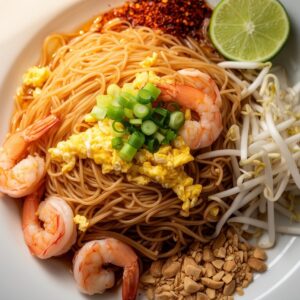
Pad Thai
Stir-fried rice noodles with shrimp or chicken, eggs, tamarind sauce, and bean sprouts. High heat and proper sauce balance are the key to restaurant-quality results.
Ingredients
For the Noodles and Sauce
- 8 oz dried rice noodles (3mm to 5mm flat) rice stick noodles
- 3 tbsp tamarind paste dissolved in 3 tbsp warm water, or use 1.5 tbsp tamarind concentrate
- 2 tbsp fish sauce
- 2 tbsp palm sugar or packed brown sugar
- 1 pinch white pepper
For the Stir-Fry
- 8 oz shrimp or chicken thigh small pieces or peeled large shrimp
- 2 large eggs
- 2 tbsp neutral oil peanut or vegetable
- 1 cup bean sprouts fresh
- 2 green onions sliced into 1-inch pieces
For Serving
- 1 lime wedge
- 3 tbsp crushed roasted peanuts
- 1 pinch dried chili flakes
- 1 tsp extra fish sauce for table adjustment
- 1 tsp sugar for table adjustment
Instructions
- Cover the rice noodles with room-temperature water and soak for 25 to 30 minutes until pliable but still firm — they should bend without snapping but not feel soft. Drain and set aside.
- In a small bowl, whisk together the tamarind paste (dissolved in warm water), fish sauce, palm sugar, and a pinch of white pepper until the sugar dissolves. Taste and adjust: it should be tangy, savory, and slightly sweet in that order. Add more fish sauce for salt, more tamarind for sourness, or more palm sugar for sweetness as needed.
- Heat a wok or large heavy skillet over high heat until a drop of water evaporates on contact — preheat for at least 2 full minutes. Add oil and swirl to coat the surface.
- Add the shrimp or chicken to the hot pan and cook without stirring for 1 minute until the protein starts to color, then toss it around.
- Push the cooked protein to the side of the pan, crack the eggs into the center, break the yolks, and scramble loosely until just set but still wet. Fold the scrambled eggs into the protein.
- Add the drained soaked noodles to the pan, spreading them in an even layer. Pour the sauce over the top and toss immediately using tongs or two spatulas, breaking up any clumps.
- Continue tossing over high heat for 2 to 3 minutes — the noodles will absorb the sauce and become tender. If the pan looks dry before the noodles are tender, add 1 tablespoon of water and continue tossing.
- Add the bean sprouts and green onions, toss once more, and remove from heat immediately. The sprouts should be barely wilted — if they go fully soft, the temperature was too low or you cooked too long.
- Plate immediately — pad thai sits poorly and the noodles continue to absorb liquid as they cool. Arrange on the plate with a lime wedge, a small pile of crushed roasted peanuts, dried chili flakes, and extra fish sauce and sugar on the side for guests to adjust their own balance.
Notes
The sauce balance is critical — it should taste tangy, savory, and slightly sweet in that order. Work over high heat and cook in small batches to avoid overcrowding the pan. Have all ingredients prepped and within arm's reach before you start cooking, as the actual stir-fry takes less than 10 minutes.