Coating & Prep
Before food meets heat it often needs a coat or a prep step — for crust, for protection, or just so it cooks evenly. These are the small moves that quietly decide the result.
Dredge
A light, dry coat of flour, shaken to leave only a thin film. It dries the surface so it browns, and gives a delicate crust — the start of most pan-fried cutlets.
Bread
The standard three-stage coat: flour, then beaten egg, then crumb. Each layer grips the next; skip the flour and the whole jacket slides off in the pan.
Batter
A wet flour-and-liquid coating, sometimes leavened with beer or soda for lightness. It puffs and crisps into a shell around fried food.
Dust
A very light scattering — flour on a work surface, sugar or cocoa over a finished cake. Less than a coat, barely there on purpose.
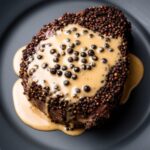
Coat
Any even covering — oil before roasting, sauce to finish, seasoning to season. Even is the whole point; patchy coating cooks patchily.
Season
Salt and aromatics — and the timing matters as much as the amount. Salt early to penetrate, or at the end to taste; rarely is “later” the same as “earlier”.
Pound
Flatten between two sheets of plastic to an even thickness so the whole piece cooks at one rate. Evenness matters more than softness. More: Tenderizing →
Score
Shallow cuts in the surface — to help fat render and skin crisp, to stop fish curling, or to let a marinade reach past the outer layer.
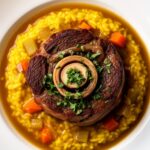
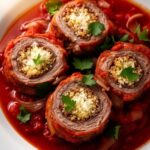
Truss
Tying meat or poultry into a compact, even shape with twine so it holds form and cooks at a single rate instead of drying out at the thin ends.