
Authentic kung pao chicken has velvety chicken pieces, a glossy mahogany sauce, and a balance of numbing-sweet-hot that fades into warmth rather than burning. The technique is in the marinade — cornstarch coats every piece so chicken comes out silky instead of dry, and the sauce mounts together in under a minute once everything is prepped. Done in 25 minutes from cold pan to plate.
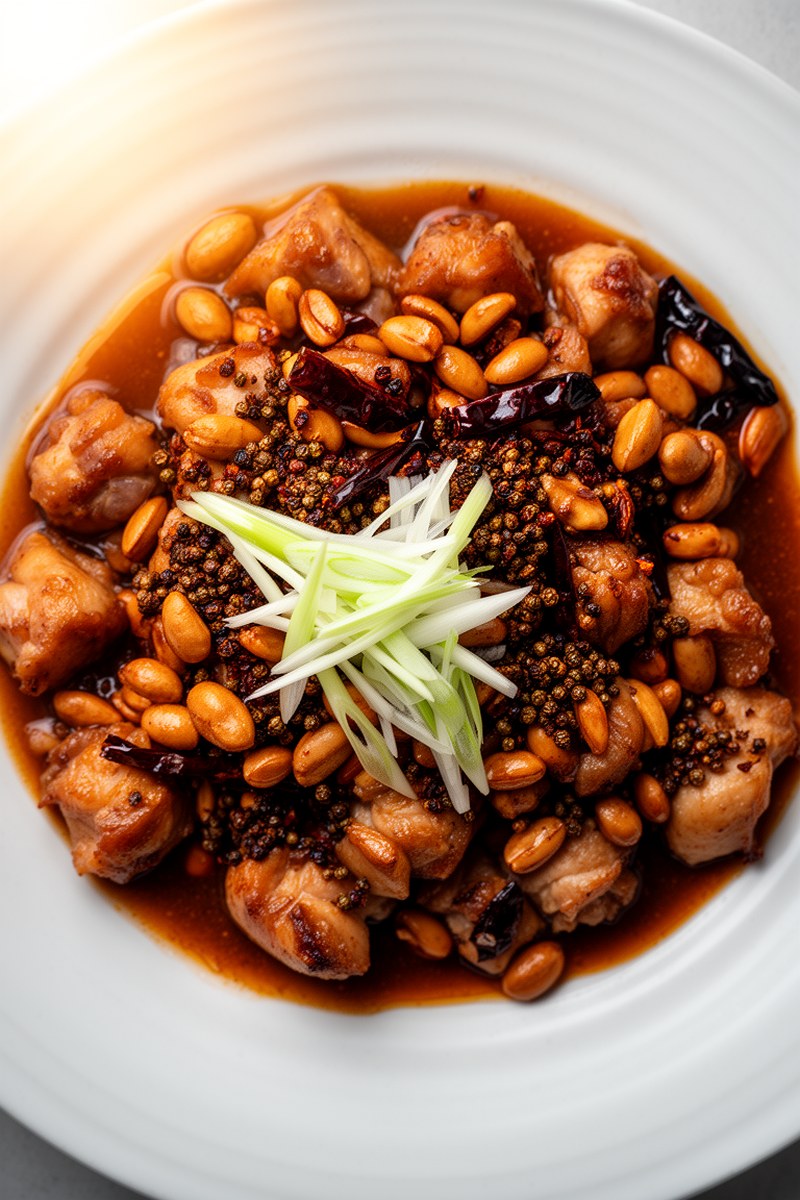
The dish gets its name from Ding Baozhen, the 19th-century Sichuan governor whose courtesy title was Gong Bao — anglicized to “kung pao.” Restaurant versions in the U.S. often skip the Sichuan peppercorns and dial up the sweetness, but the original is built on three controlled flavors: charred dried chili, tingling peppercorn, and the dark fermented umami of Chinese black vinegar. Once you have those three on hand, the rest is technique.
Two things separate restaurant-quality kung pao from the gloppy version that shows up in takeout containers. First, the cornstarch in the marinade isn’t optional — it forms a thin protein-bound layer that locks moisture in during the high-heat sear. Second, the sauce gets premixed in a small bowl and added all at once at the end, so it reduces in 30–45 seconds and coats every piece without breaking. If you want the related techniques in pork or beef form, see our kung pao pork and kung pao beef versions.
Origins of Kung Pao Chicken
The dish was created in Sichuan province in the late 1800s, supposedly when Governor Ding hosted visitors and his cook improvised with chicken, peanuts, and dried chili. The name stuck through political changes — even when the dish was briefly banned during the Cultural Revolution for honoring a Qing-era official, it was renamed and continued being made. What you’ll find in most U.S. takeout is a Hong Kong-style adaptation: more bell pepper, less peppercorn, sweeter sauce. The authentic Sichuan version is lighter on vegetables, heavier on the peppercorn-chili balance, and the chicken is cut smaller — about ½-inch dice rather than chunks.
Ingredients
You need boneless skinless chicken thighs cut into small dice — thigh stays moist where breast would dry out, though breast works if you’re willing to watch it closely since it cooks faster. Cornstarch does double duty here: mixed into the marinade to coat the chicken, then again in the sauce for body and gloss.
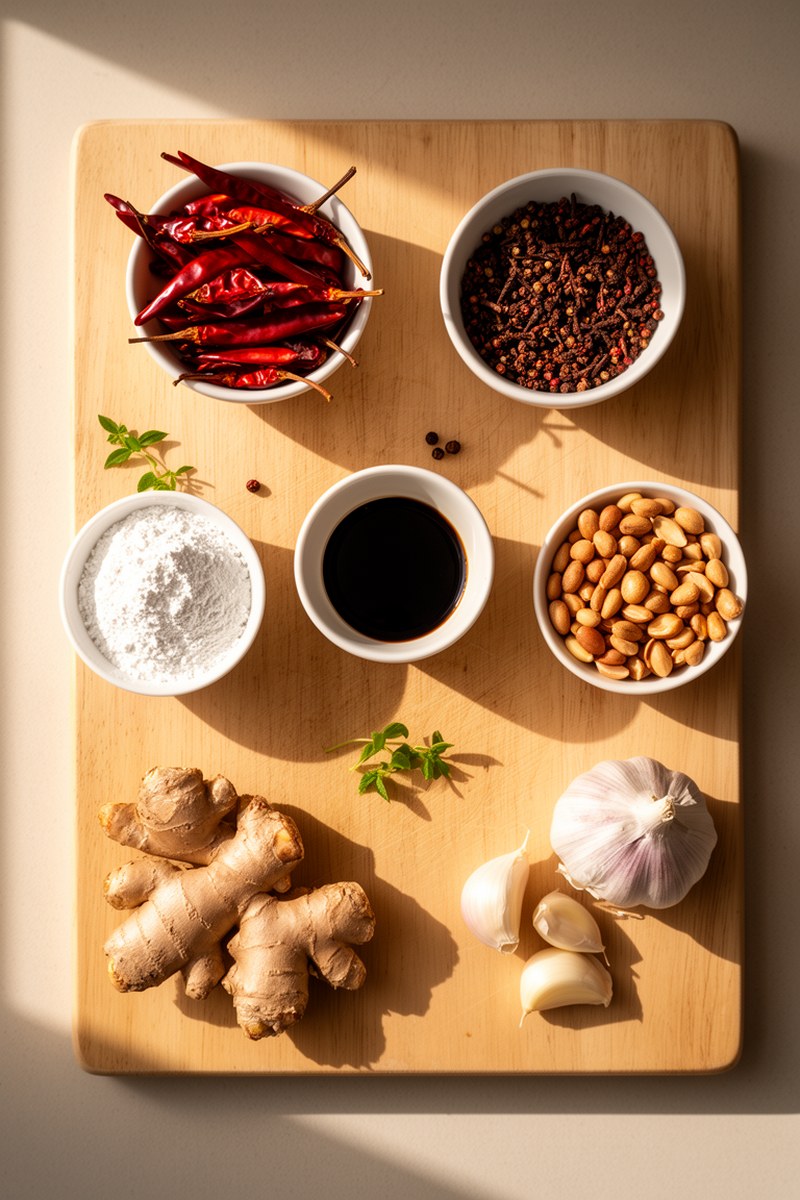
The sauce is where the dish lives. Light soy sauce (not dark), Shaoxing wine (dry sherry works fine as a substitute), Chinese black vinegar for that funky depth — balsamic is the closest pantry alternative if you’re stuck, though use less since it’s sweeter and more aggressive. A touch of sugar balances the vinegar’s punch. Sichuan peppercorns, lightly crushed, bring that distinctive numbing tingle that makes kung pao sing; dried red chilis (chiles de árbol or Tianjin work well) add heat and smoke — break them in half and shake out the seeds if you want to dial back the fire.
The aromatics are straightforward: sliced garlic, julienned ginger, and scallion pieces (white and light green parts). Unsalted roasted peanuts go in at the end for crunch and richness. Use neutral oil — peanut, vegetable, or avocado all work — for the cooking, then finish with toasted sesame oil for aroma and depth.
Kung Pao Chicken
Ingredients
- 1 lb boneless skinless chicken thighs cut into ½-inch dice; thigh stays moist, breast works but cooks faster
- 2 tbsp cornstarch for marinade and sauce thickening
- 2 tbsp soy sauce light, not dark
- 1 tbsp Shaoxing wine dry sherry works as substitute
- 2 tbsp Chinese black vinegar (Chinkiang) balsamic is the closest pantry alternative, use half as much
- 1 tbsp sugar
- 1 tsp Sichuan peppercorns lightly crushed
- 8-12 dried red chilis chiles de árbol or Tianjin, broken in half, seeds shaken out for less heat
- 4 cloves garlic sliced thin
- 1 inch piece fresh ginger julienned
- 4 scallions white and light green parts only, cut into 1-inch pieces
- ½ cup unsalted roasted peanuts
- 3 tbsp neutral oil peanut, vegetable, or avocado
- 1 tsp toasted sesame oil for finishing
Instructions
- Combine diced chicken with 1 tablespoon soy sauce, 1 tablespoon cornstarch, and 1 teaspoon Shaoxing wine in a bowl. Mix with your hands until each piece is coated and there’s no visible cornstarch left. Rest 15 minutes at room temperature while you prep everything else. The cornstarch hydrates and forms a protein-bound layer during this time.
- In a small bowl, whisk together remaining 1 tablespoon soy sauce, 2 tablespoons black vinegar, 1 tablespoon sugar, 2 teaspoons Shaoxing wine, 1 tablespoon cornstarch, and 2 tablespoons water. Set next to the stove. This is the only sauce action that happens during cooking — measure now, not later.
- Have everything else within arm’s reach of the stove: dried chilis, crushed peppercorns, sliced garlic, julienned ginger, scallion whites, and peanuts. From the moment the oil hits the pan, you have 6 minutes of constant motion. Anything not prepped now will get burned.
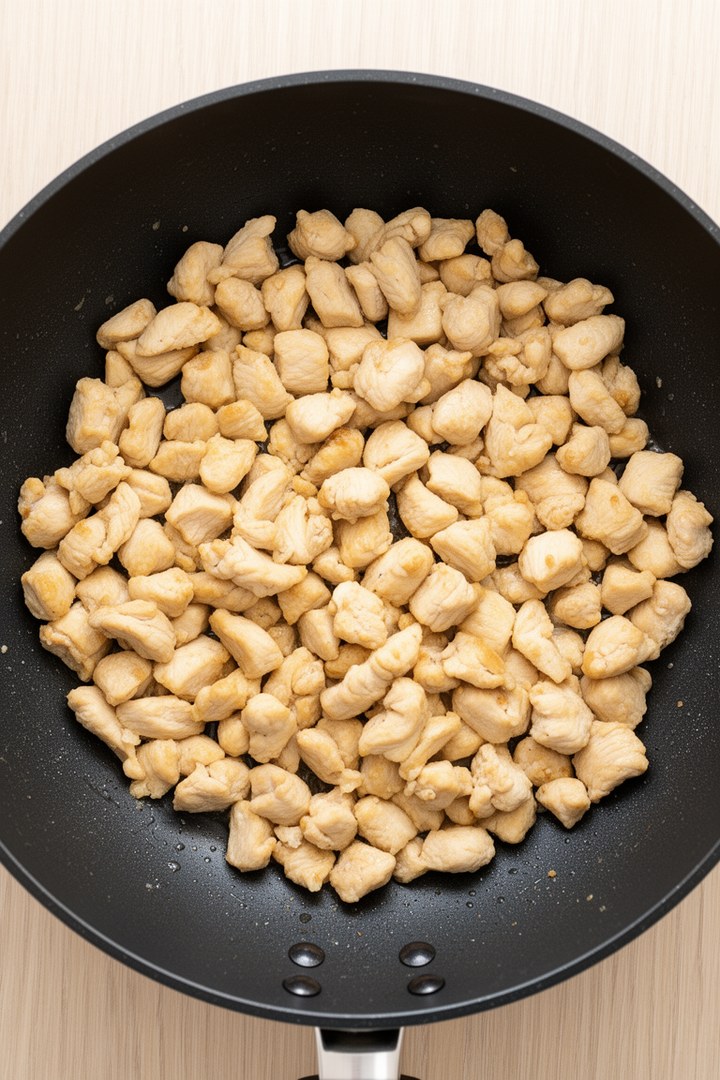
- Heat 2 tablespoons oil in a wok or large skillet over high heat until shimmering. Spread the marinated chicken in a single layer and let it sit untouched for 1 minute to develop a sear. Stir-fry another 2 minutes until pieces are no longer pink. Transfer to a clean plate — it’ll finish cooking later. Don’t crowd the pan; if your skillet is smaller than 12 inches, sear in two batches.
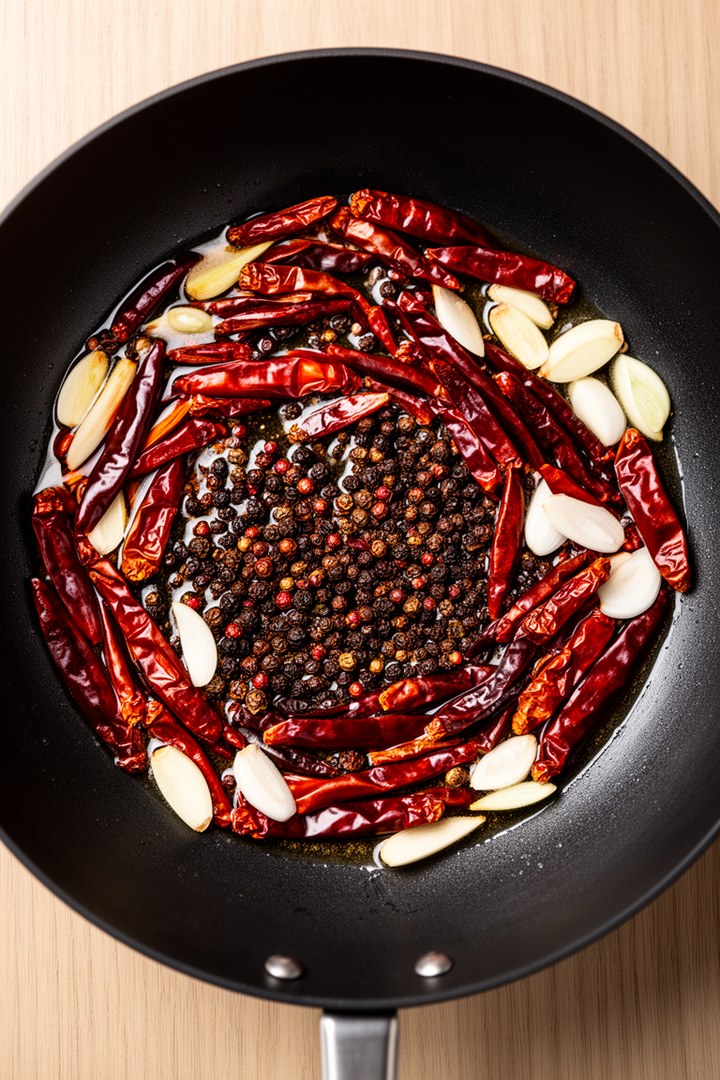
- Add the remaining 1 tablespoon oil to the empty pan, still over high heat. Add dried chilis and crushed Sichuan peppercorns. Stir 15 seconds — they’ll darken and release a sharp peppery aroma. Add garlic, ginger, and scallion whites. Stir another 20 seconds until fragrant. Don’t let the chilis burn black; pull the pan off heat briefly if needed.
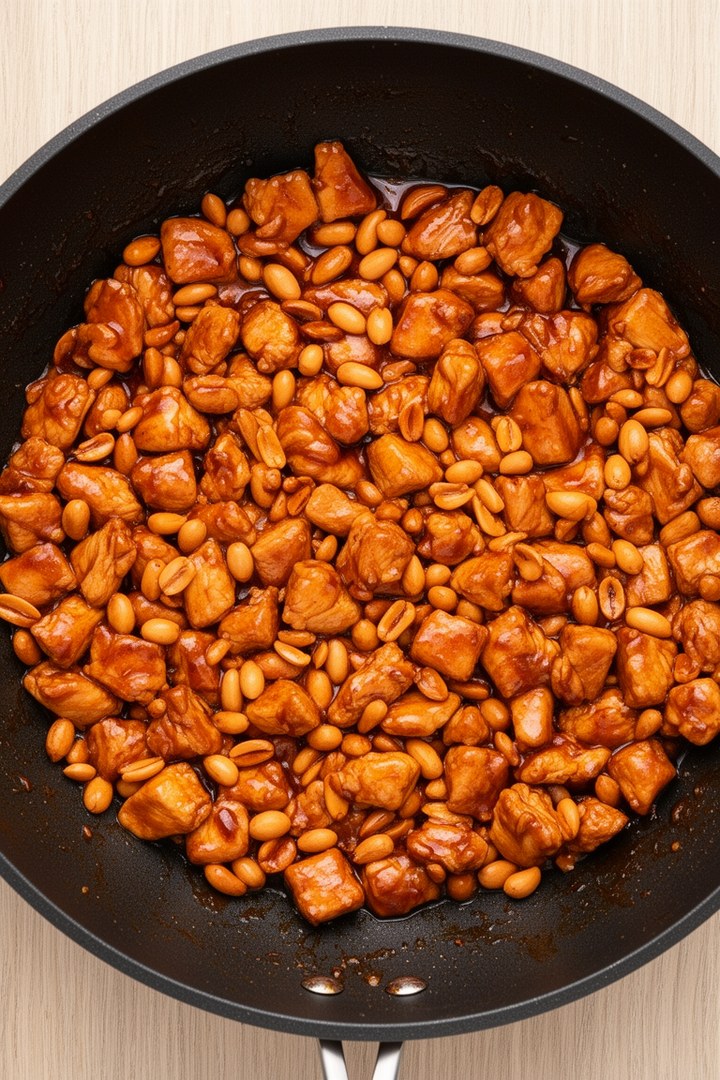
- Return chicken to the pan. Stir the sauce one more time (cornstarch settles fast) and pour it in. Toss constantly for 30–45 seconds — the sauce will thicken and turn glossy, coating every piece. Add roasted peanuts and toasted sesame oil. One final toss to distribute. Off the heat.
Notes
How to Make Kung Pao Chicken
Step 1 — Marinate the chicken
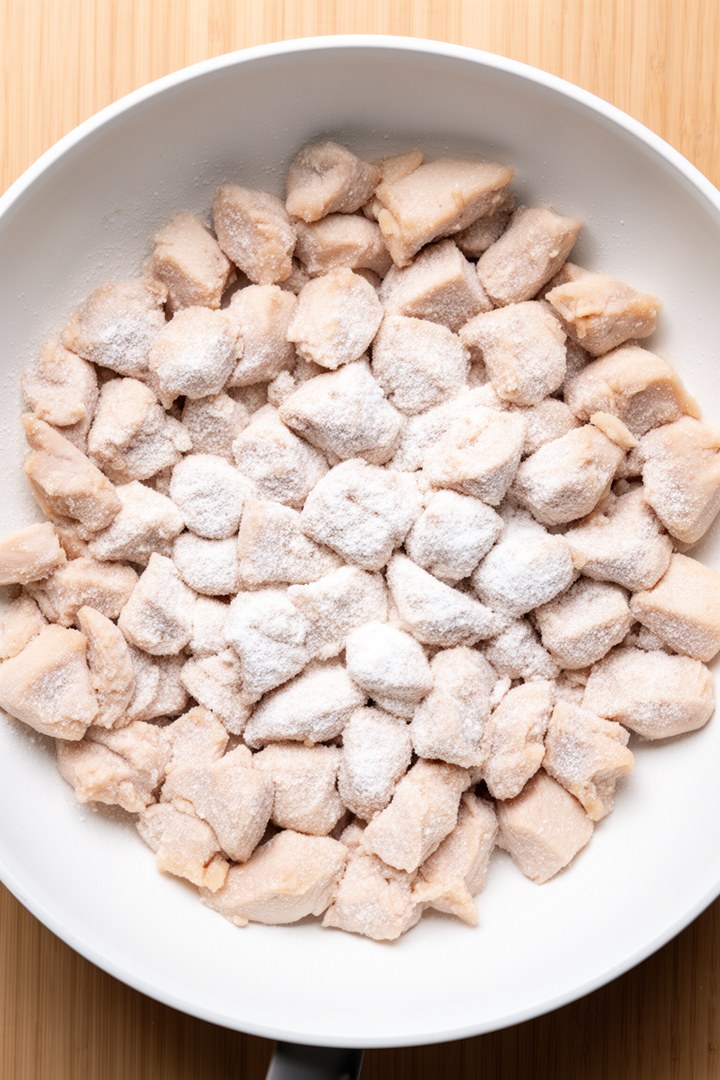
Combine diced chicken with 1 tablespoon soy sauce, 1 tablespoon cornstarch, and 1 teaspoon Shaoxing wine in a bowl. Mix with your hands until each piece is coated and there’s no visible cornstarch left. Rest 15 minutes at room temperature while you prep everything else. The cornstarch hydrates and forms a protein-bound layer during this time.
Step 2 — Mix the sauce
In a small bowl, whisk together remaining 1 tablespoon soy sauce, 2 tablespoons black vinegar, 1 tablespoon sugar, 2 teaspoons Shaoxing wine, 1 tablespoon cornstarch, and 2 tablespoons water. Set next to the stove. This is the only sauce action that happens during cooking — measure now, not later.
Step 3 — Prep aromatics
Have everything else within arm’s reach of the stove: dried chilis, crushed peppercorns, sliced garlic, julienned ginger, scallion whites, and peanuts. From the moment the oil hits the pan, you have 6 minutes of constant motion. Anything not prepped now will get burned.
Step 4 — Sear the chicken
Heat 2 tablespoons oil in a wok or large skillet over high heat until shimmering. Spread the marinated chicken in a single layer and let it sit untouched for 1 minute to develop a sear. Stir-fry another 2 minutes until pieces are no longer pink. Transfer to a clean plate — it’ll finish cooking later. Don’t crowd the pan; if your skillet is smaller than 12 inches, sear in two batches.
Step 5 — Bloom aromatics
Add the remaining 1 tablespoon oil to the empty pan, still over high heat. Add dried chilis and crushed Sichuan peppercorns. Stir 15 seconds — they’ll darken and release a sharp peppery aroma. Add garlic, ginger, and scallion whites. Stir another 20 seconds until fragrant. Don’t let the chilis burn black; pull the pan off heat briefly if needed.
Step 6 — Finish and toss
Return chicken to the pan. Stir the sauce one more time (cornstarch settles fast) and pour it in. Toss constantly for 30–45 seconds — the sauce will thicken and turn glossy, coating every piece. Add roasted peanuts and toasted sesame oil. One final toss to distribute. Off the heat.
Can I Substitute Vegetables in Kung Pao Chicken?
The authentic Sichuan version doesn’t include bulky vegetables — just aromatics. If you want to bulk it out, red or green bell pepper diced to ½-inch works well; add it with the aromatics in Step 5 so it stays crisp. Diced zucchini, celery, or water chestnuts also work, all added at the aromatics stage so they don’t release water into the sauce. Avoid soft vegetables like mushrooms or eggplant — they wilt and dilute the glaze. For a vegetarian version with all the same technique, see our kung pao tofu.
Cook’s Notes and Tips
The heat scale runs 1–10 depending on how many dried chilis you use and whether you keep the seeds. Eight chilis with seeds removed gives you about a 4 — warm but not aggressive. Twelve chilis with seeds in pushes to 7 or 8. The Sichuan peppercorn isn’t capsaicin heat — it’s a numbing tingle that lasts about 30 seconds on your lips and tongue. Don’t omit it; it’s what separates Sichuan kung pao from generic stir-fry.
If your sauce won’t thicken, your pan isn’t hot enough. The cornstarch needs to hit boiling-hot liquid to gelatinize. If it stays watery after 60 seconds, the wok cooled down when you added everything back — turn the heat up and keep tossing.
Pro Tips
- Cornstarch is the texture key: 1 tablespoon mixed into the marinade coats every piece of chicken in a thin film. When it hits hot oil, that film sets immediately and traps moisture inside. Skip this step and chicken comes out dry no matter how briefly you cook it.
- Premix the sauce: combine vinegar, soy sauce, sugar, Shaoxing wine, and remaining cornstarch in a small bowl before you start cooking. The whole stir-fry takes 6 minutes total — there’s no time to measure once the wok is hot.
- Crush peppercorns by hand: a mortar and pestle or the flat side of a knife blade. Pre-ground Sichuan peppercorn loses its tingle within weeks of grinding.
How to Serve Kung Pao Chicken
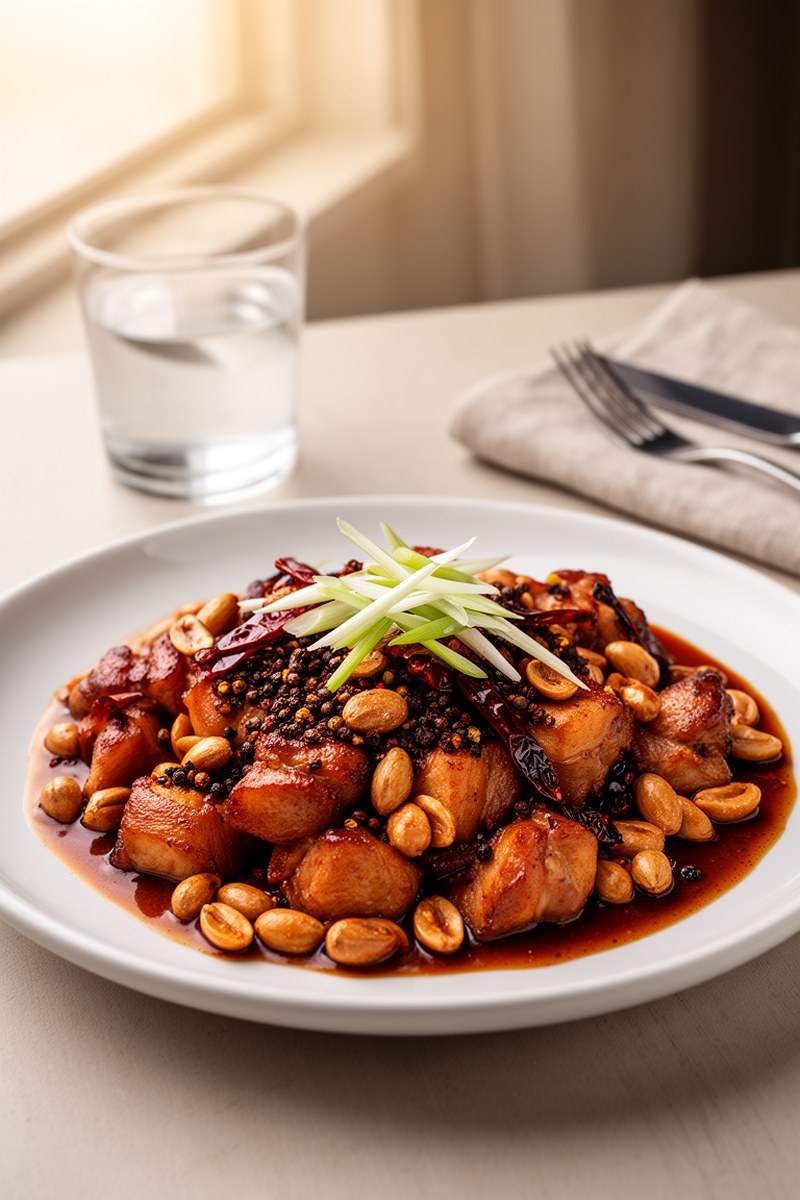
Steamed jasmine rice is the classic. Plain white rice absorbs the sauce and lets the chicken-peppercorn balance carry the dish. Brown rice works but the nutty flavor competes; if using brown, skip the toasted sesame oil at the end. Garnish with the scallion greens you held back, sliced thin on the diagonal. For a full Sichuan meal, pair with a cold smashed cucumber salad and steamed bok choy.
Make-Ahead and Meal Prep
The chicken can be marinated up to 4 hours ahead, covered in the fridge. The sauce can be premixed up to 24 hours ahead. The full dish doesn’t reheat well — the cornstarch coating goes from silky to gummy after refrigeration. If you’re meal-prepping, finish each portion fresh from refrigerated marinated chicken plus premixed sauce; cook time stays at 6 minutes.
Storage and Reheating
Cooked kung pao keeps 3 days refrigerated in an airtight container. Reheat in a hot skillet for 90 seconds rather than the microwave — the microwave makes the sauce gluey and the peanuts soggy. Add 1 tablespoon water if the sauce looks thick. Don’t freeze; cornstarch sauce breaks into a watery layer on thawing.
Frequently Asked Questions
What’s the best substitute for Shaoxing wine in kung pao?
Dry sherry is the closest substitute, used in the same quantity. Dry white wine works in a pinch but the flavor profile is brighter and less rounded. Sake will substitute, but use slightly less since it’s lower in residual sugar. Avoid mirin — too sweet. Non-alcoholic option: chicken broth with a teaspoon of rice vinegar.
Why is my kung pao chicken not silky?
Three common reasons: not enough cornstarch in the marinade (use a full tablespoon per pound), insufficient marinating time (15 minutes minimum so cornstarch hydrates and binds), or pan not hot enough when chicken goes in (the coating needs to set immediately). The cornstarch creates a protein-bound moisture barrier — without it, chicken dries out no matter how briefly you cook it.
How long does kung pao chicken keep in the fridge?
Three days refrigerated in an airtight container. The chicken stays safe up to 4 days, but the texture degrades — the cornstarch coating turns gummy after about 72 hours. Reheat in a hot dry skillet for 90 seconds, not the microwave, to refresh the sauce. Add a tablespoon of water if the sauce has thickened too much.
Can I substitute different veggies in kung pao chicken?
Yes, but stick to firm vegetables that won’t release water into the glaze. Bell pepper, celery, water chestnuts, and zucchini all work, added at the aromatics stage so they stay crisp. Avoid mushrooms, eggplant, or leafy greens — they wilt and dilute the sauce. The authentic Sichuan version uses minimal vegetables; bulky additions are an American adaptation.
More Chicken Recipes
- Kung Pao Tofu — same sauce technique, vegetarian version with extra-firm tofu
- Kung Pao Pork — pork tenderloin with the same Sichuan peppercorn-chili balance
- Kung Pao Beef — flank steak version, slightly more soy and a touch more peppercorn
- General Tso’s Chicken — the deep-fried sweet-spicy cousin from American Chinese cuisine





Leave a Reply