
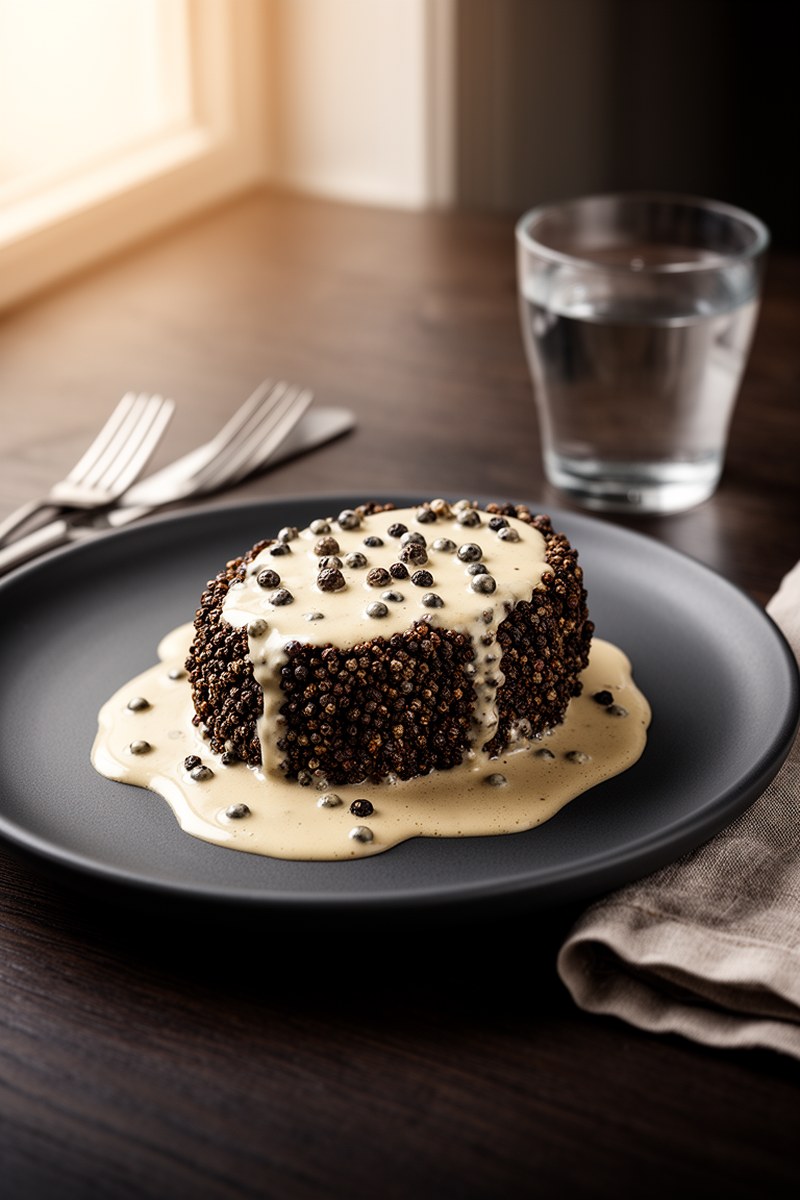
Most home cooks press peppercorns onto the steak too lightly, then watch them fall off in the pan — leaving a plain seared steak in a pan sauce that had no business being called au poivre. The peppercorns need to be cracked coarse and pressed hard enough to embed into the raw meat before the heat locks them in place.
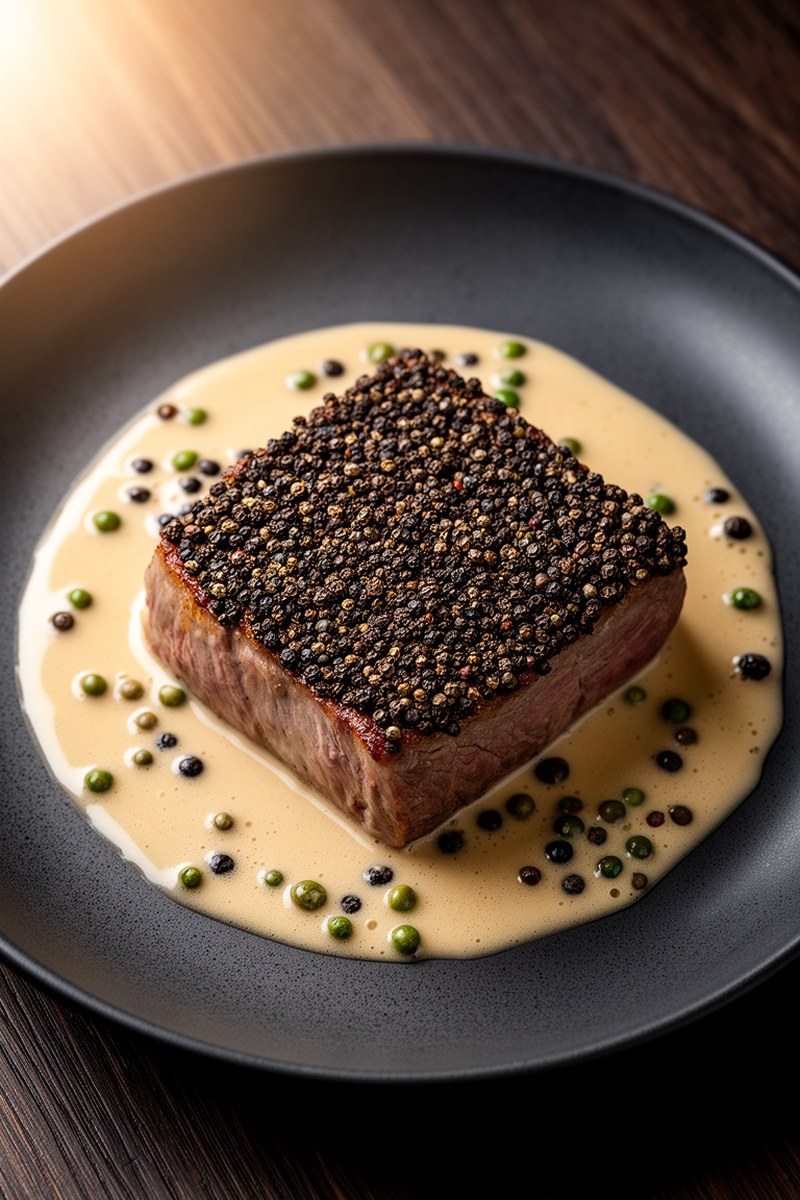
Steak au poivre is a French bistro staple that translates to “pepper steak” — but the technique is what matters here. A thick ribeye or strip steak gets crusted in cracked black peppercorns, seared in a ripping-hot pan, then finished with a quick pan sauce of cognac, cream, and beef stock that comes together in under five minutes while the steak rests. The whole dish takes thirty minutes, most of which is prep and resting time.
This is Tier 1 bistro cooking — not complicated, but each step has a reason behind it. The peppercorn variety, how you crack them, how hot the pan gets, and when you add the cognac all affect the result. This recipe explains why each step matters so you can make it correctly the first time.
Origins of Steak au Poivre
Steak au poivre has its roots in 19th-century French bourgeois cooking, though it became iconic through Parisian brasseries in the early 20th century. The dish was practical as much as elegant: black pepper was expensive, and using a generous crust of it signaled a restaurant’s quality and ambition. By the 1950s and 1960s, steak au poivre had become a fixture on French restaurant menus worldwide, often prepared tableside with a flambéed cognac pour that made the dish theatrical as well as delicious.
The American version sometimes adds Worcestershire or Dijon mustard to the pan sauce. The French version keeps it clean: cognac or Armagnac, good beef stock, and heavy cream. That’s the version here.
Ingredients You’ll Need
The steak matters. Ribeye gives you more fat and flavor; strip (New York strip) is leaner and holds the pepper crust slightly better because of its firmer texture. Either works — go with at least 1¼ inches (3cm) thick so the interior stays medium-rare while the exterior chars properly. Thin steaks overcook before you get the crust you want.
For the peppercorns, buy whole black peppercorns and crack them yourself — pre-ground pepper doesn’t have the texture or volatile oils this dish needs. Crack them coarse in a mortar or under a heavy pan: you want irregular fragments, not dust. The cognac for the pan sauce doesn’t need to be expensive, but it does need to be real cognac or Armagnac; brandy works if that’s what you have.
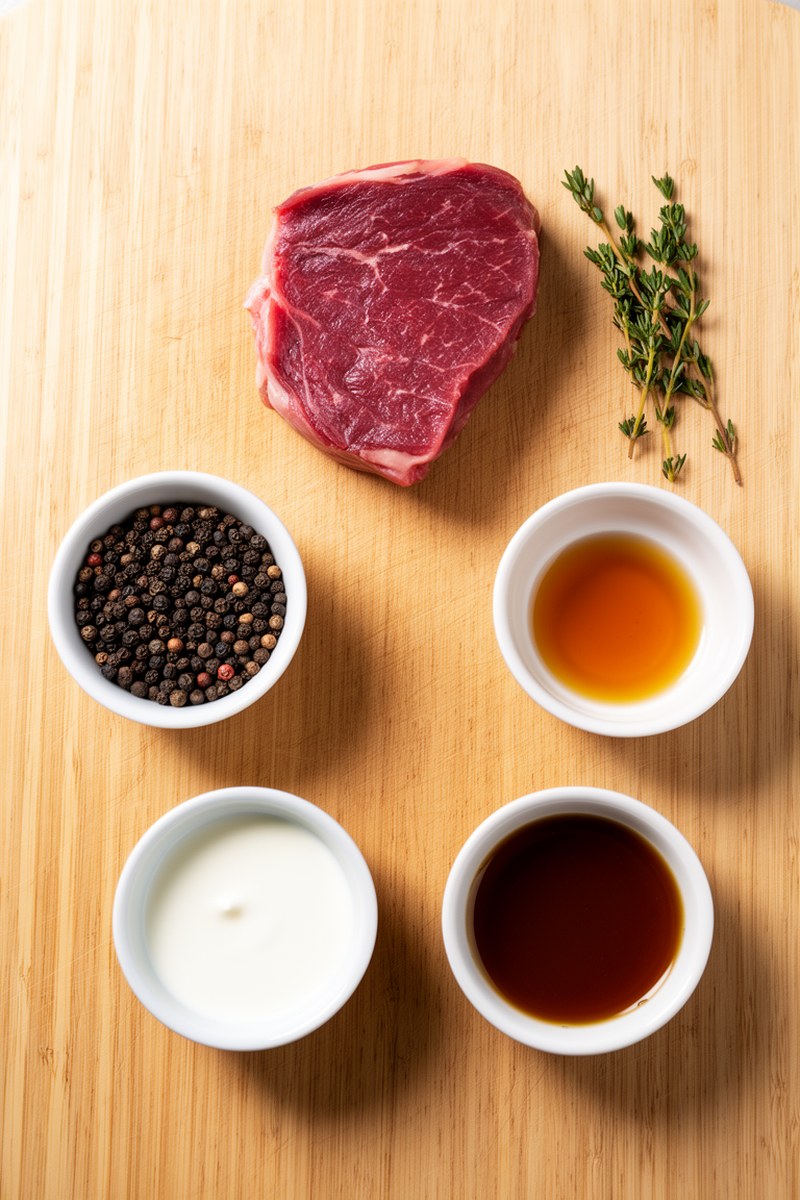
Steak au Poivre (Pepper Steak)
Ingredients
For the Steak
- 2 ribeye or strip steaks 1.25 inches (3cm) thick, 10-12 oz each
- 3 tbsp whole black peppercorns freshly cracked coarse
- 1 tsp kosher salt plus more to taste
- 2 tbsp neutral oil grapeseed, avocado, or refined sunflower
For the Pan Sauce
- 3 oz cognac or Armagnac
- 0.5 cup beef stock good quality
- 0.25 cup heavy cream
Instructions
- Place whole black peppercorns on a cutting board and crush coarsely using the bottom of a heavy skillet, pressing and rolling until you have irregular chunks — nothing finer than coarse sea salt.
- Pat the steaks completely dry with paper towels. Season both sides with kosher salt.
- Spread the cracked pepper on a plate. Press each steak firmly into the pepper on one side, pressing down hard with your palm and holding for five seconds. Flip and repeat on the other side — the pepper needs to be embedded into the raw meat, not just sprinkled on.
- Heat a cast iron or heavy stainless steel skillet over high heat for two full minutes until the pan is visibly smoking.
- Add a thin layer of neutral oil with a high smoke point (not butter — it burns at this temperature). Lay the steaks in the pan and do not move them.
- Sear for 3 to 4 minutes per side for medium-rare on a 1.25-inch thick steak, adjusting timing for thickness. Use an instant-read thermometer to check: 130°F is medium-rare.
- Transfer the steaks to a warm plate and rest, loosely tented with foil, for at least 5 minutes while you make the sauce. This allows the meat to reabsorb juices and ensures a juicy interior.
- Remove the pan from heat. Pour in the cognac — it will steam aggressively. Be cautious of fumes.
- Return the pan to medium heat and let the cognac reduce by half, about 1 minute, scraping up the browned bits (fond) from the bottom of the pan with a wooden spoon.
- Add the beef stock and reduce again until slightly syrupy, another 2 minutes.
- Pour in the heavy cream and stir until the sauce coats the back of a spoon. Taste for salt and adjust if needed.
- Spoon the warm sauce over the rested steaks immediately. The sauce tightens as it cools, so serve right away.
Notes
How to Make Steak au Poivre
Step 1 — Crack the peppercorns and crust the steak
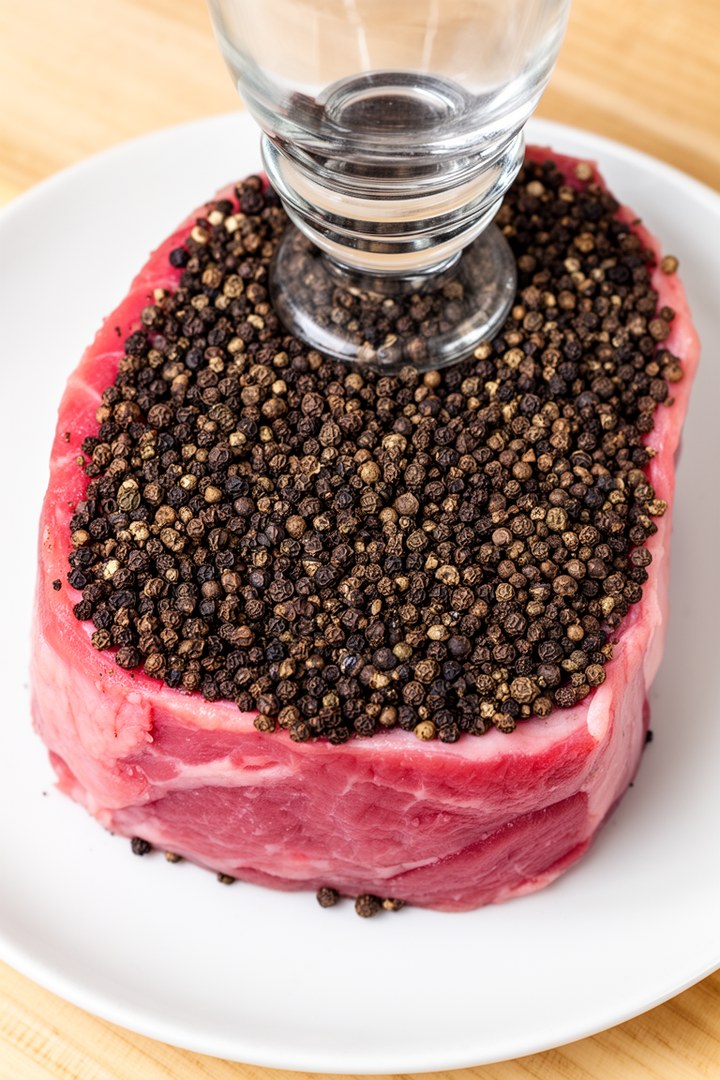
Place whole black peppercorns on a cutting board and crush coarsely using the bottom of a heavy skillet, pressing and rolling until you have irregular chunks — nothing finer than coarse sea salt. Spread the cracked pepper on a plate, pat the steaks completely dry with paper towels, season with salt on both sides, then press each steak firmly into the pepper on one side. Press down hard with your palm and hold for five seconds. Flip and repeat on the other side. The pepper needs to be embedded, not sprinkled.
Step 2 — Sear in a screaming-hot pan
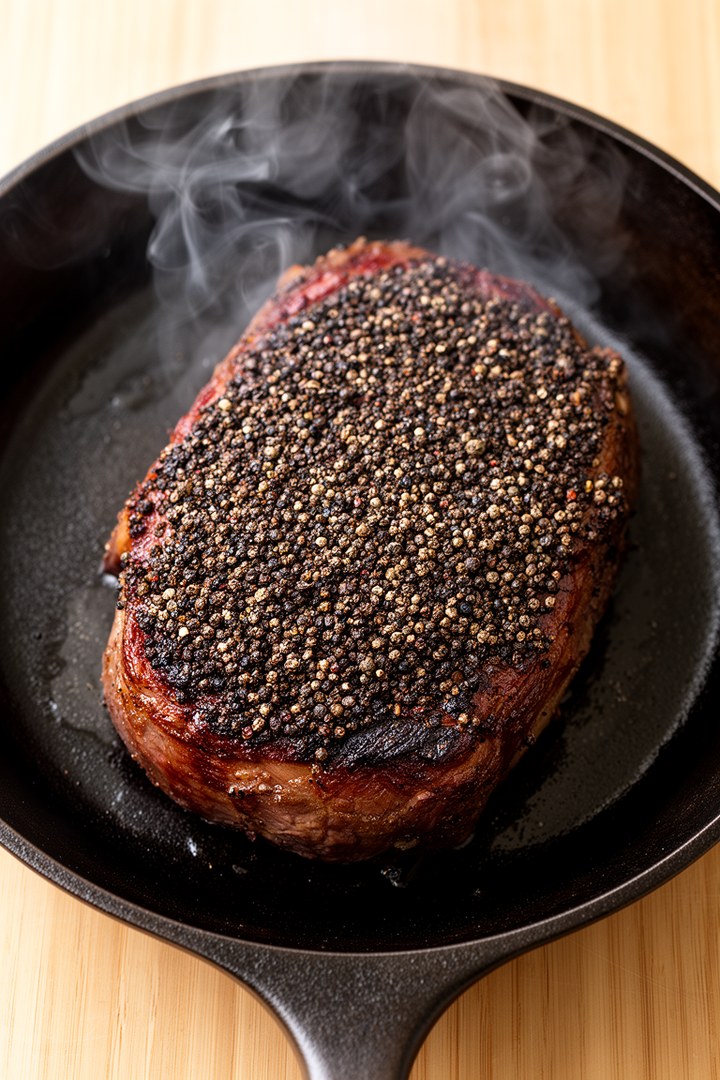
Heat a cast iron or heavy stainless skillet over high heat for two full minutes until the pan is visibly smoking. Add a thin layer of neutral oil — not butter, which burns at this temperature. Lay the steaks in the pan and do not move them. Sear 3 to 4 minutes per side for medium-rare on a 1¼-inch steak, adjusting for thickness. Use an instant-read thermometer: 130°F (54°C) is medium-rare. Transfer to a warm plate and rest, loosely tented, for at least 5 minutes while you make the sauce.
Step 3 — Deglaze with cognac
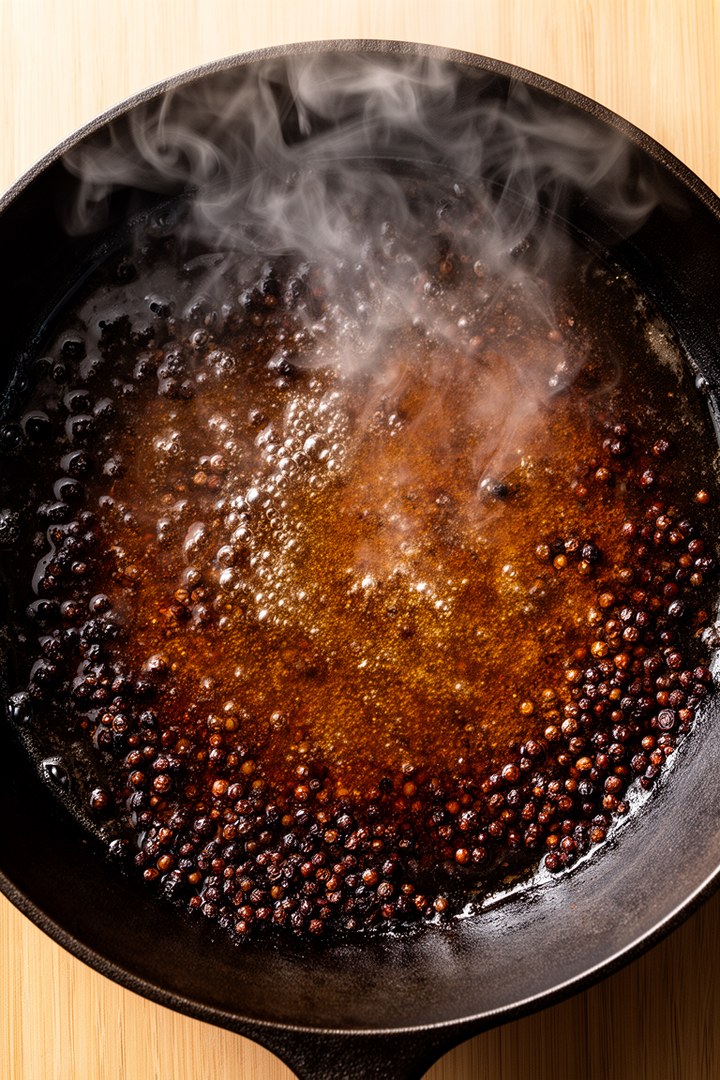
Remove the pan from heat completely before adding the cognac — this prevents flare-ups. Pour in the cognac and return to medium heat. It will steam aggressively and pick up every bit of flavor stuck to the pan. Scrape the bottom with a wooden spoon as the cognac bubbles, dissolving the fond. Let it reduce by half, about 1 minute.
Step 4 — Build the cream sauce
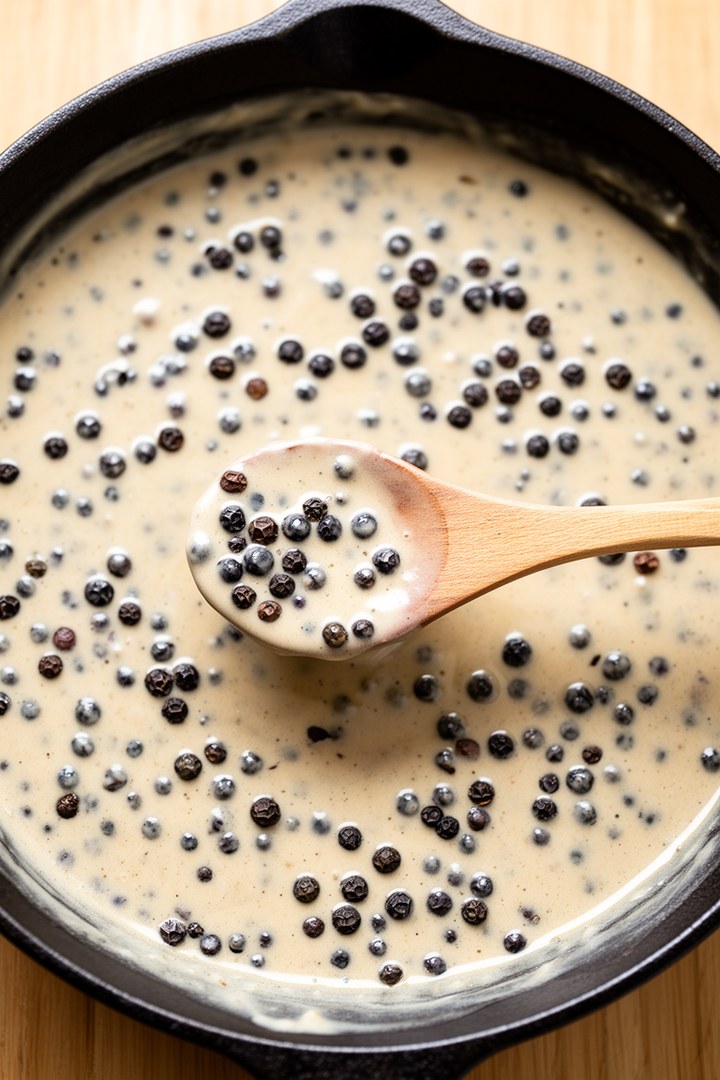
Add the beef stock and let it reduce until slightly syrupy, another 2 minutes — the sauce should coat the back of a spoon at this point. Pour in the heavy cream and stir continuously over medium heat until the sauce thickens enough to coat a spoon held horizontally. Taste for salt. The sauce will continue to tighten as it sits, so pull it slightly before it looks done.
Step 5 — Plate and finish
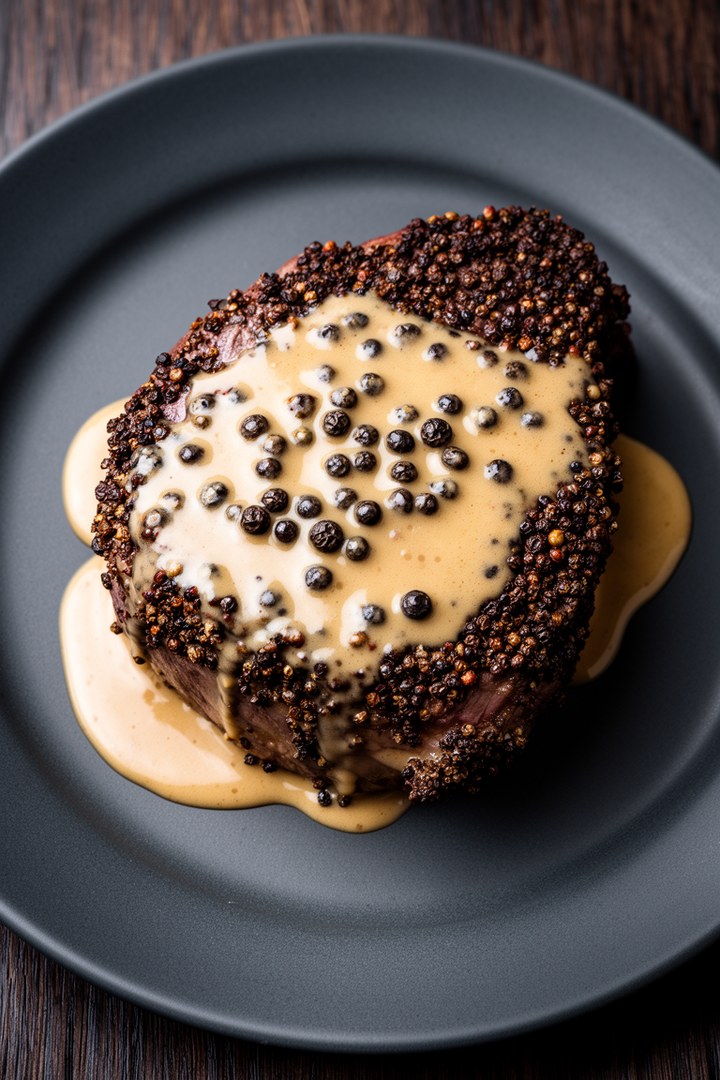
Spoon the cognac cream sauce generously over the rested steaks immediately before serving — do not let it sit in the pan. The sauce tightens fast. Serve on warm plates so the steak stays hot through the meal.
Why Does the Peppercorn Crust Matter?
The cracked peppercorns do two things: they create a textural crust that seals the surface during the high-heat sear, and they release fat-soluble aromatic compounds (piperine and terpenes) that would evaporate completely in pre-ground form. A coarse crack exposes the interior of the peppercorn to the heat, releasing oils that meld into the meat’s surface fat. This is why freshly cracked whole peppercorns taste pungent and floral while pre-ground pepper tastes flat and sharp — the volatiles have already off-gassed in the jar.
Cook’s Notes and Tips
- Steak thickness is non-negotiable: Anything under 1 inch (2.5cm) will overcook before the crust develops. Buy thick or ask the butcher to cut to order.
- Pat the steak bone-dry: Surface moisture prevents browning. Dry paper towels, then salt, then pepper — in that order. Salt draws a tiny bit of moisture out; pat again right before the pan.
- Cast iron or stainless, never non-stick: Non-stick pans can’t handle high enough heat for a proper sear and the coating degrades. Cast iron retains heat best; stainless heats faster but also works.
- Cognac off the heat first: Pull the pan from the burner before adding the alcohol. This reduces the flare-up risk. If you keep it on heat, the alcohol may ignite — not catastrophic, but startling. Reduce with the alcohol after you return to medium.
- Rest the steak, no exceptions: Cutting immediately loses a third of the juices to the plate. Five minutes minimum; 8 minutes is better for a thick steak.
How to Serve Steak au Poivre
Serve immediately after the sauce goes on — this dish waits for no one. Classic accompaniments are pommes frites (French fries), sautéed haricots verts (thin green beans), or creamed spinach. A simple watercress salad with a sharp vinaigrette cuts through the cream sauce well. Pour a glass of Bordeaux or a Côtes du Rhône if you have one; the tannins in a red wine complement the pepper and cream better than a white would.
Substitutions and Variations
The steak can be veal chop or venison loin — both take the pepper crust well and benefit from the cream sauce. Reduce the cooking time by about a minute per side for veal; venison should be served no more than medium-rare or it tightens. For the cognac, Armagnac or a decent brandy are direct substitutes. If you want to skip the alcohol entirely, deglaze with extra beef stock and a splash of red wine vinegar — you’ll get acidity without the depth of cognac, but it’s workable.
Make-Ahead Instructions
The pan sauce can be made up to 2 days ahead: reduce the cognac and stock, then add the cream and refrigerate. Reheat gently over low heat before serving, adding a tablespoon of stock if it’s too thick. The steak itself should be cooked to order — reheated steak loses the crust and overcooks past medium-rare with any method. If you need to serve a group, sear all steaks 2 minutes per side in batches and finish them in a 400°F (200°C) oven for 4 to 5 minutes while you make one large batch of sauce.
Storage and Leftovers
Leftover steak au poivre keeps in the refrigerator for up to 3 days. Store the steak and sauce separately; the sauce will congeal but reheat smoothly over low heat with a splash of water. Cold sliced steak au poivre is excellent in a sandwich with Dijon mustard and arugula — the pepper crust holds up overnight. Do not freeze — the cream sauce breaks on thawing.
Frequently Asked Questions
What cut of beef is best for steak au poivre?
Ribeye and New York strip (also called strip steak or sirloin) are the two best choices. Ribeye has more intramuscular fat, which keeps it juicy under the high-heat sear. Strip is leaner with a firmer texture that holds the pepper crust slightly better. Both should be cut at least 1¼ inches (3cm) thick. Filet mignon also works but has less flavor on its own — the sauce compensates.
Can I make steak au poivre without cognac?
Yes. Armagnac or brandy are direct substitutes. For a non-alcoholic version, deglaze with beef stock and add a teaspoon of red wine vinegar and a teaspoon of Worcestershire sauce for complexity. The flavor will be less layered than a cognac-based sauce but still works as a pepper cream sauce.
How do you keep the peppercorn crust from burning?
Two things: crack the peppercorns coarse (not fine), and use a pan with no added butter at the searing stage. Fine pepper burns faster and turns bitter. Butter burns at 350°F (175°C); your searing pan needs to be at 450°F (230°C) or above. Use a neutral oil with a high smoke point — grapeseed, avocado oil, or refined sunflower — and add butter only when you drop the heat for the sauce.
What’s the difference between steak au poivre and pepper steak?
Steak au poivre is the French bistro classic: a thick, high-quality steak with a cracked peppercorn crust and cognac cream sauce. Pepper steak in American Chinese cooking is a stir-fry of thinly sliced beef with bell peppers and a soy-based sauce — an entirely different dish. The only shared element is black pepper.







Leave a Reply