
Most coffee cakes turn out either dense and dry or with a streusel topping that sinks into the batter and goes soggy by morning. The fix for both is the same: use buttermilk for a tender crumb that stays moist, and keep the streusel cold and coarse so it sits on top and crisps, not dissolves.
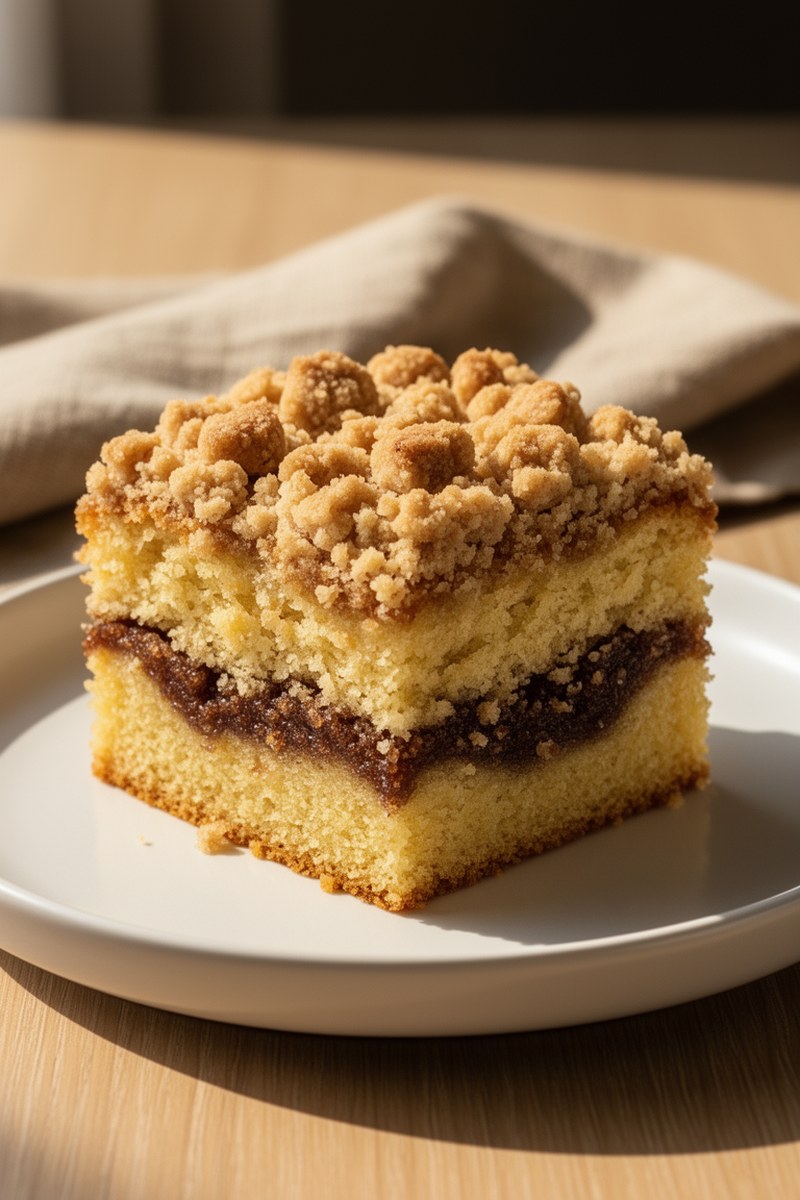
Coffee cake is an American brunch staple — a tender, slightly sweet cake with a thick cinnamon streusel topping, designed to be eaten with coffee. It contains no coffee; the name refers to what you drink alongside it. This version uses a buttermilk batter (which stays moist longer than a regular milk batter), a generous cinnamon-brown sugar filling in the middle, and a buttery crumb topping that crisps in the oven and stays crisp for hours.
It bakes in a 9×9-inch (23x23cm) pan, makes 9 generous squares, and is ready in under an hour from start to finish.
The Origins of Coffee Cake
Streusel-topped coffee cake in America has German and Scandinavian roots. German immigrants brought the tradition of Kaffeekuchen — sweet yeast cakes served with coffee — to the United States in the 19th century, and the streusel topping (from the German word “streuen,” to scatter) became a defining feature. Over time, the yeast base gave way to quicker baking-powder-leavened batters, which is why modern American coffee cake is faster and lighter than its European ancestor.
The buttermilk version is specifically a 20th-century American adaptation — buttermilk was widely available from dairy farming and bakers discovered that its acidity reacted with baking soda to produce a finer, more tender crumb than regular milk alone.
Ingredients
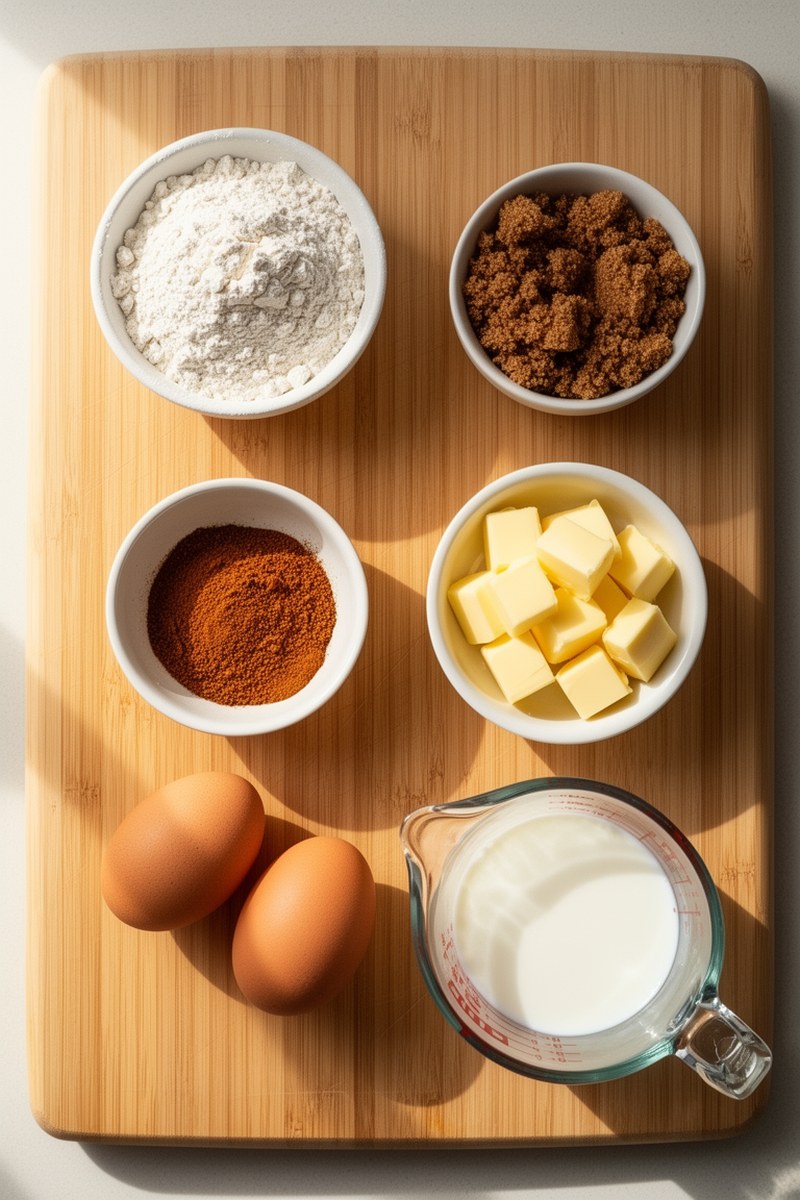
The batter uses all-purpose flour, baking powder, baking soda, salt, butter, sugar, eggs, vanilla, and buttermilk. The buttermilk is not optional — its acidity both tenderizes the crumb and activates the leavening for the right rise. If you don’t have buttermilk, make a substitute by stirring white vinegar or lemon juice into whole milk and letting it sit for a few minutes until it curdles slightly.
The cinnamon filling is just brown sugar and cinnamon layered into the center of the batter. The streusel topping uses cold butter cut into flour, brown sugar, and cinnamon — the cold butter is what keeps it coarse and crumbly rather than melting into a paste. Work quickly with your fingertips to keep the butter from warming up.
Beth’s Cinnamon Crumb Coffee Cake
Ingredients
For the Streusel Topping
- 0.75 cup all-purpose flour
- 0.5 cup brown sugar packed
- 1.5 tsp ground cinnamon
- 0.125 tsp salt pinch
- 6 tbsp cold butter cut into small cubes
For the Cake Batter
- 1.5 cup all-purpose flour
- 1.5 tsp baking powder
- 0.5 tsp baking soda
- 0.25 tsp salt
- 6 tbsp butter softened
- 0.75 cup sugar granulated
- 2 large eggs
- 1 tsp vanilla extract
- 0.75 cup buttermilk
For the Cinnamon-Brown Sugar Filling
- 0.33 cup brown sugar packed
- 1 tbsp ground cinnamon
Instructions
- Make the streusel topping first: combine flour, brown sugar, cinnamon, and a pinch of salt in a small bowl.
- Add cold butter cubes to the streusel mixture and work it in with your fingertips, pressing and rubbing until the mixture resembles coarse breadcrumbs with some pea-sized pieces of butter visible. Some larger chunks are good — they create visible crumbs in the finished cake.
- Refrigerate the streusel while you make the batter; cold streusel sits on top of the batter instead of sinking into it.
- In a bowl, whisk together flour, baking powder, baking soda, and salt for the cake batter.
- In a separate bowl, beat the softened butter and sugar together until light and pale, about 2 minutes.
- Add eggs one at a time to the butter-sugar mixture, beating after each addition until incorporated.
- Add vanilla extract to the batter and mix until combined.
- Alternate adding the flour mixture and buttermilk to the batter in three additions, beginning and ending with flour. Mix on low speed just until combined — stop as soon as no dry streaks remain. Do not overmix, as this develops gluten and makes the cake tough.
- Grease a 9×9-inch baking pan and pour half the batter into it, spreading evenly.
- Combine brown sugar and cinnamon for the filling, then sprinkle the cinnamon-brown sugar mixture evenly across the batter layer.
- Pour the remaining batter over the cinnamon layer and spread gently to cover without disturbing the filling.
- Scatter the cold streusel topping evenly across the top of the batter. Do not press it in — let it sit loosely on the surface.
- Bake at 350°F for 35 to 40 minutes, until the streusel is deeply golden, the edges are pulling from the pan, and a toothpick inserted in the center (avoiding the cinnamon layer) comes out with just a few moist crumbs.
- If the streusel is browning too fast before the center is done, tent the pan loosely with foil for the last 10 minutes of baking.
- Cool the cake in the pan for at least 15 minutes before cutting — the cinnamon layer needs time to set so it holds the layers together.
- Cut into 9 squares. Serve warm or at room temperature with coffee, espresso, or tea.
Notes
How to Make Cinnamon Crumb Coffee Cake
Step 1 — Make the streusel topping first
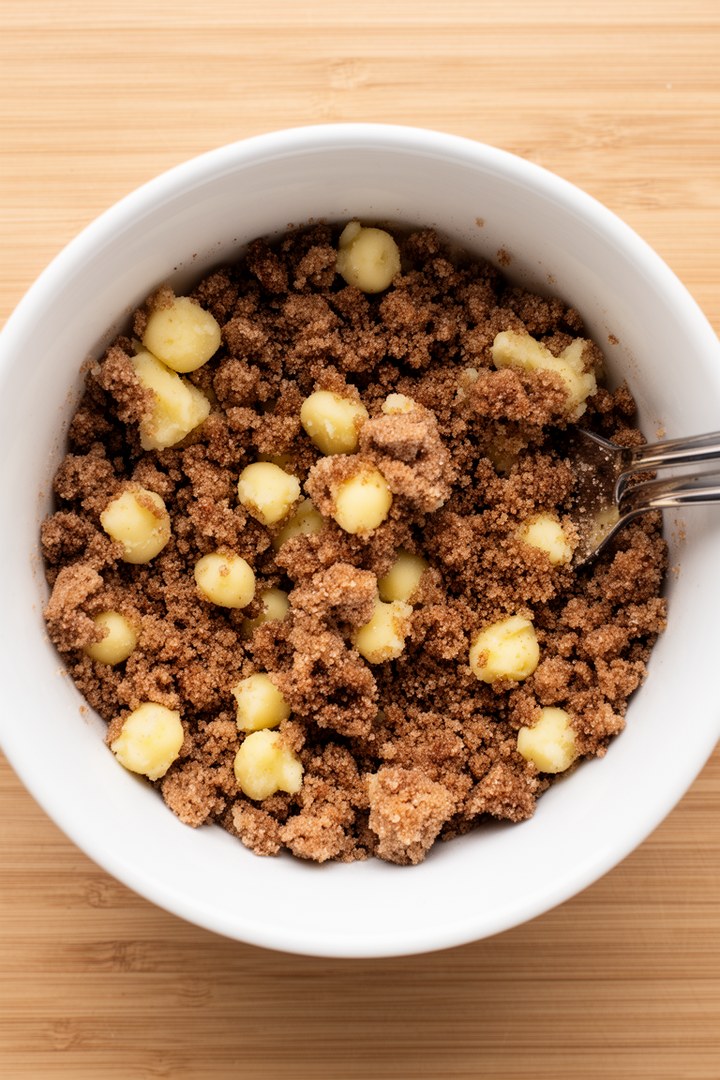
Combine flour, brown sugar, cinnamon, and a pinch of salt in a small bowl. Add cold butter cut into small cubes and work it in with your fingertips, pressing and rubbing until the mixture resembles coarse breadcrumbs with some pea-sized pieces. Some larger chunks are good — they create visible crumbs, not a uniform paste. Refrigerate the streusel while you make the batter; cold streusel sits on top of the batter instead of sinking.
Step 2 — Make the batter and layer
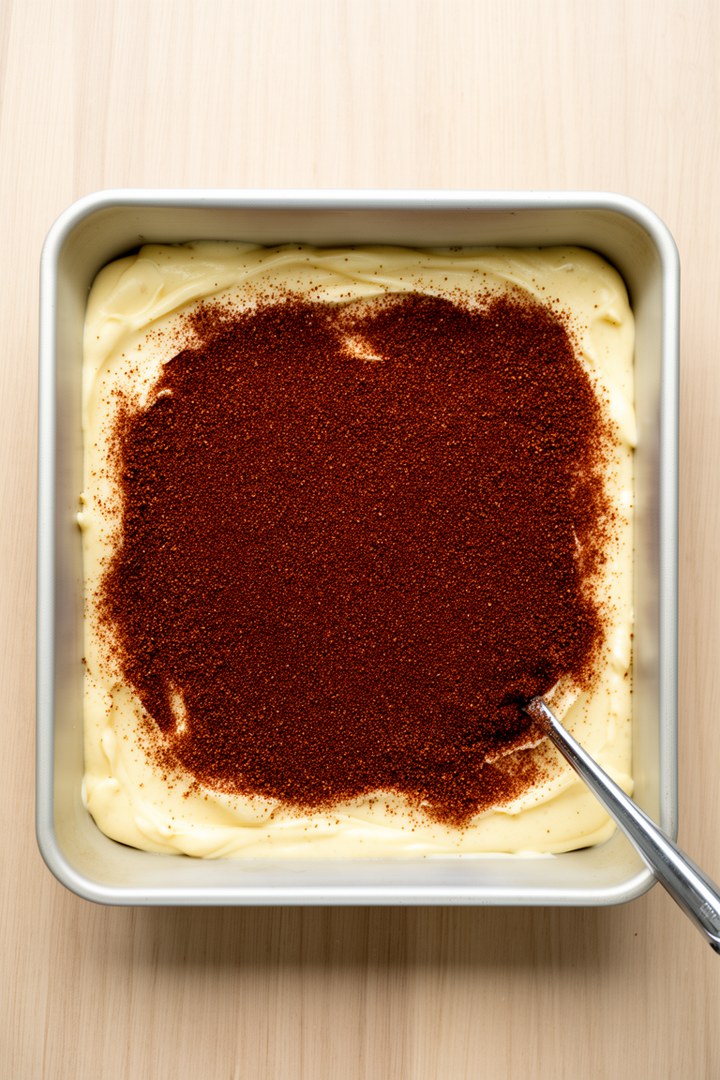
Whisk together flour, baking powder, baking soda, and salt in a bowl. In a separate bowl, beat the butter and sugar until light and pale, about 2 minutes. Add the eggs one at a time, then vanilla. Alternate adding the flour mixture and buttermilk in three additions, beginning and ending with flour, mixing on low just until combined. Pour half the batter into a greased 9×9-inch (23x23cm) pan. Sprinkle the cinnamon-brown sugar filling evenly across the surface, then pour the remaining batter over it and spread gently to cover. Scatter the cold streusel evenly across the top — don’t press it in.
Step 3 — Bake and check doneness
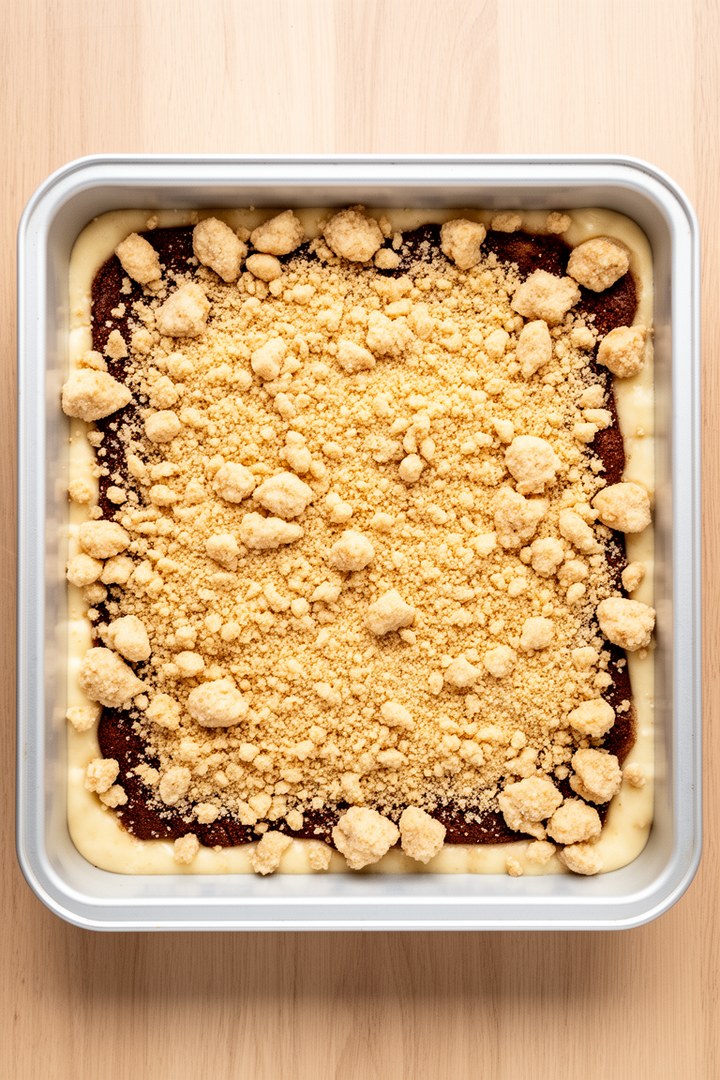
Bake at 350°F (175°C) for 35 to 40 minutes. The cake is done when the streusel is deeply golden, the edges are pulling from the pan, and a toothpick inserted in the center (avoiding the cinnamon layer) comes out with just a few moist crumbs. If the streusel is browning too fast before the center is done, tent loosely with foil for the last 10 minutes. Cool in the pan for at least 15 minutes before cutting — the cinnamon layer needs time to set.
Why Does the Crumb Topping Stay Crisp?
Two factors: cold butter and coarse texture. Cold butter creates steam pockets as it bakes, which puff the streusel into irregular clusters rather than melting it into a flat layer. If the butter is softened or at room temperature, it integrates fully into the sugar and flour, producing a dense paste that sinks into the batter and becomes soggy. The coarse, irregular texture also means more surface area exposed to the oven heat — small pieces crisp faster and more thoroughly than a smooth uniform layer.
Cook’s Notes & Tips
- Keep the streusel cold: Make it first, refrigerate while you make the batter. Warm streusel sinks into the batter instead of sitting on top. If your kitchen is warm, work quickly with cold butter from the fridge.
- Don’t overmix the batter: Stop as soon as no dry streaks remain. Overmixing develops gluten and makes the cake tough and dense. A few lumps in the batter are fine.
- The toothpick test works differently here: Insert the toothpick into the cake portion, avoiding the cinnamon filling layer, which will always look wet. You’re checking the cake batter, not the filling.
- Cool before cutting: The cinnamon-sugar filling is molten right out of the oven. It sets as it cools and holds the layers together. Cutting too early means the filling runs and the layers separate.
- Buttermilk makes it stay moist: This cake stays tender for 2 to 3 days at room temperature, which most cakes don’t. The acid in buttermilk slows staling. Don’t substitute regular milk if you want that shelf life.
How to Serve This Coffee Cake
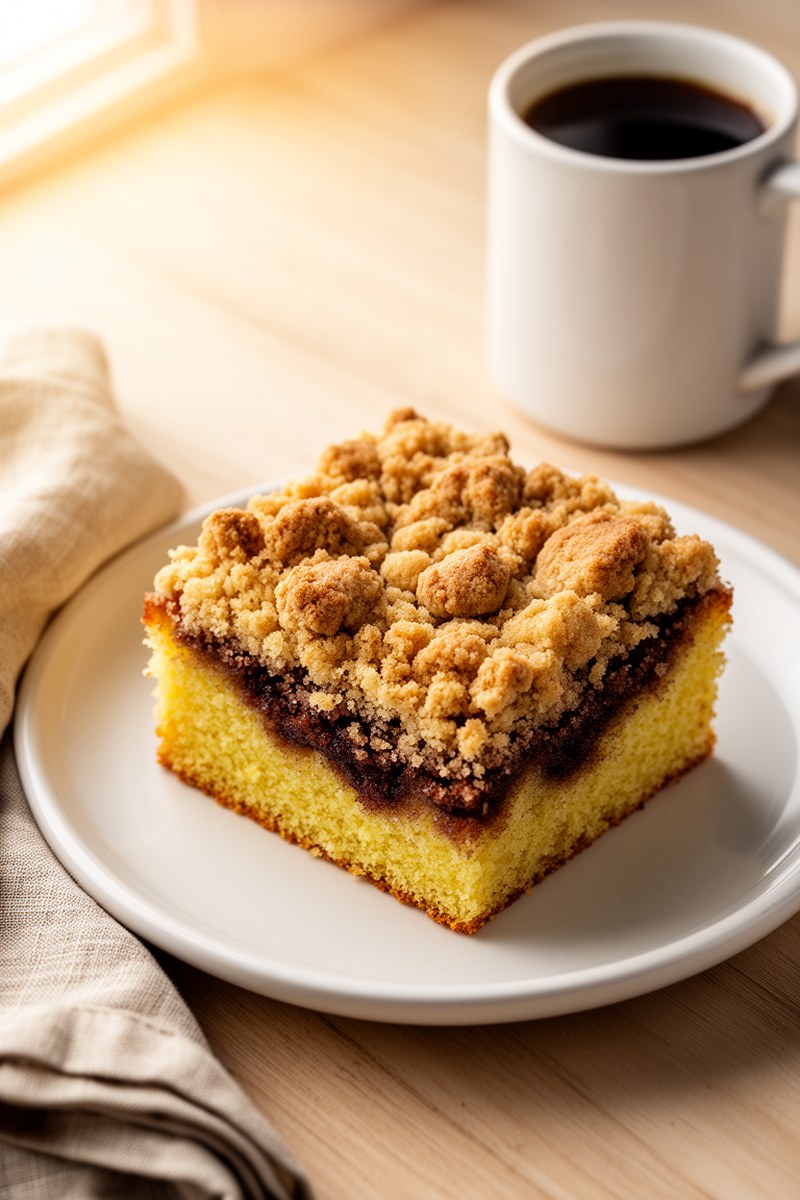
Serve warm or at room temperature — not straight from the fridge, where it firms up. Cut into 9 squares and serve with coffee, espresso, or tea. This is a morning or brunch cake, not a dessert — the sweetness is calibrated for a morning palate, not a post-dinner one. It works equally well as a midday snack. No accompaniments are needed: the streusel and cinnamon layer provide enough complexity on their own.
Make-Ahead Instructions
The assembled but unbaked cake (batter + filling + streusel) can be covered and refrigerated overnight. Bring to room temperature for 30 minutes before baking and add 5 minutes to the bake time. Alternatively, bake fully and store at room temperature covered for up to 3 days. Warm individual slices in a 300°F (150°C) oven for 5 minutes to refresh the streusel before serving.
Storage & Keeping
Store covered at room temperature for up to 3 days — the streusel stays crisp and the crumb stays moist thanks to the buttermilk. Refrigerating actually dries it out faster. Freeze individual squares wrapped in plastic for up to 2 months. Thaw at room temperature for 1 hour and warm in the oven to refresh the streusel.
Frequently Asked Questions
Why is my streusel topping sinking into the cake?
The butter in the streusel was too warm. Warm butter integrates fully with the flour and sugar, creating a paste that’s too heavy to float on the batter surface. Make the streusel with cold butter straight from the fridge, work quickly with your fingertips to keep the heat down, then refrigerate the streusel while you make the batter. Cold streusel on top of freshly made batter will stay on the surface during baking.
Can I make coffee cake the night before?
Yes. Assemble completely (batter, filling, streusel) in the pan, cover tightly with plastic wrap, and refrigerate overnight. The next morning, let the pan sit at room temperature for 30 minutes, then bake as directed, adding 5 to 8 minutes to the total bake time to account for the cold start. The streusel will be slightly softer than same-day baked, but still crisps well in the oven.
What’s the difference between coffee cake and regular cake?
Coffee cake is less sweet, has a denser, more bread-like crumb, and is typically topped with streusel rather than frosting. Regular layer cakes are designed as dessert — coffee cake is designed as a breakfast or brunch food. The buttermilk base and the ratio of butter to sugar also differ: coffee cake uses less sugar and more fat than typical dessert cake, which is why it pairs better with coffee than with ice cream.
Can I use oil instead of butter in coffee cake?
In the cake batter, yes — substitute the same quantity of neutral vegetable oil. The crumb will be slightly more tender and moister, and the cake will stay fresh slightly longer. In the streusel topping, no — oil doesn’t create the coarse crumbly texture that butter does. The streusel must use cold solid butter to work correctly. Cold-pressed coconut oil (which is solid at room temperature) is a workable alternative if you need a dairy-free streusel.









Leave a Reply