
Most homemade pho fails at two moments: the bones go into the pot without blanching first, so the broth turns cloudy and bitter, and the spices go in raw, so the broth tastes thin and flat instead of deep and fragrant. Blanch the bones for five minutes, char the onion and ginger directly over flame, toast the spices until they bloom — and you get a broth that actually tastes like pho.
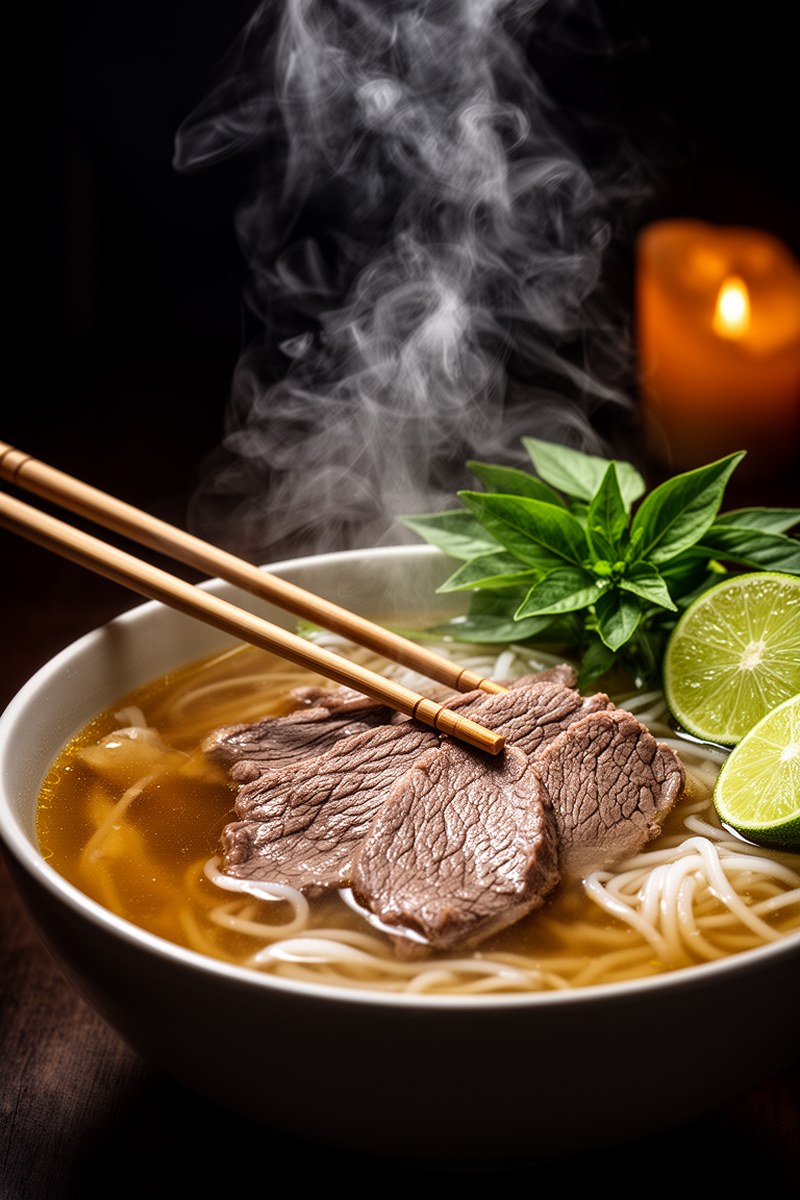
Pho is a Vietnamese beef noodle soup built on a long-simmered bone broth spiced with star anise, cinnamon, cloves, and cardamom. It’s served over rice noodles with thinly sliced raw beef that cooks in the bowl from the heat of the broth, and finished at the table with fresh herbs, bean sprouts, lime, and chili. The combination of a deeply savory, gently spiced broth with cool, fresh garnishes is what makes it one of the most balanced one-bowl meals in the world.
This recipe makes a broth that simmers for 2 hours on the stovetop — long enough to extract the collagen and marrow from the bones without requiring overnight cooking. For a faster version, a pressure cooker achieves the same result in 45 minutes. The recipe serves 4 with enough broth left over to freeze for a second batch.
What Is Pho?
Pho (pronounced “fuh,” not “foh”) is a Vietnamese noodle soup that has become Vietnam’s most internationally recognized dish. At its core, pho is a study in contrast: a broth that takes hours to make meets garnishes that are raw, bright, and added at the last second. The broth is everything — a well-made pho broth has a deep amber color, a pronounced but not overpowering spice aroma, and enough body from dissolved collagen to coat the back of a spoon. The noodles and protein are almost secondary to the quality of the liquid they’re served in.
There are two main regional styles: Hanoi pho (pho bac) is more austere — cleaner broth, fewer garnishes, scallions only. Saigon pho (pho nam) is the version most Westerners know — more garnishes, bean sprouts at the table, hoisin and sriracha on the side. This recipe follows the Saigon style, which is more forgiving and more adaptable for home cooks unfamiliar with the dish.
Origins of Pho
Pho originated in northern Vietnam in the early 20th century, almost certainly in the Nam Dinh province near Hanoi, though Hanoi itself adopted and refined the dish quickly. The precise origin is debated, but most food historians place it between 1900 and 1910. The dish shows the influence of French colonial cooking — the French introduced cattle for beef consumption, and pot-au-feu (the French boiled beef soup) likely influenced the concept of a long-simmered bone broth. Vietnamese cooks adapted it with local spices, fish sauce for seasoning, and rice noodles instead of bread.
Pho spread south when Vietnamese refugees and migrants brought it to Saigon after 1954, where it acquired the herb garnishes, bean sprouts, and table sauces that define the modern version. After 1975, Vietnamese immigrants introduced pho to the United States, Australia, France, and Canada — and it has since become one of the most widely eaten noodle soups in the world.
Ingredients for Pho Broth
The bones determine the broth. Beef knuckles (the joint bones) provide the collagen that gives pho its body; oxtail or marrow bones provide the fat and richness. Use a mix: 2 lbs (900g) of knuckle bones and 1 lb (450g) of oxtail or marrow bones. Ask the butcher to cut the bones if they’re large — they need to fit in your pot and release their collagen efficiently. Blanching the raw bones in boiling water for 5 minutes, then rinsing them under cold water, removes the blood and impurities that cloud the broth. This step is non-negotiable if you want a clear, clean-tasting pho.
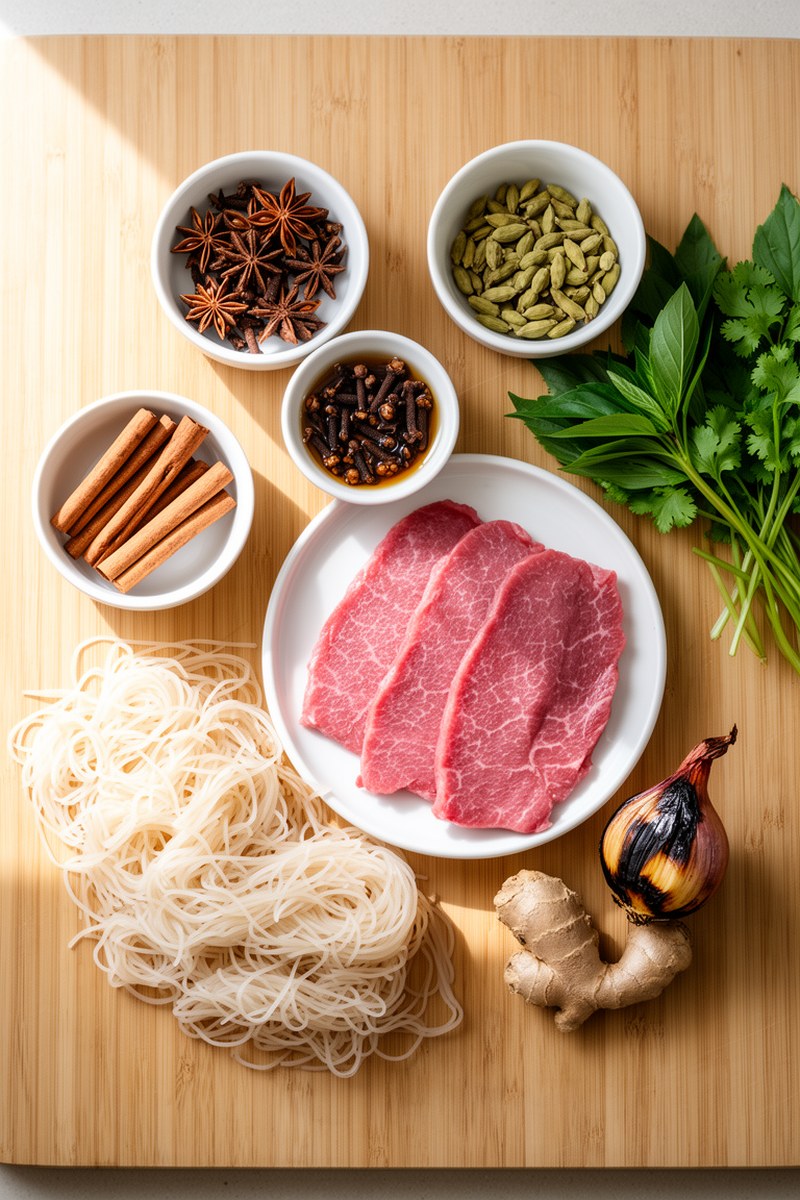
The aromatics are charred, not sautéed. A whole onion (halved) and a 3-inch (8cm) piece of fresh ginger are held directly over a gas burner or placed under a broiler until blackened on the outside — 5 to 8 minutes. The char adds a smoky, slightly sweet depth to the broth that raw aromatics can’t produce. The spice blend for the broth: 3 star anise pods, 1 cinnamon stick (3 inches / 8cm), 4 whole cloves, 3 cardamom pods (lightly crushed), 1 teaspoon coriander seeds, and 1 teaspoon fennel seeds. Toast these in a dry skillet over medium heat for 2 minutes until fragrant before adding to the broth. Fish sauce is the primary seasoning — add it to taste at the end, not during the simmer, so you can control the salt level precisely. Rock sugar (a small chunk, about 1 oz / 30g) balances the fish sauce and adds the subtle sweetness that distinguishes pho from plain beef soup.
Pho
Ingredients
For the Broth
- 2 lbs beef knuckle bones ask butcher to cut if large
- 1 lb oxtail or marrow bones
- 12 cups cold water
- 1 whole onion halved
- 3 inches fresh ginger 1 piece
- 3 whole star anise pods
- 1 whole cinnamon stick 3 inches long
- 4 whole cloves
- 3 whole cardamom pods lightly crushed
- 1 tsp coriander seeds
- 1 tsp fennel seeds
- 3 tbsp fish sauce or to taste
- 1 oz rock sugar small chunk, about 30g
For Serving
- 8 oz dried rice noodles banh pho, medium width
- 1 lb beef sirloin or eye of round sliced 1/8 inch thick, partially frozen
Garnishes (at the table)
- 2 cups fresh bean sprouts
- 1 bunch Thai basil sprigs
- 2 whole fresh limes cut into wedges
- 2 whole fresh chilies bird’s eye or jalapeño, thinly sliced
- 3 tbsp hoisin sauce
- 2 tbsp sriracha
Instructions
- Place the beef knuckle bones and oxtail or marrow bones in a large pot and cover with cold water. Bring to a full boil over high heat and boil hard for 5 minutes — you’ll see grey foam and impurities rise to the surface. This step is essential for clear broth.
- Drain the bones and discard the water. Rinse each bone thoroughly under cold running water, removing all residue. Clean the pot completely before proceeding.
- Halve the onion and place cut-side down in a dry cast iron skillet over medium-high heat, or hold directly over a gas burner with tongs. Char the cut face until blackened and slightly softened, about 4 to 5 minutes. Repeat with the ginger piece, turning until all surfaces are lightly blackened. The char adds smoky, complex depth to the broth.
- In a separate dry skillet, toast the star anise, cinnamon stick, cloves, cardamom pods, coriander seeds, and fennel seeds over medium heat for 2 minutes, shaking constantly, until fragrant. Place the toasted spices in a small muslin bag or cheesecloth bundle so they stay together and are easy to remove later.
- Return the blanched, rinsed bones to the cleaned pot. Add 12 cups of cold water, the charred onion and ginger, and the spice bundle. Bring to a gentle boil, then immediately reduce heat to a low simmer — the surface should tremble gently, not boil vigorously. A rolling boil will emulsify fat into the broth and make it cloudy.
- Skim any foam that rises to the surface during the first 20 minutes of simmering. Simmer uncovered for 2 to 3 hours. The broth is ready when it has reduced slightly, turned amber in color, and smells deeply of beef and spice.
- Remove and discard the charred onion, ginger, and spice bundle. Add 3 tablespoons of fish sauce and stir. Taste the broth — it should taste savory and slightly sweet, not aggressively salty. Add more fish sauce in small increments if needed, as saltiness varies by brand.
- Add the rock sugar (about 1 oz) to the broth and stir until dissolved. The sweetness should balance the savory fish sauce. Strain the broth through a fine-mesh sieve into a clean pot, discarding all solids.
- Skim excess fat from the surface of the broth, or refrigerate overnight and lift off the solidified fat cap for a cleaner broth. Keep the broth at a near-boil while assembling the bowls.
- Cook dried rice noodles (banh pho medium width, about 8 oz for 4 people) according to package instructions — typically soak in cold water for 30 minutes, then boil for 30 to 60 seconds until just tender. Do not overcook.
- Partially freeze the beef sirloin or eye of round for 30 to 45 minutes until firm but not solid. Slice thinly across the grain to 1/8 inch thickness using a sharp knife. Thin, uniform slices are essential for proper cooking in the broth.
- Divide the cooked rice noodles evenly between 4 deep bowls. Arrange the thinly sliced raw beef over the noodles, keeping the slices separate so they cook evenly.
- Bring the broth to a hard, rolling boil. Pour the boiling broth directly over the raw beef and noodles in each bowl — the heat of the broth cooks the beef in seconds. The beef should be just barely pink when the broth hits it; it finishes cooking in the bowl.
- Serve immediately with the garnish plate on the side: fresh bean sprouts, Thai basil sprigs, fresh lime wedges, thinly sliced fresh chilies, hoisin sauce, and sriracha. Each person builds their bowl to taste at the table.
Notes
How to Make Pho
Step 1 — Blanch the bones
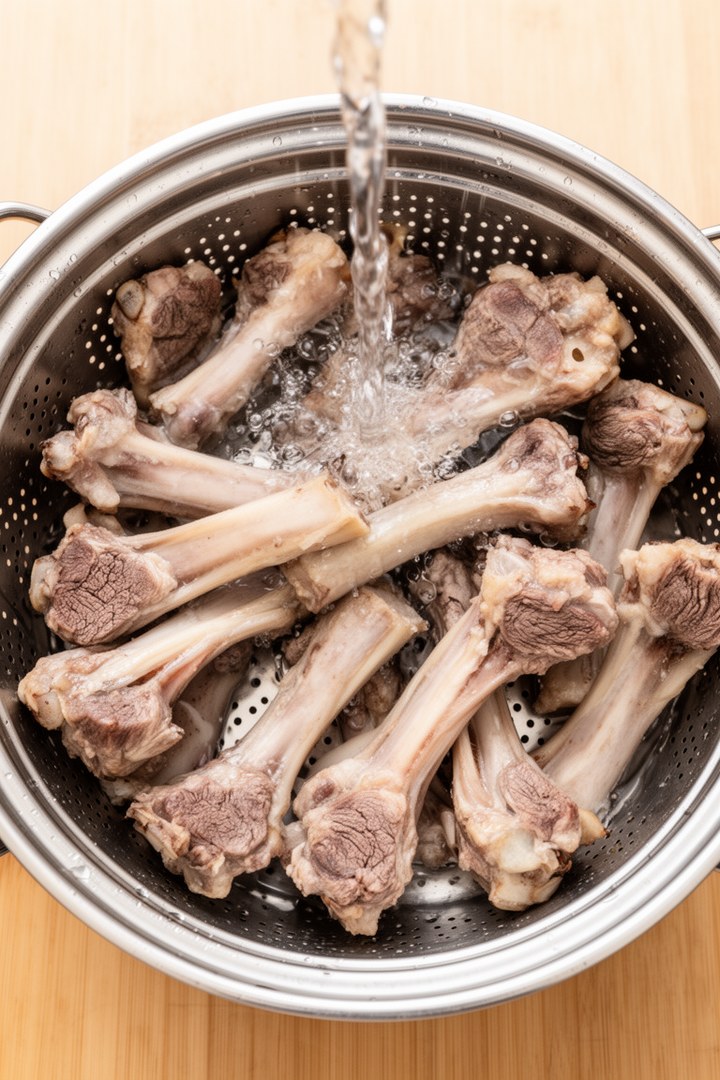
Place the bones in a large pot and cover with cold water. Bring to a full boil over high heat and boil hard for 5 minutes — you’ll see grey foam and impurities rise to the surface. Drain the bones, discard the water, and rinse each bone under cold running water to remove all the residue. Clean the pot. This blanching step produces a clear, clean-tasting broth. Skipping it produces a murky, slightly bitter broth that no amount of skimming during the long simmer will fully fix.
Step 2 — Char the aromatics and toast the spices
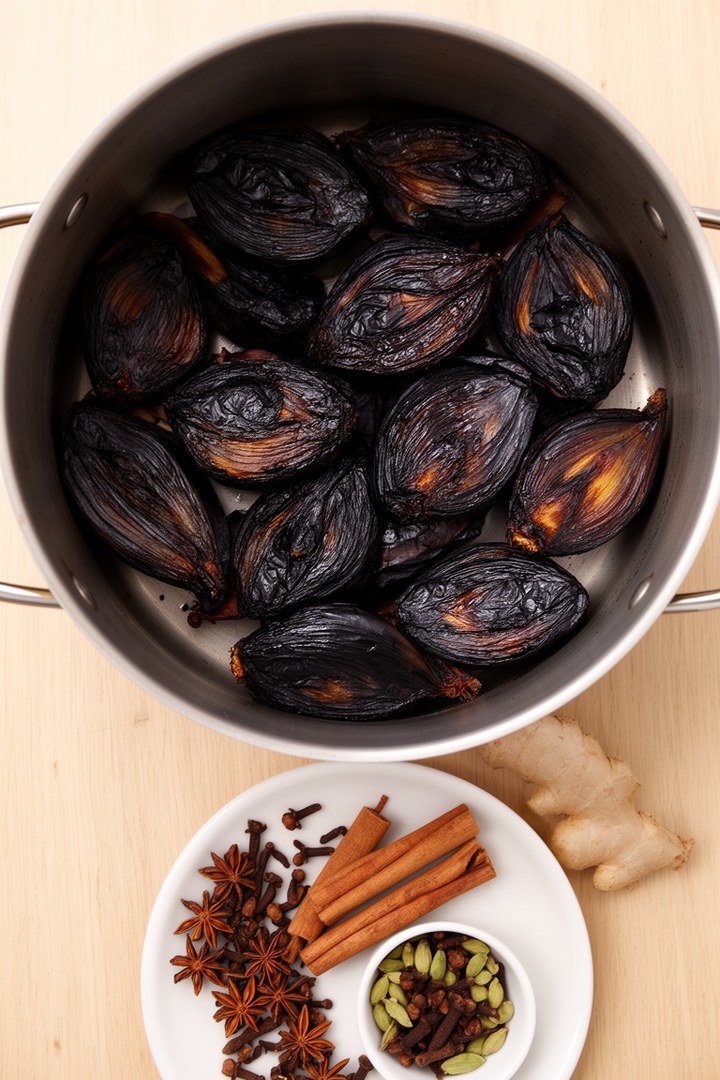
Halve the onion and place it cut-side down in a dry cast iron skillet over medium-high heat, or hold it directly over a gas burner with tongs. Char the cut face until blackened and slightly softened — 4 to 5 minutes. Do the same with the ginger, turning until all surfaces are lightly blackened. The charring is what you’re after; the black parts don’t make the broth bitter — they make it complex. In a separate dry skillet, toast the star anise, cinnamon, cloves, cardamom, coriander seeds, and fennel seeds over medium heat for 2 minutes, shaking constantly, until fragrant. Add the spices to a small muslin bag or bundle in cheesecloth so they stay together and are easy to remove.
Step 3 — Simmer the broth
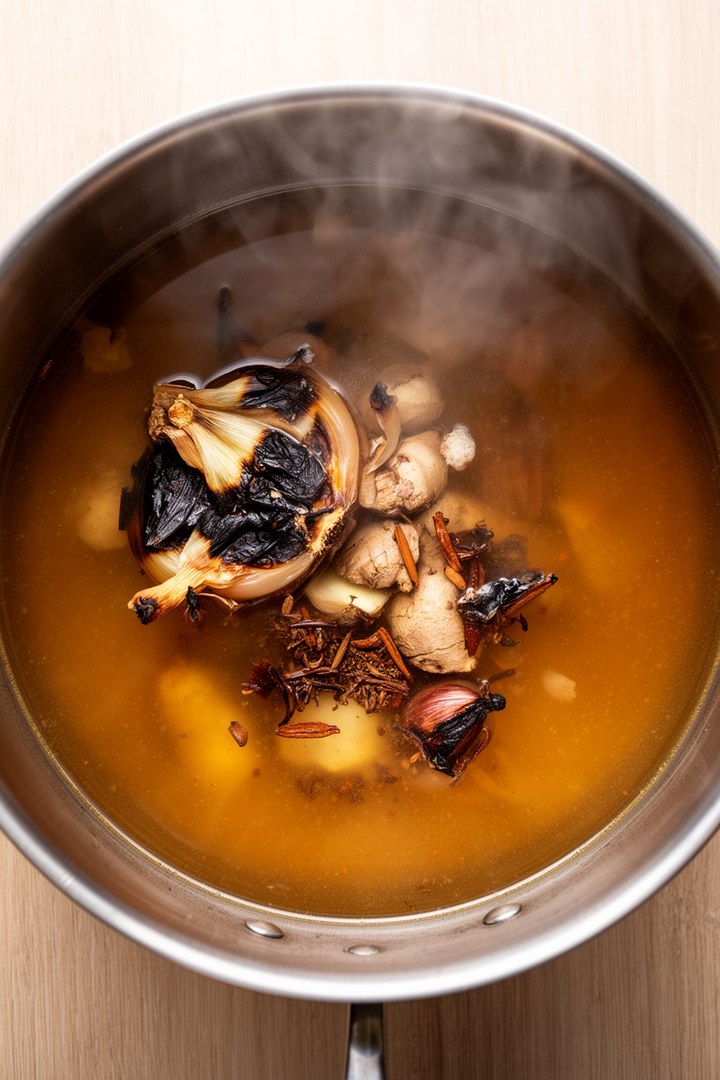
Return the blanched bones to the clean pot. Add 12 cups (2.8 liters) of cold water, the charred onion and ginger, and the spice bundle. Bring to a gentle boil, then immediately reduce to a low simmer — the surface should tremble, not boil vigorously. A rolling boil emulsifies the fat into the broth and makes it cloudy. Skim any foam that rises in the first 20 minutes. Simmer uncovered for 2 to 3 hours. The broth is ready when it has reduced slightly, turned amber, and smells deeply of beef and spice.
Step 4 — Season and strain
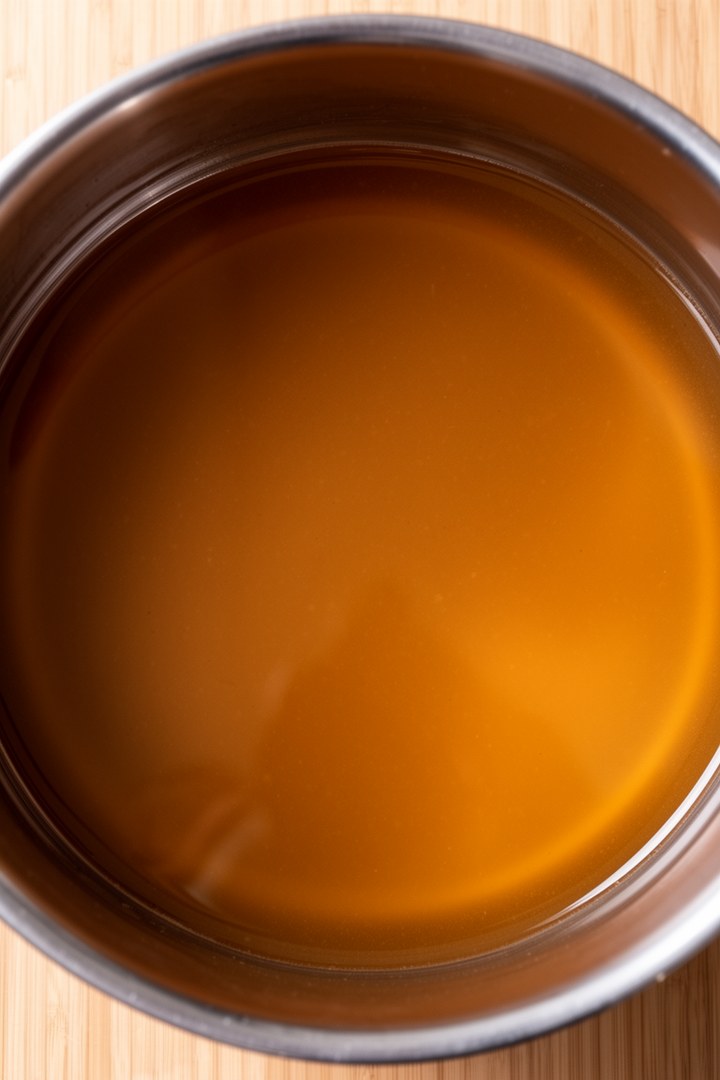
Remove and discard the onion, ginger, and spice bundle. Season the broth with fish sauce — start with 3 tablespoons and taste. Add the rock sugar and stir until dissolved. The balance should be savory, lightly sweet, and aromatic — not aggressively salty. Strain the broth through a fine-mesh sieve into a clean pot, discarding the solids. Skim any excess fat from the surface (or refrigerate overnight and lift the solidified fat cap off). Keep the broth at a near-boil while you assemble the bowls.
Step 5 — Assemble the bowls
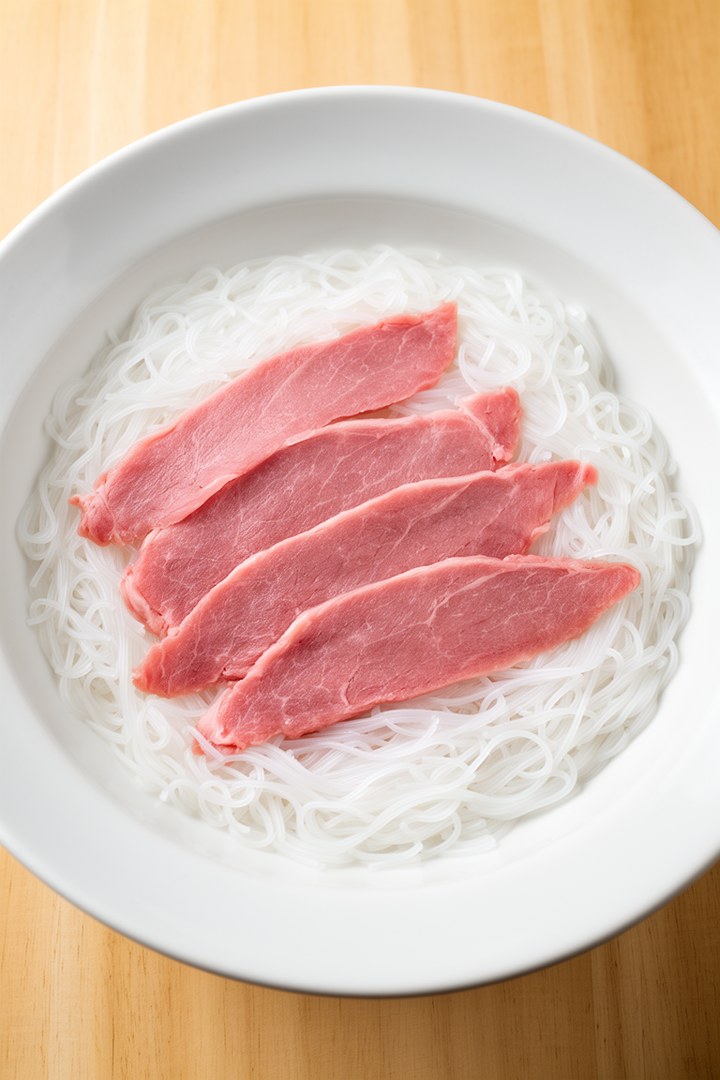
Cook dried rice noodles (banh pho, medium width, about 8 oz / 225g for 4 people) according to package instructions — usually soaked in cold water for 30 minutes, then boiled for 30 to 60 seconds until just tender. Divide the noodles between deep bowls. Arrange thinly sliced raw beef (sirloin or eye of round, sliced ⅛ inch / 3mm thick, partially frozen for easier slicing) over the noodles. The beef goes in raw — the boiling broth poured over it in the next step cooks it in seconds.
Step 6 — Pour the broth and serve
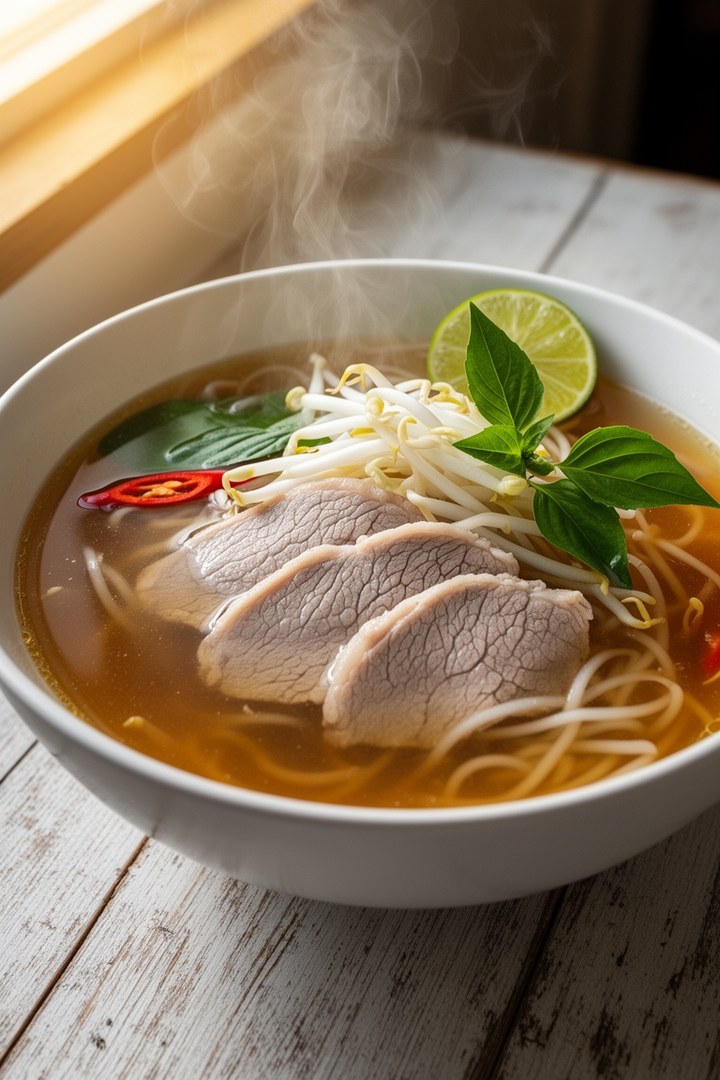
Ladle the boiling broth directly over the raw beef and noodles. The heat of the broth cooks the beef in 10 to 15 seconds — it should be just barely opaque when you serve it, finishing in the bowl at the table. Bring the bowl immediately to the table with a garnish plate: fresh Thai basil, bean sprouts, lime wedges, sliced red chili, and hoisin and sriracha on the side. Pho is built at the table — the garnishes go in according to each person’s preference.
Why Does Pho Need Such a Long Simmer Time?
The 2-to-3-hour simmer is not about cooking the meat through — it’s about extracting collagen from the bones. Collagen is a structural protein in connective tissue and bone joints; at simmering temperature (around 180°F / 82°C), it slowly converts to gelatin, which dissolves into the broth and gives it body and a slightly sticky, mouth-coating texture. This is what separates pho broth from plain beef stock. At a full boil, the conversion happens faster but the fat emulsifies into the liquid, making it cloudy and greasy. At a gentle simmer, the collagen converts slowly and the fat rises to the surface where you can skim it off, leaving a clear, richly textured broth.
A pressure cooker can compress this timeline to 45 minutes by raising the boiling point of water, which accelerates collagen extraction. The result is slightly less clear than stovetop pho (pressure prevents skimming) but the flavor and body are comparable. For a quick weeknight version, the pressure cooker is a legitimate shortcut.
Tips and Cook’s Notes
- Blanch the bones — always: Five minutes in boiling water and a cold rinse removes the blood and impurities that cloud and bitter the broth. This is the single most impactful thing you can do for broth clarity.
- Never boil the broth after it starts simmering: A rolling boil emulsifies fat into the liquid and makes the broth opaque and greasy. Once it’s simmering, keep it there — barely trembling, not bubbling.
- Partially freeze the beef for cleaner slices: Raw beef sliced for pho should be paper-thin — ⅛ inch (3mm) or less. Freeze the beef for 30 to 45 minutes until firm but not solid, then slice with a sharp knife across the grain. It’s much easier to control the thickness this way.
- Boiling broth is the cooking mechanism: The beef in the bowl is raw — it cooks from the heat of the broth poured over it. The broth must be at a rolling boil when it goes into the bowl, not just hot. Have the broth at a hard boil when you serve.
- Season at the end, taste as you go: Fish sauce varies in saltiness by brand. Add 3 tablespoons, taste, and add more in small increments. The broth should taste savory and slightly sweet, not salty or fishy. Rock sugar is traditional — white sugar works but rock sugar gives a cleaner sweetness.
How to Serve Pho
Pho is a bowl sport — serve it immediately and serve it hot, because the broth cooks the beef in real time. Set the garnish plate on the table before you ladle the broth: fresh bean sprouts, Thai basil sprigs, fresh lime wedges, thinly sliced fresh chilies (bird’s eye or jalapeño), hoisin sauce, and sriracha. Each person builds their bowl to taste — some squeeze lime directly into the broth, others dip the beef in a hoisin-sriracha mix on the side. There’s no wrong way. Fresh herbs go in at the last second: they wilt in the broth but lose their brightness if they sit too long.
Traditional accompaniments are rare. Pho is a complete meal in one bowl. The only addition that makes sense is a small dish of the broth-cooked bone marrow (if you used marrow bones), scooped out and eaten on the side with a little salt and lime.
Substitutions
The beef can be replaced with chicken (pho ga) — use chicken backs and feet for the bones, omit the rock sugar, and reduce the fish sauce slightly. The broth simmers for only 1 hour. Chicken pho is lighter, quicker, and equally valid as a variation.
If you can’t find rice noodles in the width you want (banh pho medium is ideal), rice vermicelli is a workable substitute — it’s thinner but holds the broth well. Udon noodles can be used for a thicker, chewier bowl; the flavors work even if it’s not traditional. Avoid egg noodles — the wheat clashes with the clean spice profile of the broth.
Fish sauce can be replaced with soy sauce for a fish-free version, though the flavor shifts — soy adds a different depth. For vegetarian pho, replace the bones with a mushroom-heavy stock (dried shiitake + kombu + roasted onions), keep the same spice blend, and season with soy sauce and a small amount of miso.
Make-Ahead Instructions
The broth is the only component that benefits from making ahead — in fact, pho broth made the day before and refrigerated overnight is better than day-of broth. The fat solidifies on top and lifts off cleanly, leaving a clearer, cleaner broth. The flavor also deepens overnight as the spices continue to meld. Reheat the broth to a full boil before serving.
The garnishes and noodles should be prepared just before serving — pre-cooked noodles sitting in broth go soft and mushy. If you’re serving a crowd, cook the noodles in batches and keep them in ice water until ready to plate, then reheat each portion in the boiling broth for 30 seconds before adding to the bowl.
Storage and Freezing
The broth keeps refrigerated for up to 5 days. Freeze in 2-cup (480ml) portions for up to 3 months — having frozen pho broth means a bowl is 15 minutes away whenever you want one. Thaw in the refrigerator overnight and bring to a full boil before using. Do not freeze assembled bowls — the noodles go soft and the beef is overcooked on reheating. Only the broth freezes well.
Frequently Asked Questions
Why is my pho broth cloudy?
Almost always one of two reasons: the bones weren’t blanched before the long simmer, or the broth was boiled instead of simmered. Blanching removes the blood and proteins that cloud the liquid — skip it and no amount of skimming will fully clear the broth. Boiling emulsifies fat into the liquid and makes it permanently cloudy. Keep the heat low enough that the surface barely trembles, skim the first 20 minutes, and you’ll have a clear amber broth.
Can I make pho in a pressure cooker?
Yes. After blanching and rinsing the bones (still required), add everything to the pressure cooker and cook on high pressure for 45 minutes, then natural release for 15 minutes. The broth will be slightly less clear than stovetop pho — you can’t skim during pressure cooking — but the flavor and body are excellent. Strain, season with fish sauce and rock sugar, and use exactly as you would the stovetop version. A pressure cooker reduces total active time to about 1 hour 15 minutes versus 2 hours 30 minutes on the stove.
What cut of beef is best for pho?
For the raw sliced beef in the bowl: sirloin or eye of round, partially frozen and sliced paper-thin against the grain. Eye of round is the most common choice in Vietnamese restaurants — it’s lean, holds its shape when the hot broth hits it, and doesn’t get tough. For the bones: beef knuckles (collagen-rich, for body), plus oxtail or marrow bones (for richness). If you want cooked meat in the bowl rather than raw, brisket simmered in the broth for 90 minutes, then sliced thin, is traditional and excellent.
Do I need to toast the spices for pho?
Yes — toasting the spices before adding them to the broth is one of the two steps (along with charring the onion and ginger) that separate pho with real aroma and depth from pho that tastes flat. Dry toasting in a skillet for 2 minutes releases the volatile aromatic compounds in star anise, cinnamon, cloves, and cardamom that are locked in at room temperature. Raw spices added directly to the broth produce a noticeably thinner, less complex flavor even after hours of simmering.









Leave a Reply