
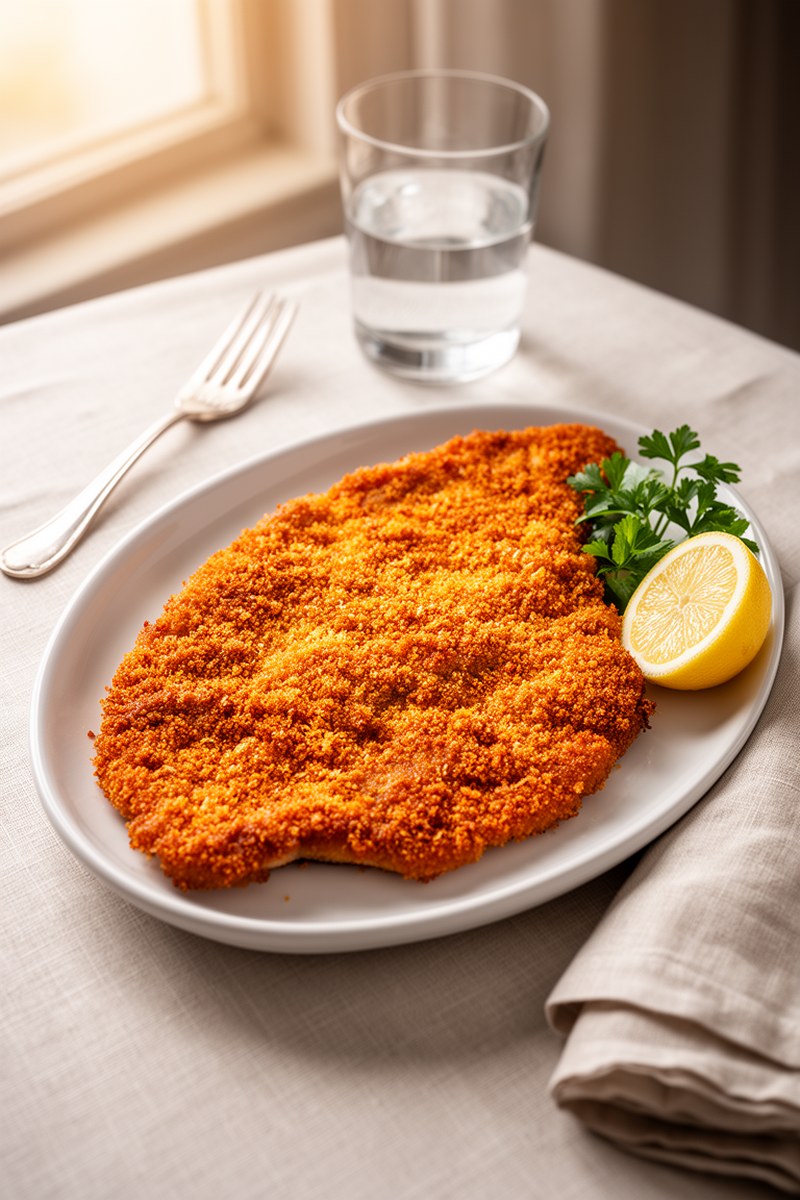
Authentic Wiener Schnitzel doesn’t lie flat — the breading puffs up from the meat in golden waves, almost like a soufflé. That effect only happens when you follow two rules that most recipes either skip or get wrong.
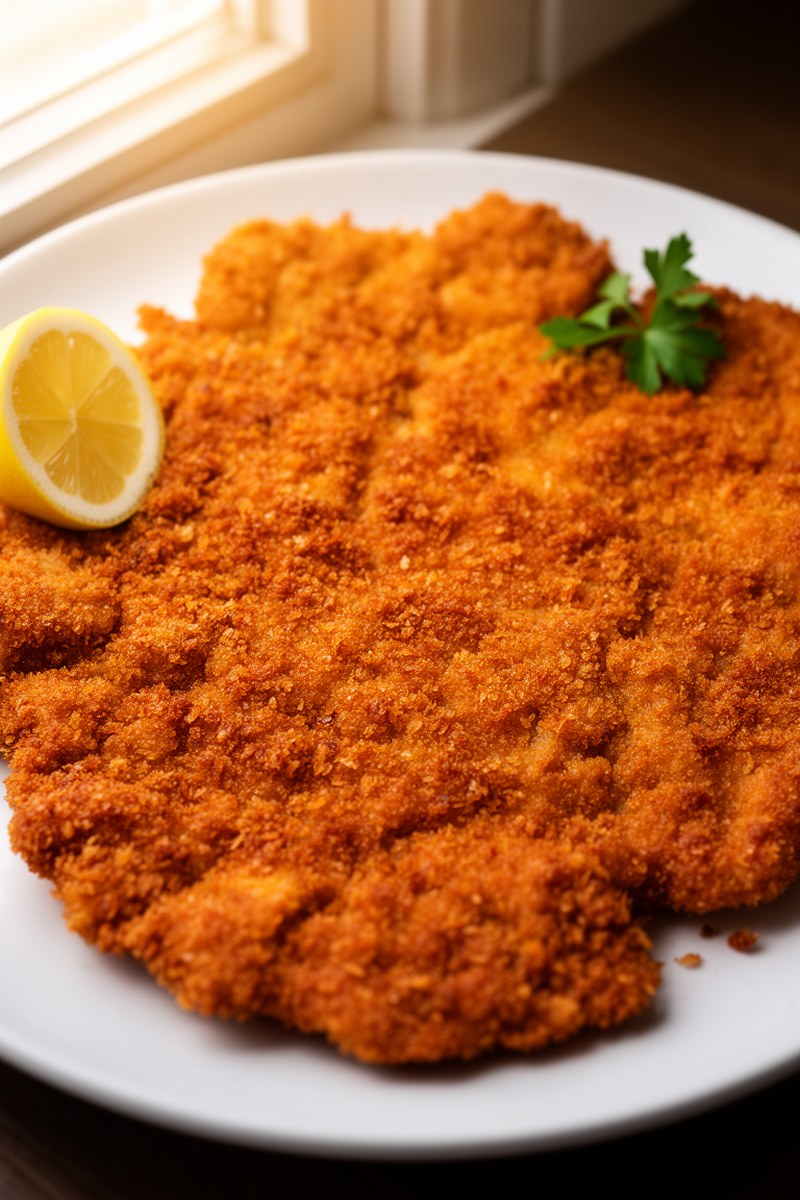
Wiener Schnitzel is Austria’s national dish — a thin veal cutlet breaded and fried until the coating lifts away from the meat in an undulating pattern the Austrians call Wellenschlag, meaning “wave pattern.” It’s the visual proof that the schnitzel was cooked correctly.
The technique is simple once you understand what’s happening in the pan. This recipe explains both the what and the why — so the puffed crust isn’t luck, it’s repeatable. The key details most home cooks miss: why you never press the breadcrumbs, what temperature the fat needs to be, and why you keep moving the pan.
If you’re planning an Austrian dinner, pair this with Apfelstrudel for dessert or Salzburger Nockerl if you want something more dramatic. Both are on the site.
Origins of Wiener Schnitzel
The origin story is one of the livelier debates in culinary history. The Italian Cotoletta alla Milanese — a breaded, fried veal cutlet — predates any Austrian written record by centuries. Austrian Field Marshal Radetzky is often credited with bringing the dish from Milan to Vienna in the 1850s, but food historians have largely dismissed this as legend invented after the fact.
What is documented: by the late 19th century, the breaded veal cutlet was so thoroughly associated with Vienna that “Wiener” became its defining word. Austrian law today protects the name — a schnitzel labeled “Wiener Schnitzel” must be made with veal. The widely served pork version is legally called Schnitzel Wiener Art (in the style of Vienna). Not the same thing, even if it’s delicious.
Ingredients
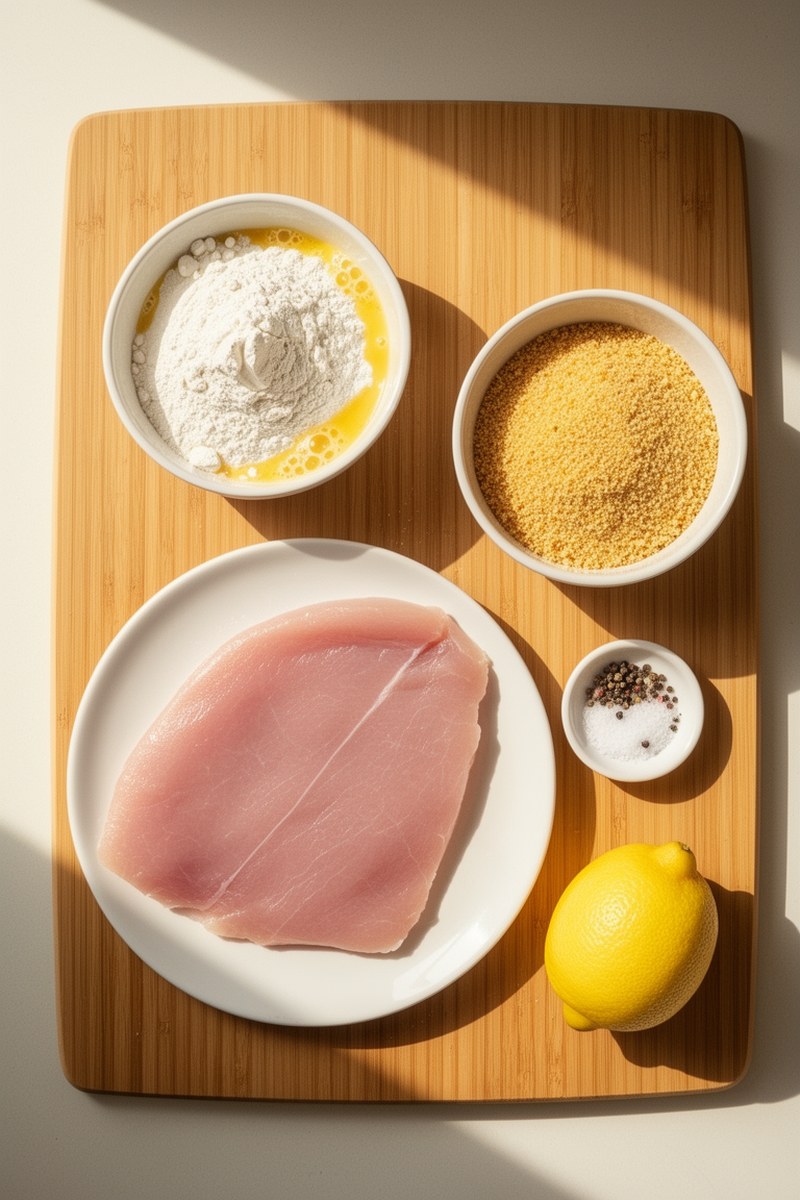
The ingredient list is short, but each element has a specific job. Veal cutlets from the leg — top round or a dedicated schnitzel cut — are the correct choice. Veal is milder and more tender than pork, and it cooks through quickly at the thin measurements required without drying out. Four cutlets at around 5 oz each is a standard serving for four people.
The breading uses a classic three-stage setup: all-purpose flour first (the adhesion layer), then beaten egg (the glue), then fine dry breadcrumbs. Not panko — panko is too coarse and doesn’t produce the right texture or the characteristic puff. Standard fine dry breadcrumbs, either store-bought or made from blitzed stale white bread dried in the oven.
For frying, clarified butter (Butterschmalz) is traditional and gives the best flavor — nutty and rich. Neutral vegetable oil works well and has a higher smoke point. Lard is also traditional and excellent. The fat needs to be deep enough to come at least halfway up the schnitzel during frying — this is shallow-frying, but with significantly more fat than most recipes suggest.
Wiener Schnitzel (Austrian)
Ingredients
- 4 oz veal cutlets from leg (top round or schnitzel cut) approximately 5 oz each
- 0.5 cup all-purpose flour
- 2 eggs, beaten
- 0.75 cup fine dry breadcrumbs not panko
- 0.5 inch clarified butter or neutral oil for frying at least ½ inch depth in large skillet
- to taste salt
- to taste black pepper
- 1 lemon cut into wedges for serving
- fresh parsley for garnish, optional
Instructions
- Place each veal cutlet between two sheets of plastic wrap. Using a meat mallet or heavy pan bottom, pound evenly to ⅛ inch thick, working from center outward. Even thickness prevents raw patches. Season both sides with salt and black pepper.
- Arrange three shallow dishes in a row: all-purpose flour in the first, two beaten eggs in the second, fine dry breadcrumbs in the third. Season the flour lightly with salt. Set up the entire station before breading begins.
- Dredge the cutlet in flour and shake off excess in a thin, even coating. Dip in beaten egg and let excess drip. Lay the cutlet in breadcrumbs and do not press — this is critical. Pressing seals air pockets needed for puffing. Lift immediately, shake off loose crumbs gently, and set on a plate.
- Refrigerate the breaded cutlets uncovered for 10 minutes before frying. This allows the surface to dry slightly for better coating adhesion.
- Heat at least ½ inch of clarified butter or neutral oil in a large 12-inch skillet over medium-high heat. Target temperature: 340–360°F. Use a cooking thermometer for accuracy. At this range the crust sets and browns without burning before the thin meat cooks through.
- Add one schnitzel to the hot fat — only one. Adding two drops the temperature sharply and causes greasy coating. The moment the schnitzel hits the pan, begin tilting it in a slow, continuous circular motion so hot fat washes repeatedly over the top surface.
- Continue the tilting motion for 2–3 minutes until the underside is deep golden. This basting from below drives even heat and creates steam that lifts the crust, producing the characteristic Wellenschlag (wave pattern).
- Flip once and continue tilting the pan for another 2 minutes. The breading will visibly pull away from the meat in waves — that is the desired result.
- Transfer to a paper towel-lined plate to drain. In Austria, Wiener Schnitzel is traditionally served at room temperature rather than piping hot — the fat needs a moment to settle and the crust finishes crisping as it cools slightly.
- Return the fat to 340–360°F between batches before frying the next cutlet. Serve each schnitzel with a lemon wedge; the acidity cuts the richness and brightens the plate.
Notes
How to Make Wiener Schnitzel
Step 1 — Pound the veal thin

Pound veal thin
Place each veal cutlet between two sheets of plastic wrap. Using a meat mallet or the bottom of a heavy pan, pound evenly to ⅛ inch (3mm) thick, working from the center outward. Uneven thickness is the most common reason for undercooked patches — the thicker areas stay raw while the breading turns golden. Season both sides with salt and black pepper.
Step 2 — Set up the breading station
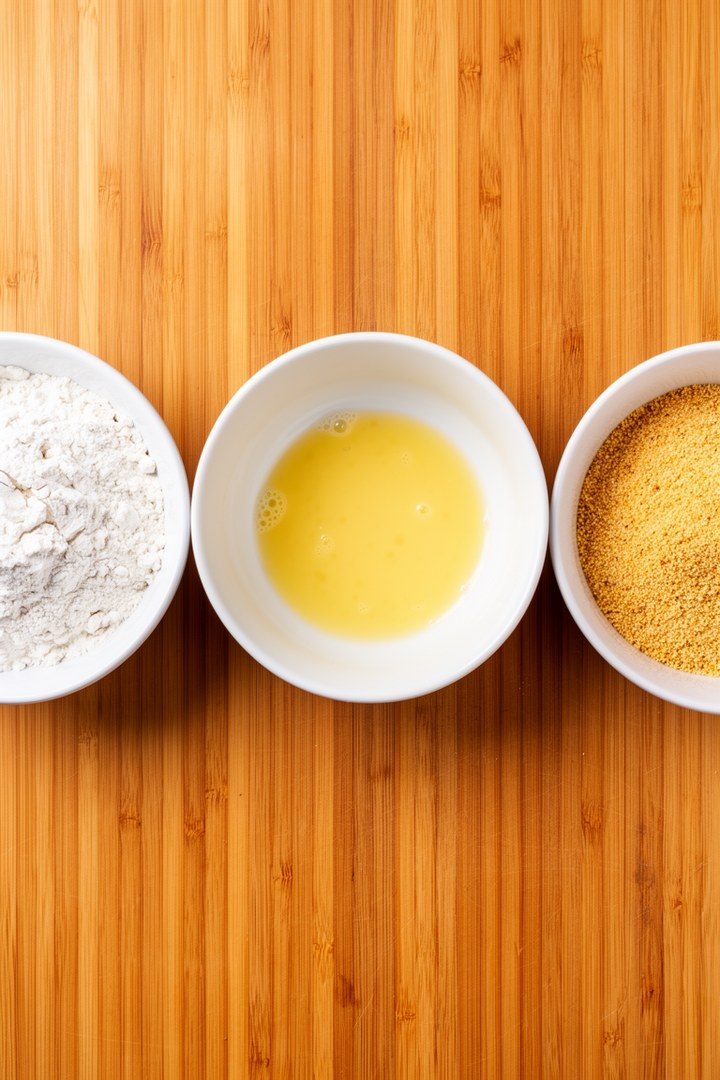
Breading station setup
Arrange three shallow dishes in a row: all-purpose flour in the first, two beaten eggs in the second, fine dry breadcrumbs in the third. Season the flour lightly with salt. Having everything in line before you start is practical — wet hands and multiple trips across the kitchen guarantee uneven breading.
Step 3 — Bread without pressing
Lay in breadcrumbs gently
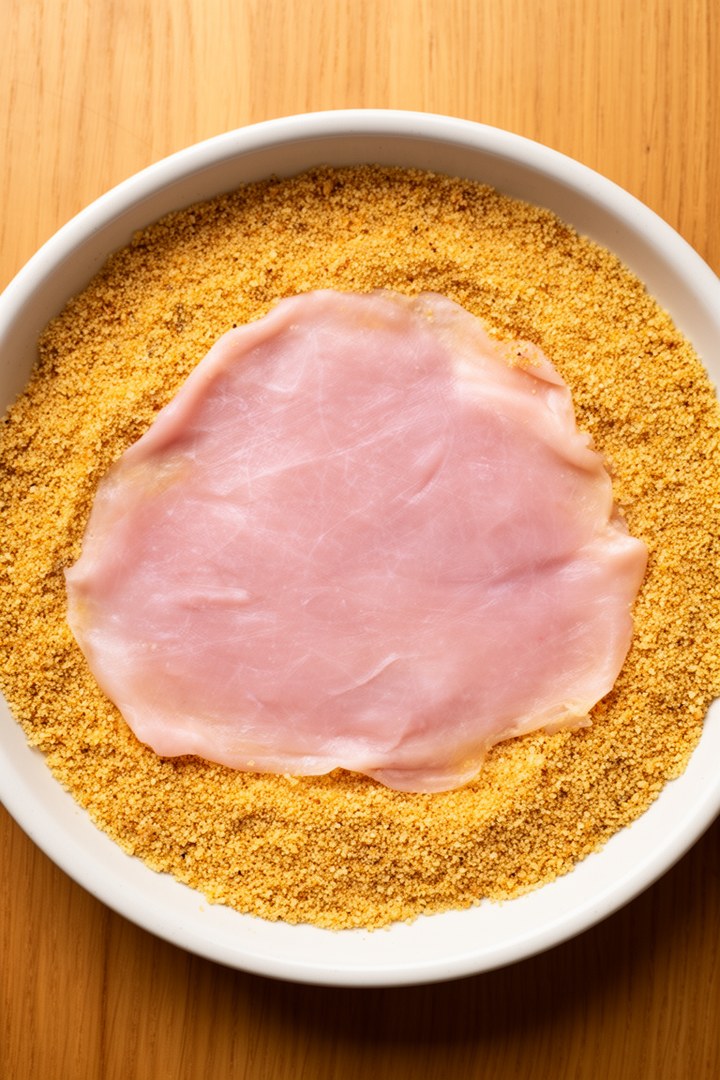
Dredge the cutlet in flour and shake off the excess — a thin, even coating, not clumped. Dip in beaten egg and let the excess drip. Now lay the cutlet in the breadcrumbs and do not press. Lift it immediately, shake off loose crumbs gently, and set on a plate. This is the step most recipes get wrong: pressing the breadcrumbs into the meat seals them against the surface. The puffed crust requires air pockets between meat and coating, and those pockets only exist if the crumbs sit loosely. Refrigerate the breaded cutlets uncovered for 10 minutes before frying.
Step 4 — Heat the fat to the right temperature
Fat at correct temperature
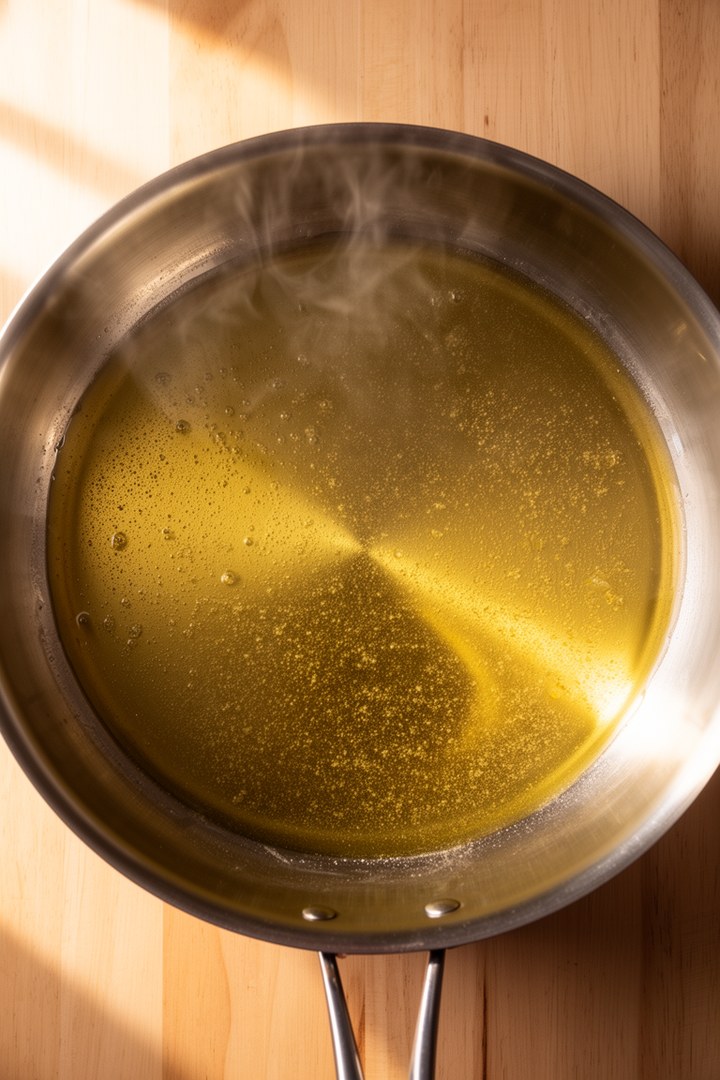
Heat at least ½ inch of clarified butter or neutral oil in a large (12-inch) skillet over medium-high heat. Target temperature: 340–360°F (170–180°C). At this range the crust sets and browns without burning before the thin meat cooks through. Below 320°F the crust absorbs fat and goes greasy. Above 375°F the breadcrumbs char before the inside is done. A cooking thermometer is the most reliable check. If you don’t have one: dip a wooden spoon in — steady small bubbles mean it’s ready.
Step 5 — Fry with continuous pan movement
Schnitzel frying with tilt
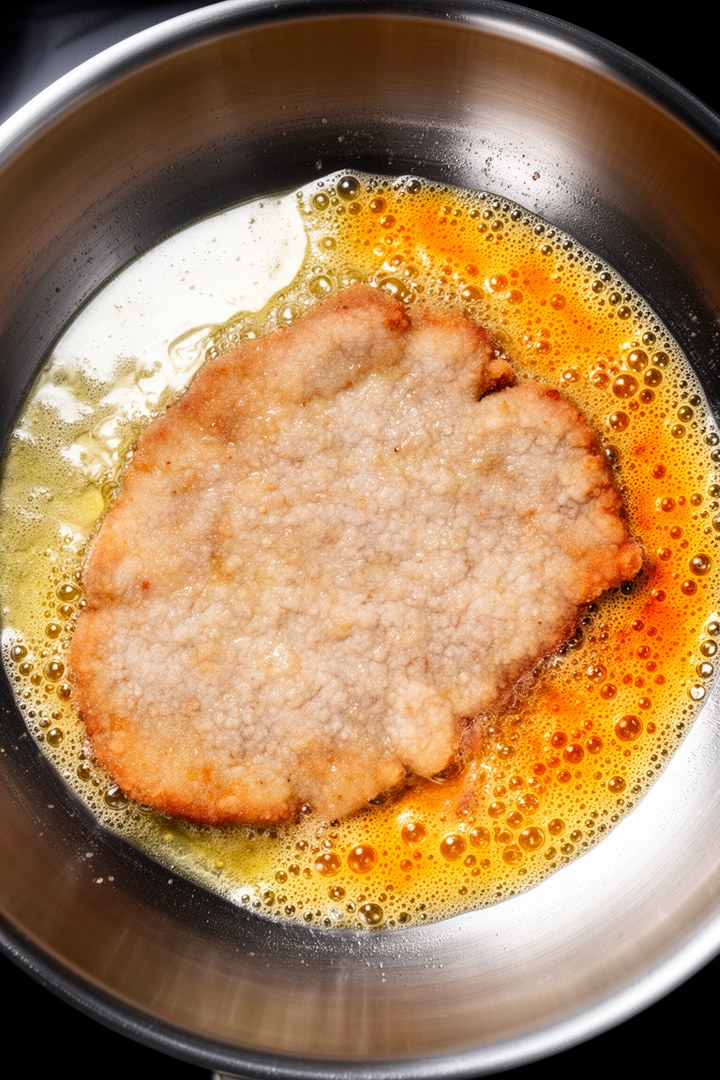
Add one schnitzel — only one. Adding two drops the temperature sharply, which means the crust absorbs fat instead of searing. The moment the schnitzel hits the pan, begin tilting it in a slow, continuous circular motion so hot fat washes repeatedly over the top surface. This “basting from below” drives even heat into the coating and creates the steam that lifts the crust. After 2–3 minutes the underside should be deep golden. Flip once and continue the tilting motion for another 2 minutes. The breading will visibly pull away from the meat — that’s the Wellenschlag.
Step 6 — Drain and serve
Finished with puffed crust
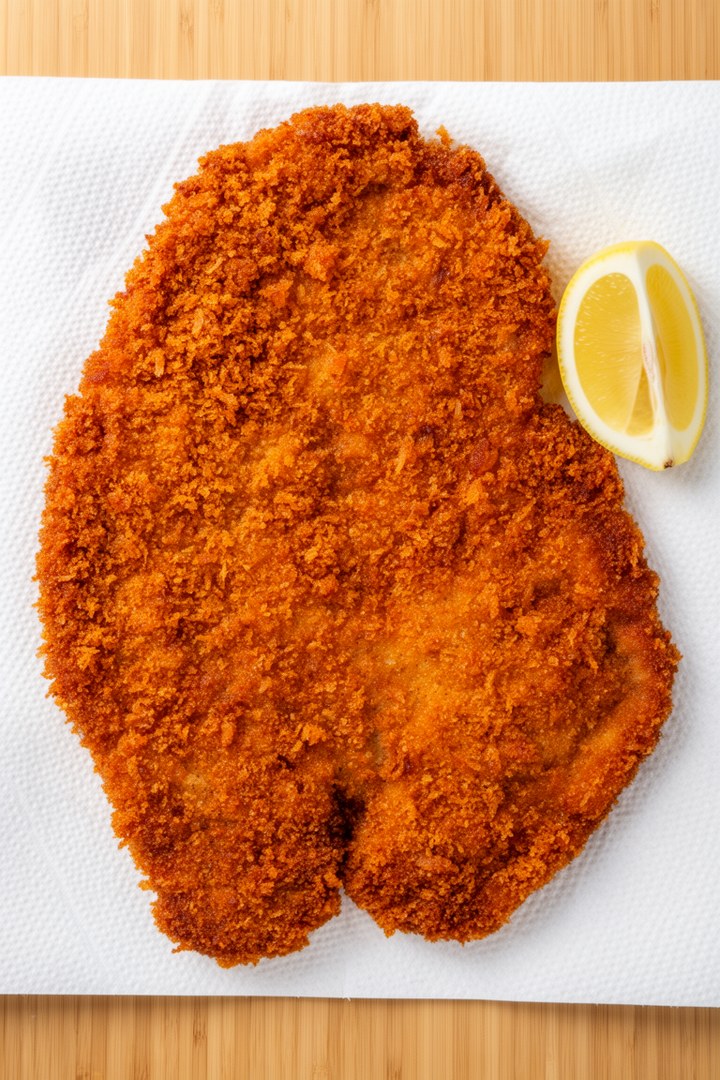
Transfer to a paper towel-lined plate. In Austria, Wiener Schnitzel is traditionally served at room temperature rather than piping hot — the fat needs a moment to settle and the crust finishes crisping as it cools slightly. A lemon wedge is mandatory; the acidity cuts the richness and brightens the whole plate. Return the fat to 340–360°F between batches before frying the next cutlet.
Why Does Wiener Schnitzel Puff Up?
The puffed, undulating crust — Wellenschlag — is both the visual signature and the functional proof of a correctly made schnitzel. The coating lifts away from the meat and traps a pocket of steam between the breading and the veal. That steam gently finishes cooking the inside while the outer shell turns golden and crisp. It’s the same principle as a soufflé.
Two things produce this effect, and both are required:
- Unattached breadcrumbs. When you don’t press the crumbs, they sit loosely on the egg surface with air gaps beneath them. As the fat heats the underside of the schnitzel, moisture from the meat turns to steam and pushes upward, lifting the loose coating into waves. Press the crumbs in — seal those gaps — and the steam has nowhere to go. You get a flat, dense crust.
- Continuous pan movement. Tilting the pan so hot fat flows over the top surface basts the coating from below and distributes heat evenly across the whole schnitzel. Without movement, the center may puff but the edges stay flat and oily.
If your crust isn’t puffing: verify the fat temperature is at least 340°F before the schnitzel goes in; make sure you didn’t press the crumbs; and tilt the pan from the first second of contact.
Pro Tips
- Refrigerate after breading: 10 minutes uncovered in the fridge lets the surface dry slightly, which improves how the coating adheres when it hits the hot fat.
- One schnitzel at a time: Two in the pan drops the oil temperature sharply. The coating absorbs fat and goes greasy instead of searing. Worth the wait.
- Fat depth matters: At least ½ inch. Schnitzels fried in a thin film of oil brown only on direct contact points and steam everywhere else. More fat means more even contact and better lift.
- Don’t use regular butter: It burns before you reach 340°F. Use clarified butter (which has the milk solids removed), neutral vegetable oil, or lard.
- Never cover the pan: Steam trapped under a lid softens the crust immediately. Keep it uncovered from the moment the schnitzel goes in.
- Thickness check without a ruler: Properly pounded veal at ⅛ inch should be slightly translucent at the edges when held up to light — you can just see your fingers through it.
Substitutions
Veal → Pork loin
Pork loin or tenderloin, pounded thin, is the most common substitute and what Austrians call Schnitzel Wiener Art — in the style of Vienna, but not the real thing. The flavor is richer and more assertive than veal. Pound to the same ⅛ inch (3mm); the cooking time is essentially identical. The crust behaves the same way. A completely legitimate choice — just not technically Wiener Schnitzel.
Veal → Chicken breast
Butterfly a chicken breast horizontally first, then pound each half to ⅛ inch. Starting from a whole breast creates uneven thickness that’s nearly impossible to correct. Cook to an internal temperature of 165°F (74°C). The flavor is milder than pork; the texture is similar. The puffing technique works the same way.
Clarified butter → Neutral vegetable oil
Grapeseed, sunflower, or refined coconut oil all work. Smoke point is the priority at 340–360°F. Standard (unclarified) butter burns at this temperature. Extra-virgin olive oil is unsuitable for this temperature range and the flavor doesn’t complement the dish.
Fine dry breadcrumbs → Homemade
Pulse stale white bread in a food processor until fine, then dry on a sheet pan in a 300°F (150°C) oven for 10 minutes. The texture is noticeably lighter and crisper than most store-bought versions. If you have the time, it’s worth doing. Panko is not a substitute — the larger flakes don’t adhere evenly and the puffed crust is harder to achieve.
Make Ahead
Bread the cutlets up to 4 hours ahead and refrigerate uncovered on a wire rack. The uncovered rest actually helps — the surface dries slightly, which improves crust adhesion during frying. Beyond 4 hours, moisture from the meat begins to soften the breadcrumbs before cooking, which prevents puffing.
Fried schnitzel doesn’t hold well. It can sit in a 200°F (93°C) oven on a wire rack (not a plate — steam from below softens the crust) for up to 15 minutes. Beyond that, the texture goes irreversibly soft. Wiener Schnitzel is a last-minute dish — the frying is fast, and it’s worth planning around.
Storage
Leftover schnitzel keeps in the refrigerator for up to 3 days, wrapped loosely. The crust softens in storage — unavoidable. To reheat: place on a wire rack over a baking sheet and heat at 375°F (190°C) for 8–10 minutes. The rack allows air to circulate underneath and partially restores crispness. Avoid the microwave — it steams the crust and turns it rubbery.
To freeze: freeze breaded, uncooked cutlets (not fried ones) between layers of parchment for up to 1 month. Fry from frozen at a slightly lower temperature — 320°F (160°C) — for an extra 2 minutes per side to allow the interior to come up to temperature before the crust overbrowns.
Frequently Asked Questions
What’s the difference between Wiener Schnitzel and regular schnitzel?
Wiener Schnitzel is legally required to use veal in Austria. What most people call “schnitzel” — including at German and Austrian restaurants outside Austria — is pork, which is labeled Schnitzel Wiener Art (in the style of Vienna). The technique is identical; the meat and flavor profile differ. Veal is milder, more delicate, and cooks through slightly faster than pork at the same thickness.
Why isn’t my schnitzel crust puffing up?
Three possible causes: the fat wasn’t hot enough when the schnitzel went in (needs to be 340–360°F / 170–180°C), you pressed the breadcrumbs into the meat during breading (which eliminates the air gaps required for lift), or you weren’t moving the pan. All three need to be correct simultaneously. Check your fat temperature with a thermometer — guessing is the most common failure point.
Can I use pork or chicken instead of veal?
Yes. Pork loin or tenderloin pounded to ⅛ inch works well and is what most restaurants outside Austria serve. Chicken breast, butterflied and pounded, is a lighter option. The technique — including the no-press breading and pan movement — is identical for all three. The result just won’t be called Wiener Schnitzel.
What do you serve with Wiener Schnitzel?
The traditional Austrian accompaniments are warm potato salad (Erdäpfelsalat — with vinegar, not mayonnaise), cucumber salad, or lingonberry jam. A lemon wedge is non-negotiable. Outside Austria, a simple green salad or roasted potatoes work well. The dish is rich from the fat, so something acidic or fresh alongside is always the right call.
Can I make Wiener Schnitzel ahead of time?
You can bread the cutlets up to 4 hours ahead and refrigerate them uncovered. The frying itself needs to happen right before serving — fried schnitzel doesn’t reheat well. If you must hold them, a wire rack in a 200°F (93°C) oven for no more than 15 minutes is the best option. The crust will soften slightly but remain acceptable.
More Austrian Recipes
- Salzburger Nockerl — Austria’s dramatic soufflé dessert, done in one pan
- Apfelstrudel — the classic Viennese apple strudel, authentic dough and all
- Blue Cheese Crusted Schnitzel
- Jägerschnitzel — schnitzel with mushroom cream sauce


Leave a Reply